The esophagus is a tube about 25 centimeters long in the digestive tract. It connects the throat to the stomach and transports food to the stomach. When swallowing, peristalsis creates a wave-like movement that propels the food bolus forward.
The anatomy of the esophagus shows that it runs behind the trachea along the spine and passes through the diaphragm. The mucous membrane is lined with squamous epithelium and protects against mechanical irritation.
At the upper and lower ends, esophageal sphincters regulate closure and prevent the backflow of stomach contents. Conditions such as reflux or Barrett’s esophagus can impair the function of the esophagus.
Anatomy of the Esophagus
The esophagus is an elastic muscular tube that transports food from the throat to the stomach. It is located between the pharynx and the stomach.
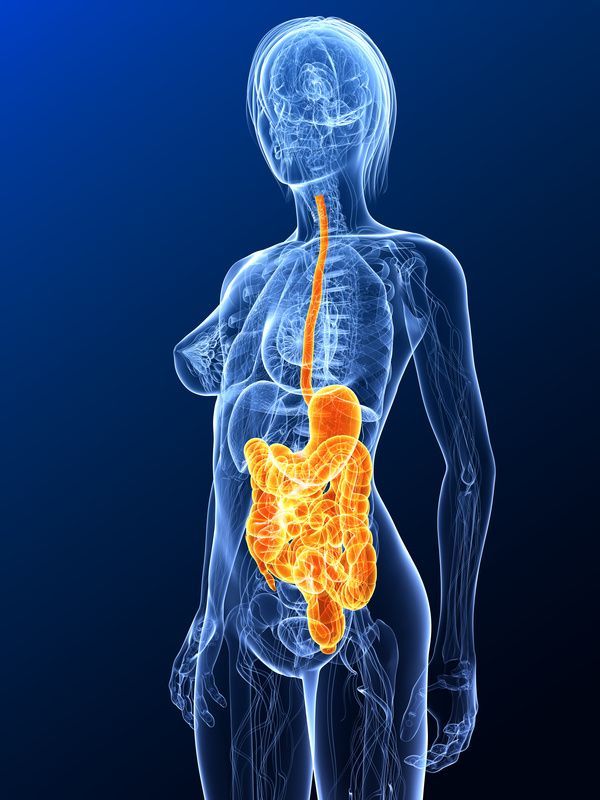
Because the esophagus is very elastic, it can expand to a diameter of up to 3.5 centimeters. This allows the hollow organ to adapt to the volume of the food being ingested. However, there are three narrowings that are exceptions to this rule. These are the
- diaphragmatic constriction
- aortic constriction
- cricoid cartilage constriction
Here, food that has not been chewed sufficiently or foreign objects can block the esophagus. In an adult, the esophagus has a diameter of about two centimeters and a length of between 25 and 30 centimeters. The esophagus is divided into three sections. These are:
The cervical section
The esophagus begins behind the larynx (voice box). The cervical section is the term used for the area extending up to the chest.
The thoracic section
The thoracic section is the longest part of the esophagus, measuring about 16 centimeters in length. In this region, the esophagus runs in close proximity to the trachea. The esophagus then continues behind the heart.
The abdominal section
The esophagus enters the abdominal cavity through an opening in the diaphragm (esophageal hiatus). There, it is only 1 to 4 centimeters long. This is where it opens into the stomach.
The opening in the diaphragm is formed by a loop of diaphragmatic muscle.
Inner Layer of the Esophagus
The inner layer of the esophagus consists of mucosa, a layer of muscle, and a thin sliding layer of connective tissue. The esophageal glands (glandulae esophageae) are located within the middle connective tissue layer. They produce esophageal mucus, which ensures the lubrication of the hollow organ.
Function of the Esophagus
The esophagus’s primary function is to transport food from the pharynx to the stomach. This transport of food is controlled by a reflex-like interaction of the middle layer of muscles, which run both longitudinally and transversely.
When swallowing, the upper esophageal sphincter—which is a sphincter muscle—relaxes. This allows food to pass from the pharynx into the esophagus. Wave-like movements of the muscles enable the food to be transported to the lower section. The lower esophageal sphincter, located at the lower end, opens so that the bolus of food can enter the stomach.
The sphincters also ensure that no foreign objects or food particles are inhaled. Furthermore, the acidic contents of the stomach cannot flow back and damage the lining of the esophagus. Peristaltic muscle activity performs another function: it ensures the continuous cleansing of the esophagus.
What are the most common diseases of the esophagus?
There are several conditions that affect the esophagus. These include:
- gastroesophageal reflux disease (GERD), in which stomach acid flows back due to insufficient muscle closure
- achalasia, which is associated with reduced muscle tone in the lower esophagus and is linked to problems with the opening of the sphincter
- esophageal diverticula, which are outpouchings that occur to varying degrees in different sections of the esophagus
- esophageal spasm, in which repeated contractions of the smooth esophageal muscles occur, resulting in a drastic shortening of the esophagus
- Esophageal cancer, which is primarily promoted by risk factors such as tobacco use, a high-fat and high-salt diet, heavy alcohol consumption, and gastroesophageal reflux disease
Other symptoms and conditions:
- Bleeding from esophageal varices
- an esophageal tear
- Esophageal stricture
- Esophagitis
- Congenital esophageal defects
- Ingestion of foreign objects
Symptoms of esophageal disorders
Despite having different causes, esophageal disorders often trigger the same or similar symptoms. Among the most common complaints are difficulty swallowing, also known as dysphagia. This involves the reflux of stomach contents into the esophagus or mouth. Other typical symptoms include:
- heartburn
- the sensation of having a lump in the throat
- Burning or pain in the chest
- esophageal spasm
How are esophageal disorders diagnosed?
Medicine has various options available for identifying symptoms or diseases of the esophagus.
These primarily include esophagoscopy (examination of the esophagus) using a special endoscope. This procedure is excellent for detecting changes in the esophageal lining.

Esophagoscopy
If esophagoscopy does not provide sufficient information, esophageal manometry (measurement of esophageal pressure) is usually performed. As part of this method, the doctor uses a probe to measure pressure at various sections of the esophagus as well as at the entrance to the stomach. This allows for the assessment of esophageal motility and the function of the lower esophageal sphincter.
Another diagnostic method is long-term acid monitoring, which is used to measure the pH level inside the esophagus. This test is performed when pathological acid reflux is suspected. The doctor inserts a pH probe—equipped with a sensor and a 1.5-millimeter-thin tube—into the patient’s nose. Over a 24-hour period, the probe then records the reflux of acid back into the esophagus.
Summary of the Esophagus
Overall, the esophagus is an organ of the digestive tract approximately 25 centimeters long that transports food from the pharynx toward the stomach. It runs dorsal to the trachea and is closely related to the trachea, as well as to the aortic arch and the superior vena cava in the thoracic region. As it passes through the diaphragm, it traverses the esophageal hiatus and reaches the cardia of the stomach at the lower end of the esophagus.
Histologically, the esophagus has a complex wall structure consisting of the mucosa, a layer of connective tissue, and a muscular layer composed of striated and smooth muscle. During swallowing, innervation via the right vagus nerve, the anterior vagal trunk, and the posterior vagal trunk, as well as through the sympathetic and parasympathetic nervous systems, ensures coordinated movements. The contractions of the smooth muscle facilitate the transport of the bolus of food, while the upper esophageal sphincter opens.
Diseases of the esophagus, such as reflux esophagitis, dysphagia, or motility disorders, can significantly impair its function. Cancers also pose a serious threat and require medical evaluation. Overall, it is evident that the esophagus is a finely tuned system that ensures the safe transport of food through precise control and structure.
FAQ
What is the esophagus?
The esophagus is a muscular tube that transports food from the pharynx to the stomach. It is an important part of the digestive tract.
How does the esophagus work during swallowing?
During swallowing, the bolus is propelled toward the stomach by peristalsis. During this process, the esophageal sphincters open and close in a controlled manner.
What is the function of the esophageal sphincters?
The esophageal sphincters regulate the passage of food and prevent stomach contents from flowing back into the esophagus.
What are some diseases of the esophagus?
Diseases of the esophagus include reflux, Barrett’s esophagus, dysphagia, and esophageal cancer. These conditions can affect the mucous membrane and the transport of food.
Where is the esophagus located in the body?
The esophagus runs behind the trachea along the spine and passes through the diaphragm into the stomach.