April 15, 2026
Eye diseases are diverse and affect various parts of the delicate eye, such as the cornea, retina, or lens. Many eye diseases are common, while others are rare but can severely impair vision. Among the most common eye diseases are glaucoma, cataracts, and macular degeneration, which primarily occur in older adults. Inflammatory conditions and conjunctival infections also play a significant role. Early diagnosis by an ophthalmologist is crucial to preventing damage to the optic nerve or the retina. If left untreated, some conditions can even lead to blindness. That is why it is important to take symptoms seriously and seek regular advice from an ophthalmologist.
Brief Overview
Eye diseases include both common and rare conditions affecting the eye. They involve structures such as the retina, cornea, lens, or optic nerve. Many eye diseases develop gradually and go unnoticed for a long time. Timely treatment can preserve vision and prevent complications.
Eye Diseases: Common Eye Diseases and Rare Eye Conditions
Common Eye Diseases and Their Causes
Eye diseases are among the most common health problems and affect the delicate eye in many ways. The most common eye diseases include cataracts, glaucoma, and macular degeneration, which primarily occur in older adults.
These conditions can affect the lens, the retina, or the optic nerve and significantly impair vision. Age-related changes often play a role, but conditions such as diabetes mellitus can also contribute to eye diseases. Diabetic retinopathy is a typical retinal disease in which the blood vessels of the retina are damaged.
Inflammation or infection caused by bacteria or viruses can also trigger an eye disease. Allergic reactions frequently lead to eye symptoms as well. Refractive errors such as nearsightedness or farsightedness are not directly classified as serious eye diseases, but they do significantly affect visual acuity. If an eye disease is not detected in time, it can continue to worsen.
That is why it is important to identify risk factors early and to undergo regular eye exams.
Symptoms and Progression of Eye Diseases
The symptoms of eye diseases can vary widely and depend heavily on the specific condition. Those affected often report blurred vision or reduced visual acuity. Redness of the eye or inflammation of the conjunctiva can also be an early sign. In cases of retinal diseases, changes in the visual field often occur that go unnoticed at first. Damage to the optic nerve can lead to vision loss in the long term.
Some eye diseases progress gradually and remain without obvious symptoms for a long time. Others, however, present acutely with pain or a sudden decline in vision. Diseases such as glaucoma, in which increased intraocular pressure damages the optic nerve, are particularly dangerous.
If left untreated, this can lead to blindness. Therefore, even mild symptoms should be taken seriously and evaluated early on.
Diagnosis and Treatment by an Ophthalmologist
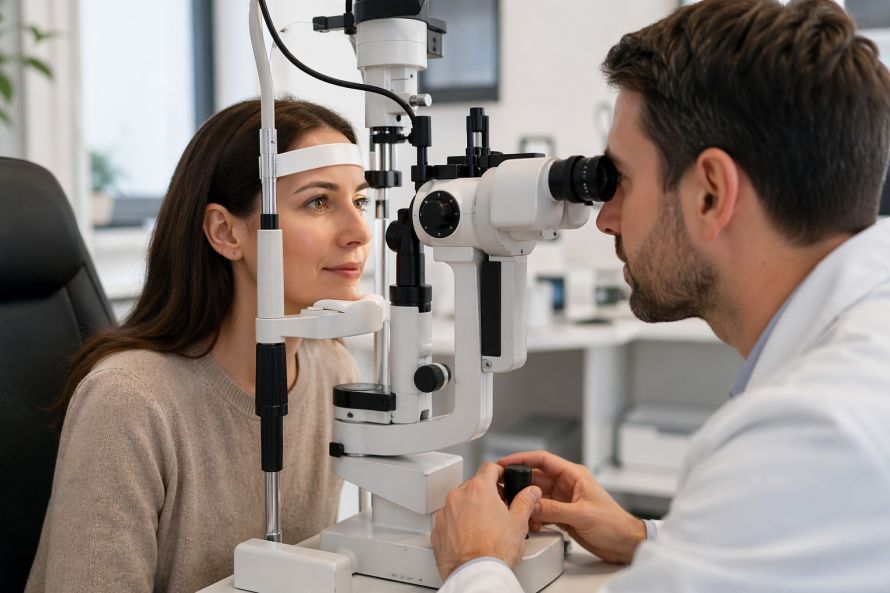
Eye diseases are typically diagnosed by an ophthalmologist using modern imaging techniques. During the examination, structures such as the cornea, retina, and lens are closely examined. The most important methods include measuring intraocular pressure and imaging techniques such as OCT or fundus examination. Ultrasound or other procedures may also be used as supplementary methods.
Treatment for eye diseases depends on the cause and severity of the condition. Eye drops are often used to relieve inflammation or lower intraocular pressure.
In cases of advanced disease, surgical treatment may be necessary. Laser therapy is also frequently used, for example, in cases of retinal diseases. The goal of any treatment is to preserve vision and prevent further deterioration. Early diagnosis significantly increases the chances of successful treatment.
Rare Eye Diseases and Specific Risks
In addition to the most common eye diseases, there are also rare eye diseases that are often difficult to diagnose. These eye diseases frequently affect the retina or involve genetically caused changes in the eye. Examples include certain retinal diseases or rare inflammation of the choroid. Retinal detachment is also a serious condition that requires immediate treatment.
Rare eye diseases can be congenital or develop over the course of a person’s life. They often lead to a progressive deterioration of vision. In some cases, if left untreated, they can even result in blindness. Therefore, early diagnosis is particularly important. Modern therapies now offer better ways to slow the progression of such conditions. Nevertheless, regular checkups with an ophthalmologist remain crucial for protecting the eye in the long term.
Overview: A Comparison of Common Eye Diseases
The most common eye diseases include cataracts, glaucoma, macular degeneration, diabetic retinopathy, inflammation, styes, as well as refractive errors such as nearsightedness and farsightedness, and dry eye. Cataracts cause the lens to become cloudy, resulting in increasingly blurred vision and often requiring the surgical implantation of an artificial lens. Glaucoma is an eye disease in which increased intraocular pressure damages the optic nerve and, if left untreated, can lead to blindness.
Age-related macular degeneration (AMD) affects the macula in the retina and causes a decline in visual acuity and reading ability in the central visual field. Diabetic retinopathy often develops in people with diabetes mellitus and damages the blood vessels of the retina, which can impair vision over the long term. Inflammatory conditions such as conjunctivitis affect the conjunctiva and can be triggered by bacteria, viruses, or allergies, often causing the eye to become red and irritated.
A stye is an inflammation of the eyelid, usually caused by bacteria, and is also one of the most common eye conditions. Refractive errors such as nearsightedness, farsightedness, or presbyopia affect vision and are usually corrected with eyeglasses or contact lenses to restore clear vision. Dry eye is also caused by a disruption in tear production and can cause persistent eye irritation, which is why eye drops are frequently used.
Rare eye diseases, such as retinal detachment or other retinal disorders, affect deeper structures like the vitreous humor, choroid, or iris and can even lead to blindness. Overall, various eye diseases demonstrate that early checkups with an ophthalmologist are crucial for preventing damage to the eyeball and the photoreceptor cells.
FAQ
What are the most common eye diseases?
The most common eye diseases include cataracts, glaucoma, age-related macular degeneration (AMD), and diabetic retinopathy. These conditions often affect the retina, lens, or optic nerve and can impair vision.
What are the symptoms of eye diseases?
Typical symptoms include blurred vision, red eyes, pain, inflammation, or a restricted field of vision. Depending on the eye disease, itching or sensitivity to light may also occur.
When should you see an ophthalmologist?
It’s a good idea to see an ophthalmologist if you experience symptoms such as vision problems, pain, or changes in your eyes. Even without symptoms, regular checkups are important for detecting eye diseases early.
Can eye diseases lead to blindness?
Yes, some eye diseases, such as glaucoma or untreated retinal diseases, can lead to blindness. Early diagnosis and treatment can significantly reduce this risk.
How are eye diseases treated?
Treatment depends on the specific condition and ranges from eye drops and medications to surgery or laser therapy. The goal is to preserve vision and prevent damage to the eye.