

A dry or irritated eye socket is a distressing experience for many people who wear an ocular prosthesis. Symptoms such as a burning sensation, a feeling of a foreign body, or increased mucus production are often considered unavoidable—yet there is frequently a treatable underlying cause. The condition known as Dry Anophthalmic Socket Syndrome (DASS) describes impaired lubrication and irritation of the eye socket following the loss of an eye. A targeted investigation of the causes is crucial, as this is the only way to improve the long-term comfort of wearing the ocular prosthesis and significantly enhance quality of life.
Dryness, burning, irritation, or increased mucus production in the eye socket are often accepted as inevitable by many people who wear an ocular prosthesis. That is precisely the mistake. Because a dry or chronically irritated eye socket is not simply something you have to put up with. These symptoms may be caused by Dry Anophthalmic Socket Syndrome, or DASS for short. This refers to an anophthalmic eye socket in which the surface and lubrication are permanently compromised. The result is significantly reduced comfort—sometimes developing gradually, sometimes so severe that the prosthesis can only be worn for a few hours at a time.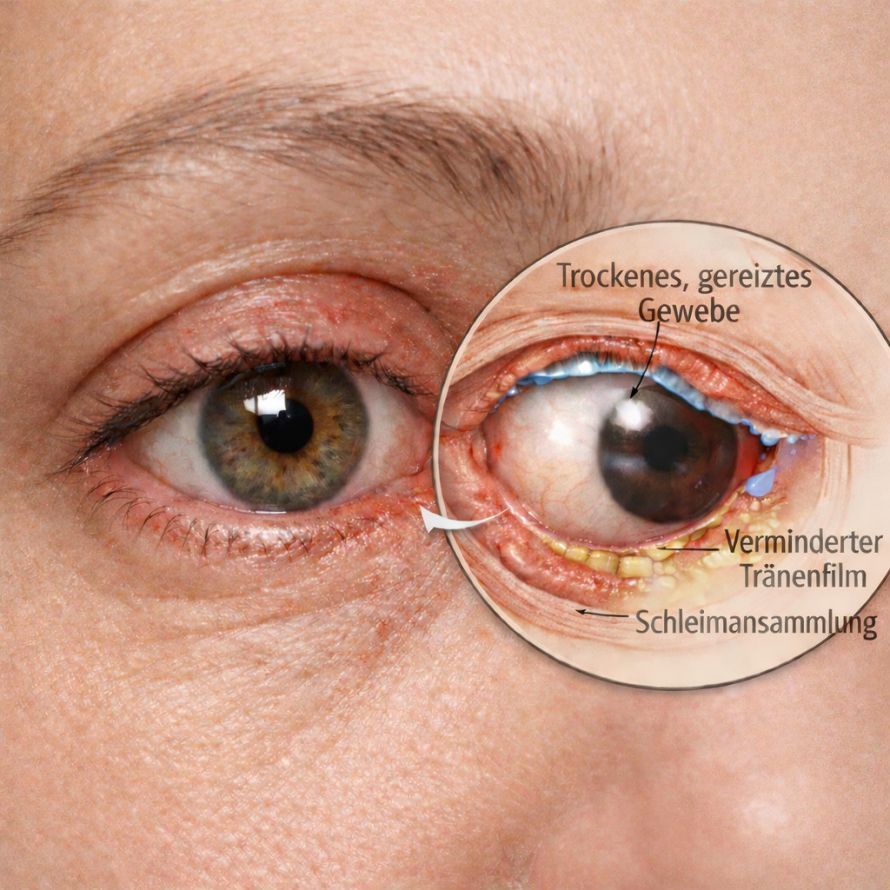
What Is Dry Anophthalmic Socket Syndrome?
Dry Anophthalmic Socket Syndrome describes a dry, irritated eye socket with impaired lubrication following the loss of an eye. It affects people who wear an ocular prosthesis and whose eye socket surface is no longer sufficiently stable or lubricated. The problem is not only uncomfortable but can also noticeably impair daily life and significantly reduce the prosthesis’s comfort. A related condition that can also occur after eye removal is post-enucleation socket syndrome.
Typical symptoms of a dry eye socket
Typical symptoms include a sensation of dryness, burning, pressure, a foreign body sensation, increased discharge, or recurrent irritation of the conjunctival surface within the eye socket. Some patients primarily notice that the ocular prosthesis is becoming increasingly uncomfortable, even though it still looks fine on the outside. Others report increased mucus production in the morning or that they need to use lubricating eye drops more frequently, without the problem actually improving. This is precisely where it becomes clear that purely symptomatic treatment often falls short.
Correctly Identifying the Causes of Discomfort with an Eye Prosthesis
The causes of dry anophthalmic socket syndrome are usually multifaceted. Factors that play a role include impaired surface lubrication, changes to the eyelid margin and the Meibomian glands, mechanical irritation from the prosthesis, chronic inflammation of the mucous membrane, or insufficient glide between the eyelids and the prosthesis. Even minor fit issues can cause significant discomfort over time. Therefore, simply cleaning more often or using more artificial tears is usually not enough. The key is whether the cause has been accurately identified in the first place.
Why purely symptomatic treatment is often insufficient
Many people initially try to manage their symptoms by cleaning the prosthesis, using moisturizing eye drops, or taking more frequent breaks from wearing it. While this may provide short-term relief, it often does not resolve the underlying problem. If the cause lies in the fit, eyelid function, inflammation, or impaired surface lubrication, the irritation will persist. This is precisely why a targeted evaluation is more important than merely treating the symptoms.
What kind of examination is recommended for dry eye sockets
An examination that considers both medical and prosthetic factors is advisable: What does the mucous membrane of the eye socket look like? Are there signs of inflammation or pressure points? Does the ocular prosthesis really fit optimally? Are the eyelids stable enough to guide the prosthesis properly and adequately moisten the surface? Only once these questions are answered can one assess which measures will actually help. This is precisely the difference between short-term relief and a treatment that noticeably improves daily life in the long term.
When Patients with an Ocular Prosthesis Need a Specialized Evaluation
At the Leading Medicine Guide, patients who have undergone eye removal receive interdisciplinary care from specialists. The combination of ophthalmological evaluation and ocular prosthetic care is a real advantage, especially in cases of a dry eye socket and declining comfort while wearing the prosthesis. Anyone who feels that their ocular prosthesis is becoming increasingly irritating, that the eye socket is dry, or that recurring symptoms are not going away should not simply accept this. A targeted evaluation at a specialized center can help identify the causes and significantly improve care. Appointments can be requested directly through the Leading Medicine Guide.
Share this article
