
Allergic conjunctivitis is a common form of allergic inflammation of the conjunctiva that primarily affects the eye. In this condition, the conjunctiva reacts sensitively to allergens such as pollen, animal dander, or house dust. Typical symptoms include itching, red eyes, and a sensation of a foreign body in the eye.
Allergic conjunctivitis occurs frequently, especially in connection with hay fever. The inflammation is caused by an allergic reaction of the immune system, during which histamine is released. Eye drops and antihistamines can effectively relieve the symptoms. It is important to avoid triggering allergens as much as possible and to see an ophthalmologist early on.
Explanation: What Is Allergic Conjunctivitis?
Allergic conjunctivitis is a common form of allergic inflammation of the conjunctiva in which the eye reacts to certain allergens. This form of conjunctivitis is caused by an allergic reaction of the immune system to triggering allergens such as pollen, animal dander, or house dust.
The conjunctiva of the eye becomes inflamed, leading to a non-infectious—and therefore non-contagious—inflammation. There are different forms of allergic conjunctivitis, including seasonal allergic conjunctivitis and perennial allergic conjunctivitis. It often occurs in conjunction with hay fever or allergic rhinitis.
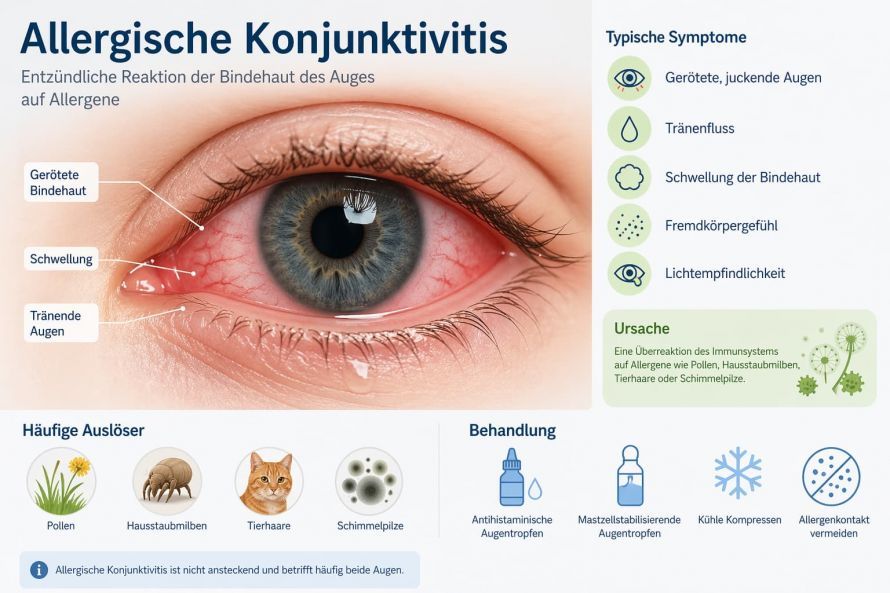
Symptoms
Typical symptoms of allergic conjunctivitis include itchy eyes, severe itching, redness of the eyes, and swelling of the eyelids.
Other symptoms of allergic conjunctivitis may include a foreign body sensation, increased tearing, and itchy eyes. The symptoms of the allergic reaction result from the release of histamine from mast cells. These allergic symptoms occur particularly frequently in the context of hay fever.
Unlike infectious conjunctivitis, there are usually no purulent secretions. In severe cases, the cornea may also be affected, such as in atopic keratoconjunctivitis or atopic dermatitis.
Allergic Conjunctivitis—Treatment of Allergic Conjunctivitis and Possible Management of Chronic Eye Allergies
Diagnosis
Allergic conjunctivitis is usually diagnosed clinically by an ophthalmologist based on typical symptoms and the patient’s medical history. The doctor looks for typical symptoms as well as possible triggers and symptoms similar to those of other conditions.
It is important to distinguish this condition from infectious conjunctivitis or bacterial inflammation. In some cases, additional tests may be performed to determine the cause of the conjunctivitis. A connection to allergic rhinitis or hay fever is also considered.
An allergy test can help identify the triggering allergen.
People with atopic dermatitis and treatment for allergic conjunctivitis
People frequently affected by allergic conjunctivitis
Allergic conjunctivitis primarily affects people with an existing allergy. It occurs particularly frequently in patients with hay fever or allergic rhinitis. Children and young adults are especially prone to this form of conjunctivitis.
People with atopic dermatitis or an atopic predisposition are also more likely to develop an allergic reaction in the eye. Seasonal allergic conjunctivitis occurs primarily during periods of high pollen counts. People who are regularly exposed to allergens such as animal dander are also more frequently affected. Overall, it appears that the immune system in these individuals reacts hypersensitively to triggering allergens.
In daily life, it is important to avoid known allergens as much as possible to prevent allergic conjunctivitis. Washing your hands regularly helps prevent additional allergens from being transferred to the eyes. Eye drops can be used to help relieve symptoms such as itching and redness. Contact lenses should be avoided whenever possible during acute episodes.
It is also recommended not to rub your eyes, as this can worsen the inflammation. When pollen levels are high, it may be helpful to keep windows closed or use pollen filters. If symptoms persist, you should see an ophthalmologist to begin appropriate treatment.
Treatment and Prevention
The primary treatment for allergic conjunctivitis is avoiding the triggering allergens. Eye drops help relieve symptoms, particularly moisturizing eye drops or antiallergic agents such as antihistamines. Mast cell stabilizers such as cromoglicic acid, as well as active ingredients like azelastine and levocabastine, are also used.
In acute cases, medication is used to reduce the release of histamine. Treatment for allergic conjunctivitis can be acute or chronic, depending on the course of the condition.
For prevention, it is important to avoid known allergens and to treat the condition early. In some cases, specific immunotherapy is the only causal treatment.
Is allergic conjunctivitis contagious?
Many people wonder whether allergic conjunctivitis is contagious. The clear answer is: No, allergic conjunctivitis is not contagious. Unlike infectious conjunctivitis, which is caused by bacteria or viruses, the allergic form results from an overreaction of the immune system to certain allergens. These include, for example, pollen, animal dander, or house dust.
An allergic reaction triggers the release of histamine, which causes typical symptoms such as itching, redness of the eyes, and swelling of the conjunctiva. This form of conjunctivitis often affects both eyes at the same time and occurs particularly in connection with hay fever.
It is important to distinguish this from other forms of conjunctivitis: While bacterial or viral conjunctivitis can be contagious, allergic conjunctivitis is exclusively a reaction to external stimuli. Therefore, there is no risk of infecting others.
Nevertheless, those affected should avoid rubbing their eyes and practice good hygiene, as irritated eyes can be more susceptible to additional infections. If symptoms are unclear or persist, it is advisable to see an ophthalmologist to determine the exact cause of the conjunctivitis and initiate appropriate treatment.
Conclusion
Allergic conjunctivitis is a common form of conjunctivitis triggered by an allergic reaction. Seasonal allergic conjunctivitis, in particular, occurs as part of hay fever and is often associated with allergic rhinitis. The cause of conjunctivitis usually lies in triggering allergens, which cause the release of histamine and produce the typical symptoms of allergic conjunctivitis. These include itching, redness of the eyes, and other allergic symptoms that distinguish it from infectious conjunctivitis.
Treatment for allergic conjunctivitis includes both medication and consistent avoidance of the allergen. Mast cell stabilizers such as cromoglicic acid, as well as active ingredients like azelastine and levocabastine, can be used effectively to treat acute allergic conjunctivitis. In addition, moisturizing eye drops provide significant relief from itching and soothe dry eyes. Treatment is tailored to the individual depending on the form of allergic conjunctivitis, such as perennial allergic conjunctivitis or acute allergic conjunctivitis.
It is important to recognize the symptoms of allergic conjunctivitis early on, as similar symptoms can also occur with other conditions. Treatment for allergic conjunctivitis should always be tailored to the specific type of conjunctivitis in order to reduce symptoms in the long term. In many cases, allergic conjunctivitis heals well, especially with consistent treatment and avoidance of triggers. In severe cases, the cornea may also be affected, which is why early treatment is crucial.
FAQ
What is allergic conjunctivitis?
Allergic conjunctivitis is a form of conjunctivitis triggered by an allergic reaction to allergens such as pollen or animal dander.
What are the symptoms of allergic conjunctivitis?
Typical symptoms of allergic conjunctivitis include itching, red eyes, swelling of the eyelids, and a sensation of a foreign body in the eye.
Is allergic conjunctivitis contagious?
No, unlike infectious or bacterial conjunctivitis, allergic conjunctivitis is not contagious.
How is allergic conjunctivitis treated?
Allergic conjunctivitis is usually treated with eye drops, antihistamines, or mast cell stabilizers such as cromoglicic acid.
When should you see an ophthalmologist?
You should see an ophthalmologist if your symptoms are severe, persist for a long time, or get worse.
Share this article

About the medical author
Sabine Schneider
Editor-in-Chief
Sabine Schneider – medical author: Explore expert articles and medical expertise in the Leading Medicine Guide.
View full expert profile →