It has been just two and a half decades since pain medicine was officially established as a separate medical specialty in Germany. Compared to other European countries and the U.S., this was quite late. Other medical specialties had claimed the field of pain for themselves because patients in those specialties (e.g., orthopedics, surgery, neurosurgery) presented with pain.
But what led to pain medicine being assigned its own field of practice and now enjoying widespread recognition? It was the observation that pain, as it became chronic over time, no longer followed the patterns of acute pain; as it became more chronic, it could no longer be effectively managed or altered using the methods employed in acute pain treatment.
It is the distinction between acute pain and chronic pain that opened up and necessitated the independent field of “pain medicine.” In hindsight, one has to wonder why it took so long to reach this realization. It is even more astonishing that, even three decades later, this fundamental concept has still not gained widespread acceptance—with the disastrous consequence that chronic pain is still predominantly treated as acute pain and, as a result, is mismanaged.
Learn more here about the field of pain medicine and the services provided by a pain specialist—and find your pain specialist right away!
Pain Medicine: Specialists in Chronic Pain
Although acute pain and chronic pain feel the same, they are two “completely different things.” Acute pain is a symptom of actual or impending tissue damage.
Chronic pain, on the other hand, is a distinct condition that can be broken down into four characteristics:
1. Chronic pain is associated with neuroplastic changes in the central nervous system
Chronic pain is a secondary condition resulting from inadequate (inappropriate) primary treatment of the initial pain.
On a physical level, neuroplastic changes are found in the following areas:
- Pain sensing
- pain transmission, and
- Pain processing
2. Chronic pain is never purely physical or psychological, but always biopsychosocial
Chronic pain is a biopsychosocial phenomenon in which physical, psychological, and social aspects of the condition coexist. They reinforce and sustain one another.
With the advent of specialized pain medicine, there has been a shift from a dichotomous (“either/or”) way of thinking to a multimodal approach.
3. Chronic pain is associated with psychovegetative changes
Chronic pain is associated with psychovegetative impairment, often in the form of psychovegetative exhaustion. The neuroplastic changes in the central nervous system do not directly trigger pain perception. These are experienced influences from the psychosocial and psychovegetative domains.
4. We are not defenseless against chronic pain
Chronic pain is not a hopeless reality, nor is it a one-way street from the site of pain to the brain (a bottom-up process).
It is the result of afferent (ascending) processes that can modulate, alter, and alleviate protective mechanisms (top-down mechanisms).
We are not defenseless against chronic pain. Since we have top-down mechanisms and psychological strategies, we have powerful tools to manage it (coping mechanisms).
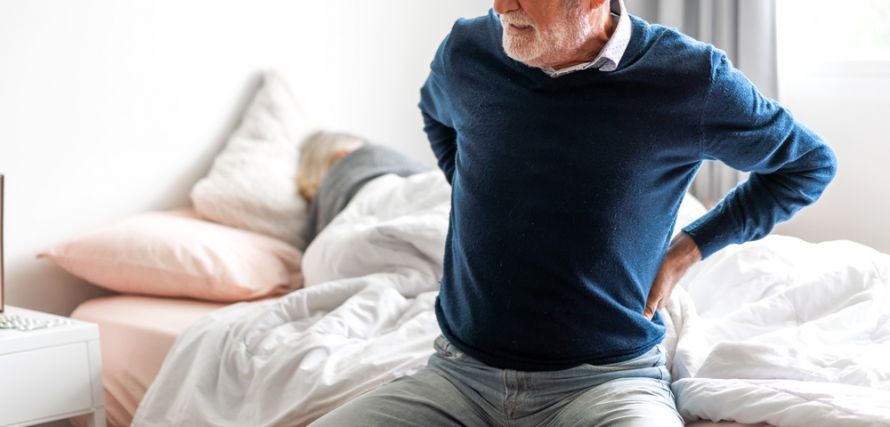 About 17% of all Germans are affected by long-lasting, chronic pain @ Art_Photo /AdobeStock
Pain Medicine: The Path to an Optimal Treatment Strategy
With an understanding of how chronic pain differs from the ubiquitous and familiar acute pain, new therapeutic strategies have emerged.
While the focus with acute pain is on “getting rid of it,” the guiding principle for chronic pain is: “…don’t let pain turn into suffering…”.
The primary goals are therefore:
- Improving quality of life
- Participation in social life
- Maintaining and improving social functioning
High demands on pain specialists
This requires a great deal of specialized knowledge that goes far beyond the requirements of a board certification. Therefore, physicians can only begin training to become pain specialists once they have obtained board certification in the following areas:
- Neurology
- Neurosurgery
- Anesthesiology
- Orthopedics or
- General Medicine
In specialized postgraduate training, physicians learn and work in a highly practical setting under supervision.
A pain management specialist in private practice must:
- Provide evidence of their work experience and success
- Pass an examination administered by the State Medical Board
- Have a well-equipped practice with state-of-the-art equipment, facilities, and staff
- Conduct interdisciplinary pain conferences,
- Complete annual continuing medical education, and
- Pass graded quality audits
These high requirements are the reason why there is a shortage of young professionals in the specialty and in private practices.
Therapeutic Services Offered by Pain Specialists
Before the pain specialist begins the actual treatment, they ask themselves a question with far-reaching consequences:
What is the bio-psycho-social balance for my patient?
If the ratio is 33:33:33, then there is an equal emphasis on:
- Physically oriented therapeutic approaches (e.g., injections, infusions)
- Psychological approaches (e.g., psychotherapy, hypnosis) and
- Social approaches (e.g., promoting vocational rehabilitation, workplace accommodations, granting pensions)
Since the introduction of specialized pain therapy into the German healthcare system, pain medicine has undergone a transformation.
Initially, the focus was on the acute medical influences of the core disciplines (“neurosurgeons performed surgeries, anesthesiologists administered injections”).
Since then, there has been a growing awareness of the psychological aspects of the field. More and more pain therapists have gone on to complete specialized training to become psychotherapists.
It became clear that pain therapy cannot do without specialized psychotherapy. And modern psychotherapy cannot do without neuromodulation using stimulation and infusion techniques (rTMS, tDCS, ketamine infusions). The integration of all these aspects is what we now call modern pain therapy.

How do I find the best clinic or practice for pain medicine?
It is not possible to identify the “best clinic” or “top clinic” for pain medicine, as specializations and areas of focus are crucial.
The “Leading Medicine Guide” has identified and recognized industry leaders through a rigorous selection process. The Leading Medicine Guide Certificate guarantees multimodal and interprofessional care at the highest level, subject to continuous quality control.
What makes our doctors specialists in pain medicine?
The Leading Medicine Guide features only select, highly qualified medical experts and specialists. All pain medicine specialists possess a high level of professional expertise and have extensive experience in the field of pain medicine.

Sources
- S1-Leitlinie "Chronischer Schmerz" der Deutschen Gesellschaft für Allgemeinmedizin und Familienmedizin: https://www.awmf.org/uploads/tx_szleitlinien/053-036l_S1_Chronischer_Schmerz_2013-10-abgelaufen.pdf
- S2k-Leitlinie "Schmerzen" der Deutschen Gesellschaft für Neurologie: https://www.awmf.org/uploads/tx_szleitlinien/030-114l_S2k_Diagnose-nicht-interventionelle-Therapie-neuropathischer-Schmerzen_2019-09.pdf
- S3-Leitlinie "Epidurale Rückenmarkstimulation" der Deutschen Gesellschaft für Neurochirurgie e.V.: https://www.awmf.org/uploads/tx_szleitlinien/041-002k_S3_Epidurale_R%C3%BCckenmarkstimulation_2013-07_abgelaufen.pdf
- Deutsche Gesellschaft für Neuromodulation e.V. zur Neurostimulation: http://www.dgnm-online.de/patienteninfos/informationen-neurostimulation.php
- Deutsche Gesellschaft für Neuromodulation e.V. zur intrathekalen Pharmakotherapie: http://www.dgnm-online.de/patienteninfos/informationen-pharmakotherapie.php
- Deutsche Gesellschaft für Neurologie (DGN): www.dgnm-online.de/patienteninfos/informationen.php
[5, 8-10]
- Bushnell, M.C., et al., Effect of environment on the long-term consequences of chronic pain. Pain, 2015. 156 Suppl 1: p. S42-9.
- Jensen, M.P. and D.C. Turk, Contributions of psychology to the understanding and treatment of people with chronic pain: why it matters to ALL psychologists. Am Psychol, 2014. 69(2): p. 105-18.
- Tamme, P., Achtsamkeitsbasierte Schmerztherapie (ABST). Zeitschrift für Palliativmedizin, 2010. 11(05): p. P66.
- Tamme, P. and I. Tamme, Frei sein im Schmerz: Selbsthilfe durch Achtsamkeitsbasierte Schmerztherapie ABST. 2013: BoD–Books on Demand.
- Williams, A.C., Psychological therapies for the management of chronic pain (excluding headache) in adults. The Cochrane Library, 2013(2).
- Kuo, M.F., W. Paulus, and M.A. Nitsche, Therapeutic effects of non-invasive brain stimulation with direct currents (tDCS) in neuropsychiatric diseases. Neuroimage, 2014. 85 Pt 3: p. 948-60.
- Antal, A. and W. Paulus, Transkranielle repetitive Magnet- und Gleichstromstimulation in der Schmerztherapie. Schmerz, 2010. 24(2): p. 161-6.
- Zieglgänsberger, W. and S. Azad, Chronic Pain. Pathophysiology–New Therapeutic Targets.
- Müller, H., Neuroplastizität und Schmerzchronifizierung. AINS-Anästhesiologie· Intensivmedizin· Notfallmedizin· Schmerztherapie, 2000. 35(05): p. 274-284.
- Courtney Lee, M., * Cindy Crawford, BA,* and M. Anita Hickey, †, Mind-body therapies for the self-management of chronic pain symptoms. Pain Medicine 2014; 15: S21–S39, 2014. 15: p. 21-39.