When headaches occur frequently, they can take a heavy toll on the daily lives of those affected. Studies show that about 70% of the population suffers from headaches at some point during the course of a year. Women are affected more often than men. In most cases, headaches are harmless. You can safely treat them yourself with over-the-counter pain relievers containing the active ingredients acetylsalicylic acid, ibuprofen, or acetaminophen. However, it is important to note that pain relievers should not be taken long-term or on a daily basis, as regular use can actually contribute to recurring headaches.
Patients with chronic headaches who experience the following symptoms should see a headache specialist:
- Headaches lasting longer than 3 days
- Headaches occurring more than 10 times a month and
- Lasting longer than 3 months
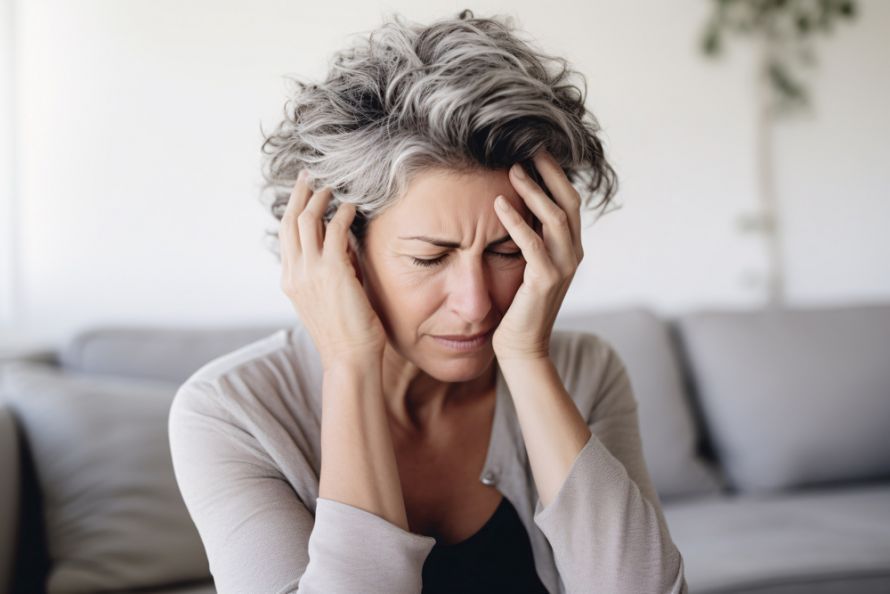
The causes of chronic headaches can vary widely @ Firn /AdobeStock
The Diagnosis
The specialist first tries to rule out a serious underlying condition as the cause of the headaches and to determine the type of headache.
To do this, it is helpful to describe the headaches in detail and to keep a headache diary in advance.
A medical emergency exists if headaches occur suddenly and severely and if neurological deficits (speech difficulties, paralysis) occur.
This is also the case if the headache is accompanied by a high fever, neck stiffness, or a seizure.
If nausea or vomiting also occur, this may also be a sign of a serious condition and should be evaluated by a doctor.
What types of headaches are there?
Doctors distinguish between primary and secondary headaches.
In primary headaches, the headache itself is the condition. All examinations of the head show no abnormal findings.
Examples of primary headaches include:
- Migraine headaches (typically characterized by increased sensitivity to light and facial pain, which often occurs on one side)
- Tension headaches and
- cluster headaches
In headaches of secondary origin, the headache is a symptom of another condition.
Secondary headaches occur in cases of:
- Fever
- Infections
- Vascular diseases, or
- brain tumors
Problems with the cervical spine, neck pain, or so-called facial pain can also cause secondary headaches.
The following types of headaches are the most common:
- Migraines
- Tension headaches
- Cluster headaches
- Medication-induced headaches
Treatment of Chronic Headaches
Doctors initially treat acute headache disorders with pain relievers. Ibuprofen or acetaminophen are frequently used for this purpose; in severe cases, specialized pain medications from the group known as triptans may also be prescribed. A pain specialist for headaches prescribes a stronger prescription medication to relieve the headache patient’s pain.
The following measures may also be helpful:
- Relaxation exercises
- Physical therapy
- Psychotherapy and
- Alternative headache therapies such as acupuncture
Other proven methods include autogenic training, endurance sports, stress management, and behavioral therapy approaches.
The headache specialist determines the appropriate treatment. The goal is to develop a personalized treatment plan that incorporates both medication and non-medication approaches.

Studies show that relaxation exercises relieve chronic headaches @ Syda Productions /AdobeStock
Headache Self-Test – What Type of Headache Do I Have?
Do you regularly suffer from headaches and migraines? The self-help group “Kopfweh” has published a simple online self-test on different types of headaches. Certain foods, such as alcohol, chocolate, MSG, or beverages high in caffeine, can also trigger headaches.
Click here for the self-test >>
FAQ
What is a chronic tension headache?
A chronic tension headache usually manifests as a pressing pain on both sides of the head that lasts for an extended period of time.
When should you see a doctor for a headache?
It’s especially important to see a doctor if headaches suddenly become very severe or are accompanied by neurological symptoms.
How are headaches diagnosed?
In addition to a medical interview, the diagnostic process includes physical examinations to rule out serious causes such as neurological disorders.
What non-medication therapies are available?
Treatment options include relaxation exercises, stress management, and techniques such as biofeedback or progressive muscle relaxation. The goal of these measures is not only to provide relief but also to prevent chronic headaches in the long term.
Share this article