
Chronic venous insufficiency (CVI)—also known as chronic venous insufficiency or venous insufficiency—is a venous disorder in which the patient’s lower legs do not receive adequate blood flow. This leads to pathological changes in the blood vessels, connective tissue, and skin surface. Chronic venous insufficiency primarily affects women.
Below you will find further information as well as a selection of specialists in chronic venous insufficiency.
What is chronic venous insufficiency?
Chronic venous insufficiency (CVI) is a condition affecting the veins in the legs, in which the patient’s lower legs do not receive adequate blood flow. This is usually caused by a backup in blood flow, which leads to increasing swelling of the tissue. The deep veins are usually affected, but in some cases the superficial veins are also involved. The veins dilate, the venous valves within them leak, and the oxygen-poor blood can no longer drain properly.
This results in pathological changes in the connective tissue and the skin’s surface.
These manifest as:
- Visible superficial veins
- Skin discoloration and thickening
- Non-healing wounds
- Significant fluid retention (edema)
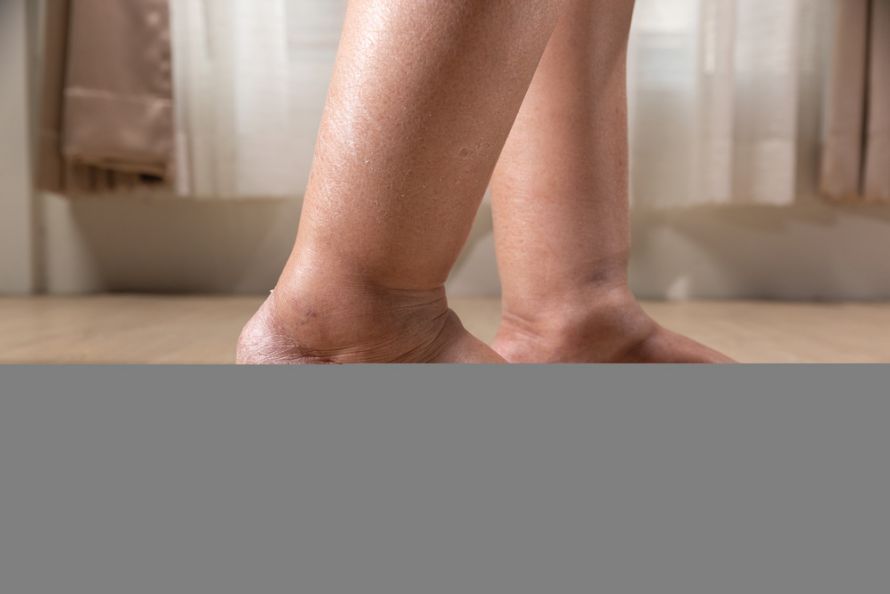 Edema occurs when lymph fluid accumulates and can no longer drain properly @ toa555 / Adobestock
This condition, also known as chronic venous insufficiency or venous insufficiency, primarily affects women. Although it is not life-threatening, you should not take it lightly. This is because the affected leg will require long-term care.
How does chronic venous insufficiency develop?
The main cause of chronic venous insufficiency is defective venous valves. They can no longer function properly or do so only inadequately. When they no longer close properly, venous blood flows back into the lower legs instead of returning to the heart. This leads to congestion in the lower legs.
This leads to excessively high blood pressure in the superficial veins: instead of the normal 20–30 millimeters of mercury (mmHg), it rises to 60–90 mmHg. This pathologically elevated venous pressure usually results in venous thrombosis. Patients are also prone to varicose veins due to a hereditary predisposition.
A venous thrombosis leads to increased pressure in the deep veins of the legs. This damages the venous valves and the walls of the blood vessels. The pooled blood causes the blood vessels to dilate excessively, leading to the formation of spider veins. Varicose veins develop when larger veins are damaged.
Why does skin damage occur in chronic venous insufficiency?
The blood vessels become permeable, allowing blood cells and fluid to leak into the surrounding tissue. This leads to chronic inflammation with hardened connective tissue and thickened subcutaneous cells. The skin no longer receives sufficient oxygen and nutrients because the metabolic exchange between the skin’s surface and the arteries is disrupted.
This results in skin damage caused by infections and allergic reactions. The upper layer of skin hardens and develops eczema (rashes) even from minor injuries. If left untreated, this can develop into an open leg (ulcer cruris). It most commonly develops in the area of the inner ankle, often as a result of varicose veins or damaged venous valves.
Because a patient with an open leg experiences severe pain, they adopt a protective posture and move less frequently. This often leads to stiffness in the ankle joint.
What are the risk factors for developing chronic venous insufficiency?
Patients with the following conditions are at increased risk for chronic venous insufficiency:
What are the symptoms of chronic venous insufficiency?
Experts classify chronic venous insufficiency into three severity levels:
- Grade I: Blue spider veins along the edges of the feet, resolving edema (tissue swelling).
- Grade II: Persistent edema. Yellowish to reddish-brown spots appear on the ankles.
- Grade III: Development of an open leg ulcer. The lower part of the lower leg is so hardened that the skin can no longer be lifted.
Other symptoms of chronic venous insufficiency include:
- Severe pain and intense feelings of tightness
- Weeping, scaly, reddish eczema (stasis eczema) that is extremely itchy and burning
- Slowed wound healing
Patients who notice one or more of the symptoms listed above should seek treatment from a specialist. The appropriate specialists are vascular surgeons or phlebologists (specialists in venous diseases).
Diagnosis of chronic venous insufficiency
Chronic venous insufficiency is easily recognizable to the naked eye. The examining physician can obtain further information through duplex sonography (Doppler sonography). Doppler sonography is a specialized ultrasound device that provides information about pressure conditions within the blood vessels. It also reveals changes in the vessel walls and surrounding tissue.
Treatment Options for Chronic Venous Insufficiency
To support the treatment of venous insufficiency, daily physical activity and elevating the legs in bed at night are recommended. Simply taking a 30-minute walk each day in comfortable shoes is sufficient. This also applies to CVI patients with open leg ulcers.
Milder cases of CVI can be effectively managed with symptomatic therapy. Simply elevating the legs for half an hour several times a day often helps the patient. This improves tissue perfusion and reduces existing swelling (edema).
If this is not sufficient, the next step is compression therapy. This involves regular manual lymphatic drainage or the use of compression stockings. The physical therapist uses manual techniques to promote the drainage of lymph that has accumulated in the tissues. The kidneys can then eliminate this lymph.
The compression stockings fit snugly enough to gently compress the veins. This reduces edema and supports the return of venous blood to the heart. The function of the venous valves improves. The patient no longer feels as though they are suffering from “heavy legs.”
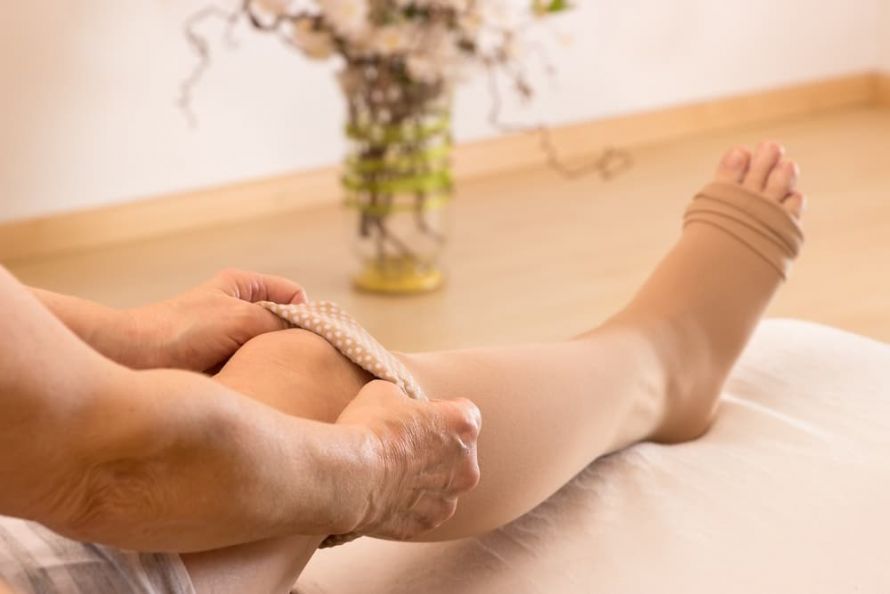 Medical compression garments include stockings, tights, or arm sleeves @ tibanna79 /AdobeStock
People with severely damaged venous valves must wear compression stockings for the rest of their lives; otherwise, the open leg will recur.
What medication options are available?
For the pharmacological treatment of CVI, doctors use pain-relieving and anti-inflammatory medications such as ibuprofen. While these medications do not eliminate the underlying cause, they do alleviate the symptoms.
Wound dressings with horse chestnut extract ointment can also help relieve chronic venous insufficiency. Weeping stasis eczema is treated with compresses containing oak bark extract, available at pharmacies.
Open leg ulcers can be effectively treated with iodine-based antiseptic ointments and polyurethane wound dressings.
What surgical procedures are available?
For patients with severe varicose veins, sclerotherapy or the complete removal of the prominently protruding blood vessels can help. This is usually performed as a vein surgery. This also normalizes venous blood flow.
If the patient suffers from poorly healing ulcers, doctors surgically remove the damaged skin area (shave procedure). They then apply a split-thickness skin graft.
For the split-thickness skin graft, doctors use a 0.3 mm-thick piece of skin from the patient’s thigh. A special device can then stretch it into a mesh, which promotes faster wound healing.
Doctors use fascial (connective tissue) surgery to release constricted arteries and leg muscles as well as hardened tissue cells. The goal is to restore better blood flow to the affected skin area and supply it with much-needed nutrients.
Can chronic venous insufficiency (CVI) be prevented?
To prevent chronic venous insufficiency from developing in the first place, you should engage in physical activity as often as possible.
Good options include:
- Swimming
- Walking
- Cycling
- Foot exercises
It is also recommended to reduce or avoid excess weight by eating a healthy and varied diet.
In cases of varicose veins accompanied by increasing leg swelling, it is recommended to have the affected veins surgically removed or sclerosed.
Patients with a blood clot should take blood-thinning medication for 3 to 6 months (or longer). They should also wear compression stockings for 1 to 2 years. Furthermore, even after this period has ended, you should continue to wear compression stockings and use thrombosis injections during situations involving physical strain, such as long flights.
Share this article

About the medical author
Prof. Dr. med. Susanne Regus
Medical Author
Prof. Dr. med. Susanne Regus – medical author: expert articles, professional insights and medical expertise in the Leading Medicine Guide.
View full expert profile →