Tinea capitis is also known as ringworm of the scalp. This fungal infection causes circular, scaly, hairless patches on the scalp. The condition is contagious and should therefore be treated immediately. Animals often transmit the pathogen to humans.
Here you will find further information as well as a selection of tinea capitis specialists and treatment centers.
Definition: What is tinea capitis?
Tinea capitis, also known as ringworm of the scalp, is an infection of the scalp. The infection is caused by dermatophytes, a type of filamentous fungus.
Since tinea capitis is contagious, it should be treated immediately when the first symptoms appear. Children are particularly susceptible because their immune systems are still developing.
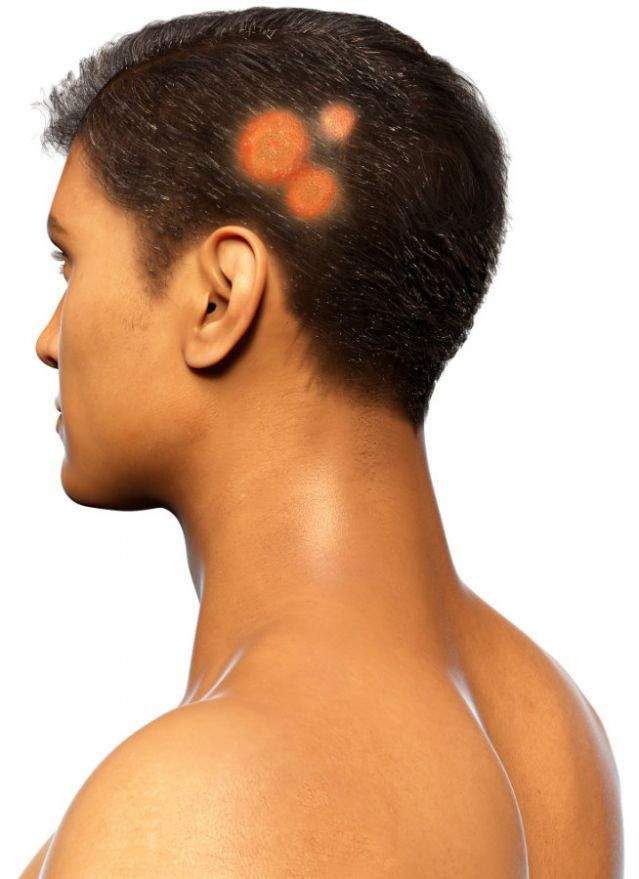
Typically, the fungal infection manifests as round, scaly, and hairless patches on the scalp.
The pathogen is often transmitted from animals to humans.
Causes of scalp ringworm
Ringworm of the scalp can be caused by various types of pathogens. These include, among others,
- Microsporum canis,
- Trichophyton mentagrophytes, and
- Trichophyton verrucosum.
In Central Europe, Microsporum canis is primarily responsible for scalp ringworm infections.
Microsporum canis is primarily transmitted by animals such as
- dogs,
- cats, or
- guinea pigs
. Animals often carry the infection without showing any outward signs. Children, in particular, are easily infected when petting these animals. Stray dogs and cats in Southern Europe are especially prone to tinea capitis.
In addition to animals, however, contaminated objects can also transmit the pathogen. These can include, for example,
- car seats,
- headrests, or
- stuffed animals
.
Transmission from person to person is also possible. When children play with their heads close together, the pathogen can be transmitted through the hair.
Symptoms of tinea capitis
Tinea capitis is always associated with a significant change in the skin’s surface.
Ringworm of the scalp can manifest in various ways. However, the symptoms do not clearly indicate the exact pathogen responsible.
Tinea capitis superficialis
A common form of ringworm of the scalp is tinea capitis superficialis. The causative pathogen in this case is usually Microsporum canis. This form of ringworm of the scalp presents as characteristic, circularly defined patches on the scalp.
The hairs growing in these areas break off just above the skin’s surface. As a result, only fine stubble is visible here at most. In addition, the circular areas are covered with a large number of gray, dense scales.
The number of hairless areas can vary from patient to patient. Some patients have only one such area, while others may have several.
If the pathogen Trichophyton is the cause of superficial tinea capitis, inflammation is often present as well.
Tinea capitis profunda
Another form of scalp fungus is tinea capitis profunda. The causative pathogen is Trichophyton verrucosum. Inflammatory reactions are also present in this case.
Pus-filled and severely inflamed areas appear on the scalp. These are often accompanied by crusting, and scars form on the patient’s scalp.
Other common symptoms include
- headaches,
- fatigue, and
- a mild fever.
In some cases, the affected person’s lymph nodes in the neck and nape of the neck may also be swollen. This form of tinea capitis is therefore very painful.
In most cases, this form of scalp ringworm is transmitted by cattle. However, transmission via contaminated objects and surfaces is also possible.
Diagnosis of Scalp Ringworm
The symptoms of tinea capitis are not specific. There are many other skin conditions that present with similar symptoms. Therefore, several medical examinations are usually necessary to definitively diagnose tinea capitis.
These include, for example,
- psoriasis,
- eczema associated with atopic dermatitis, or
- chronic contact dermatitis
are among the skin conditions with similar symptoms.
One method for diagnosing a scalp fungal infection is to use a direct smear. The doctor disinfects the site of infection with alcohol and removes a few hair shafts from the surrounding area. If necessary, any existing pus-filled crusts can also be removed with tweezers.
The tissue sample is placed on a microscope slide and coated with a TEAH solution or potassium hydroxide solution. It is then left in a humid chamber for about 5 to 10 minutes. This is followed by a microscopic analysis of the specimen. Under the microscope, a trained eye can identify the hyphae and spores of the pathogen. This confirms a scalp fungal infection.
However, the exact pathogen cannot be identified based on the microscopic examination alone. This requires the establishment of a fungal culture. The tissue sample is also used for this purpose.
Doctors cultivate the pathogens in the laboratory. The pathogens multiply at room temperature and form a culture. Over the next three to six weeks, the doctors monitor the culture once a week.
To identify the pathogen, they evaluate, among other things,
- the growth pattern,
- the growth pattern, and
- stain reaction.
Microsporum canis fluoresces under UV light. A simple diagnostic method is therefore to shine a Wood’s lamp on the infected areas. If the irradiated areas fluoresce yellowish-green, this is a clear indication of an infection caused by Microsporum canis.
Treatment of Tinea Capitis
Treatment for ringworm of the scalp varies depending on the type of pathogen and the patient’s age. Treatment for children differs from that for adults.
For adult patients, in addition to the antifungal agent griseofulvin, newer antifungals such as
- terbinafine,
- itraconazole, or
- fluconazole
are also used. These active ingredients are available in tablet form. Treatment continues until no pathogens are detected.
For children with scalp ringworm, however, only griseofulvin is currently approved in Germany. Children under one year of age often cannot tolerate this medication. If there is no other alternative, fluconazole may be used.
In addition to this systemic treatment, however, local treatment is always necessary. The antifungal agents are then applied directly to the affected areas. Antifungal medications used include, for example,
- ciclopirox olamine,
- terbinafine cream,
- tolnaftate, or
- tolciclate.
These medications are also recommended for close contacts to reduce the risk of infection. Their use shortens the duration of systemic treatment.
To reach all sites of infection, affected individuals must treat their entire head of hair daily with an antifungal medication for one week. They should also use a special shampoo twice a week.
The length of the affected person’s hair can also influence the duration of therapy. It may therefore be advisable to trim the hair or beard. Shaving alone significantly reduces the fungal load on the scalp. Shaving is recommended at the start of therapy, as well as 3 to 4 weeks later.
To ensure the treatment’s success, numerous follow-up examinations are also necessary. During these, the patient is checked for any remaining pathogens.
Treatment is considered complete when no pathogens are detected in the specimen or in the fungal culture.
In adults, tinea capitis heals more quickly than in children. Treatment of tinea capitis is therefore considerably more difficult in younger patients. Furthermore, not every patient tolerates the medication that would be best suited for treatment.
Treatment can take up to two weeks. It takes longer if there are weeping sores.
Precautions for Preventing Tinea Capitis
It is not possible to completely prevent infection with tinea capitis pathogens. However, certain precautions can reduce the risk of infection.
You should avoid touching animals that look unwell or show symptoms. This includes, above all, stray dogs or cats in southern countries. In particular, scaly, circular patches on the body are an important warning sign.
Regularly wash items that come into contact with the affected person’s head or hair in hot water. This helps prevent the spread of the infection and reinfection after treatment. These include
- clothing,
- headwear, or
- bedding.
Do not use
- hairbrushes,
- clothing, or
- towels
with other people, especially if they might be infected.
If you have been infected, you should see a doctor as soon as possible. Prompt treatment will prevent the spread of the infection and protect people you come into contact with.
After diagnosis and during treatment, you should have as little contact with other people as possible. This also includes taking time off from school, daycare, or work.
If your pet has spread the infection, you must have it treated by a veterinarian.
Share this article