Pityriasis versicolor is a fungal infection of the skin. It is caused by excessive growth of the fungus Malassezia furfur on the epidermis. If the fungus multiplies excessively, various symptoms may occur, such as irregular pigmentation or itching. The most characteristic sign of pityriasis versicolor is clearly defined circular patches. Their color differs from that of the surrounding skin.
Here you will find further information as well as a selection of specialists and centers for pityriasis versicolor.
Definition of Pityriasis Versicolor
Pityriasis versicolor is an infection caused by Malassezia yeasts. The infection is usually harmless and never contagious.
Symptoms include dandruff and patchy discoloration. These are primarily cosmetic issues, but they can be very distressing for those affected.
Only in rare cases does pityriasis versicolor lead to severe complications. In such cases, the hair follicles on the chest or back become inflamed. This condition is often mistaken for acne.
Prevalence and Distribution of Pityriasis Versicolor
Among skin conditions (dermatoses), pityriasis versicolor is one of the most common. Adolescents and young adults are particularly often affected. Toddlers and the elderly very rarely suffer from pityriasis versicolor.
People who have
- dandruff,
- excessive sweating, or
- seborrheic dermatitis
.
Pityriasis versicolor is found all over the world, but there are significantly more cases in regions with tropical climates. In regions with temperate climates, less than 5 percent of the population is affected by pityriasis versicolor. In comparison, experts estimate the prevalence in tropical countries to be as high as 40 percent.
The yeast can multiply particularly quickly in warm weather with high humidity. For this reason, pityriasis versicolor is especially common in the summer months in temperate climates.
Causes and Risk Factors of Pityriasis Versicolor
Malassezia yeasts are part of the natural skin flora. Almost every adult is infected with them. In healthy people, however, these yeasts do not cause disease.
The pathogen Malassezia furfur colonizes the epidermis starting in puberty. It prefers a warm, moist environment, such as that found on the back of the neck. Malassezia yeasts feed on lipids on the skin as well as on dead skin cells.
In a small number of people, these fungi can multiply excessively. This ultimately leads to the condition known as pityriasis versicolor.
To this day, the cause of this sudden, excessive proliferation in some people remains unclear. However, there are known risk factors for the transition from a harmless skin fungus to a fungal infection.
The greatest risk is a warm, humid climate combined with heavy sweating. These conditions provide yeast fungi with ideal conditions for proliferation.
People who
- who tend to sweat heavily or are overweight,
- have a weakened immune system or whose immune system is suppressed for medical reasons,
- who suffer from metabolic disorders such as diabetes mellitus, and
- who take certain medications, such as antibiotics or hormonal contraceptives.
Malassezia furfur feeds on skin oils. People with dry skin are very rarely affected by pityriasis versicolor. Therefore, oily skin creams are a possible cause of the development of pityriasis versicolor. These creams stimulate the production of sebum in the skin.
Symptoms of pityriasis versicolor
The main symptom of pityriasis versicolor is dark or light patches scattered irregularly across the skin. They can grow up to 2.5 cm in size.
The production and distribution of the pigment melanin are disrupted. This leads to hyperpigmentation or hypopigmentation of the skin. On the one hand, fungal colonies on the skin filter sunlight, inhibiting melanin production. On the other hand, pityriasis versicolor itself also produces pigments.
As a result, people with naturally fair skin are more likely to develop dark spots—that is, hyperpigmentation. In contrast, people with naturally brown skin are more likely to develop light spots. The color of the spots is closely related to the individual’s skin type. Nevertheless, light skin types may also develop light pink or pale spots.
Typically, the spots do not appear all over the body. They are usually limited to
- the neck,
- the shoulder area, and
- the chest area.
In some cases,
- the arms,
- the back, and
- the face
are affected by pityriasis versicolor.
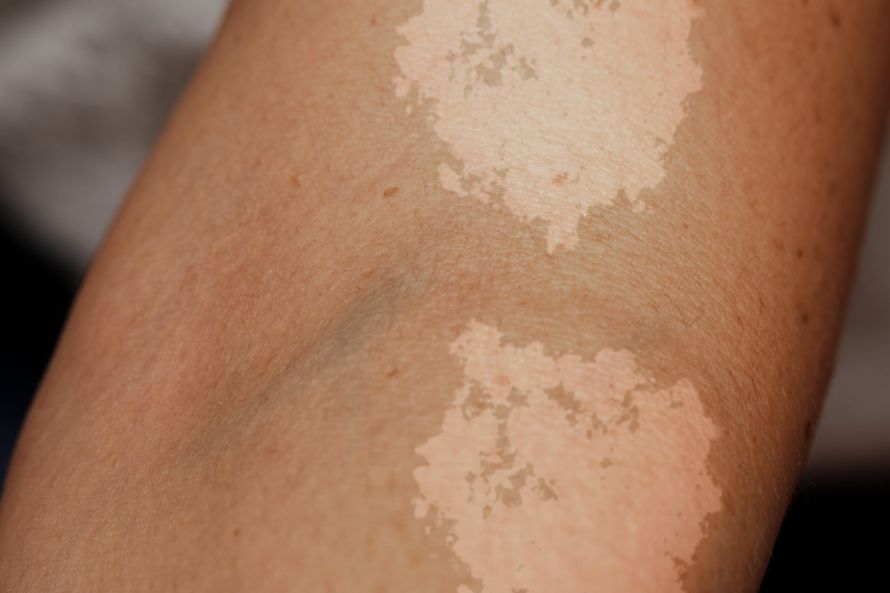
In addition, the skin may begin to flake. The skin then feels uncomfortably rough. In rare cases, pityriasis versicolor causes mild to moderate itching.
In female patients, inflammation of the hair follicles in the breast area may occur in rare cases.
Diagnosis of Pityriasis Versicolor
To diagnose pityriasis versicolor, the treating physician first performs a visual examination. During this examination, the physician pays particular attention to the appearance of the patches. The physician checks whether the skin patches are scaly or rough.
In addition, a medical history is necessary. The doctor will ask about other symptoms typical of pityriasis versicolor. The doctor will then take a small tissue sample by scraping off a few skin flakes from an area with pigmentation changes.
A suspected diagnosis of pityriasis versicolor can only be confirmed through microscopic examination of the scraped-off skin flakes.
A variety of conditions can cause symptoms similar to those of pityriasis versicolor. The doctor must rule out such conditions during the medical history interview.
For example, if a patient is experiencing severe itching or pain, pityriasis versicolor is highly unlikely. Syphilis and leprosy can also cause symptoms similar to those of pityriasis versicolor. However, these conditions are very rare.
A number of skin conditions can also cause hyperpigmentation or hypopigmentation.
Treatment of Pityriasis Versicolor
Pityriasis versicolor responds very well to treatment. Nevertheless, it may recur the following summer and will then require further treatment. Depending on the individual case, there are various treatment approaches.
Even with successful treatment, however, it can take weeks or months for the skin to return to its normal appearance and heal completely.
Antifungal medications are used to treat fungal infections. They can be applied topically to the affected areas or taken orally so that they affect the entire body.
Topical Treatment of Pityriasis Versicolor
Topical medications are applied directly to the areas affected by pityriasis versicolor. These antifungal agents are available as
- ointments,
- soaps, or
- creams.
.
Because of the hair on the scalp, the fungi can easily survive there. Those affected should therefore also use a special shampoo.
For most people, using these special personal care products once or twice a day is sufficient. Treatment can be completed after about two weeks.
Systemic Treatment of Pityriasis Versicolor
In more severe cases of pityriasis versicolor, treatment must be systemic. This is necessary when topical treatment of pityriasis versicolor has failed.
If the hair follicles are affected, systemic treatment for pityriasis versicolor is usually initiated immediately. In such cases, the doctor prescribes an antifungal medication in tablet form.
Prevention of pityriasis versicolor
The causes and triggers of pityriasis versicolor are not yet fully understood. Therefore, it is difficult to take specific preventive measures. Nevertheless, there are a few tips that can help reduce the risk of developing pityriasis versicolor.
Tip 1: Check Your Personal Care Products
Especially during the summer months, make sure your skin isn’t too oily. Some personal care products contain oils that stimulate the skin’s sebum production. This, in turn, promotes the development of pityriasis versicolor. These include, for example, sunscreen lotions.
Be sure to avoid using oil-based skin creams and shower gels.
Skin that is on the drier side makes it harder for yeast to spread. In addition, you should use soaps that have a pH level similar to that of your skin. Natural soaps with a pH of about 5.5 are best.
Tip 2: Choose appropriate clothing
Tight-fitting clothing made of synthetic fabrics promotes sweating in hot temperatures. This also encourages the development of fungal infections.
Loose-fitting cotton clothing is recommended. Cotton absorbs sweat, preventing a damp film of sweat from forming on the skin. Loose-fitting clothing allows for adequate air circulation.
Tip 3: Personal Hygiene
Proper personal hygiene using the right hygiene products is extremely important. Regular showering with pH-neutral shower gel also removes excess yeast.
However, don’t overdo it with hygiene. Washing the skin too often or with harsh cleansers damages the skin’s protective acid mantle. This, in turn, promotes the spread of yeast and thus also pityriasis versicolor.
Conclusion on Pityriasis versicolor
Pityriasis versicolor is a cosmetically bothersome but usually completely harmless condition. It primarily affects younger people during the summer months.
Pityriasis versicolor can be easily and effectively treated with antifungal medications.
Share this article