Do you experience lower abdominal pain when you’ve been sitting for a while and then stand up? Do you avoid sudden movements with your feet because they cause a sharp, painful twinge? Is your bike just sitting in the basement because riding it is so painful? If so, you may be suffering from pubic bone inflammation.
Here you’ll learn everything about this painful pelvic condition. You’ll also find a list of selected specialists who treat pubic bone inflammation and pubic bone pain.
What is pubic bone inflammation?
Pubic bone inflammation is also known as osteitis pubis or pubalgia. It is a reaction to overuse of the pubic symphysis. To better understand this, it helps to first take a look at our anatomy.
The pubic bone is located in the pelvis. It is the front part of the pelvis, consisting of two bones that converge—the pubic rami.
Between them lies the pubic symphysis, which doctors refer to as the symphysis. The symphysis is surrounded by firm connective tissue. Excessive strain causes microscopic tears in this connective tissue and in the capsular and ligamentous structures. These tears ultimately trigger pubic symphysis inflammation.
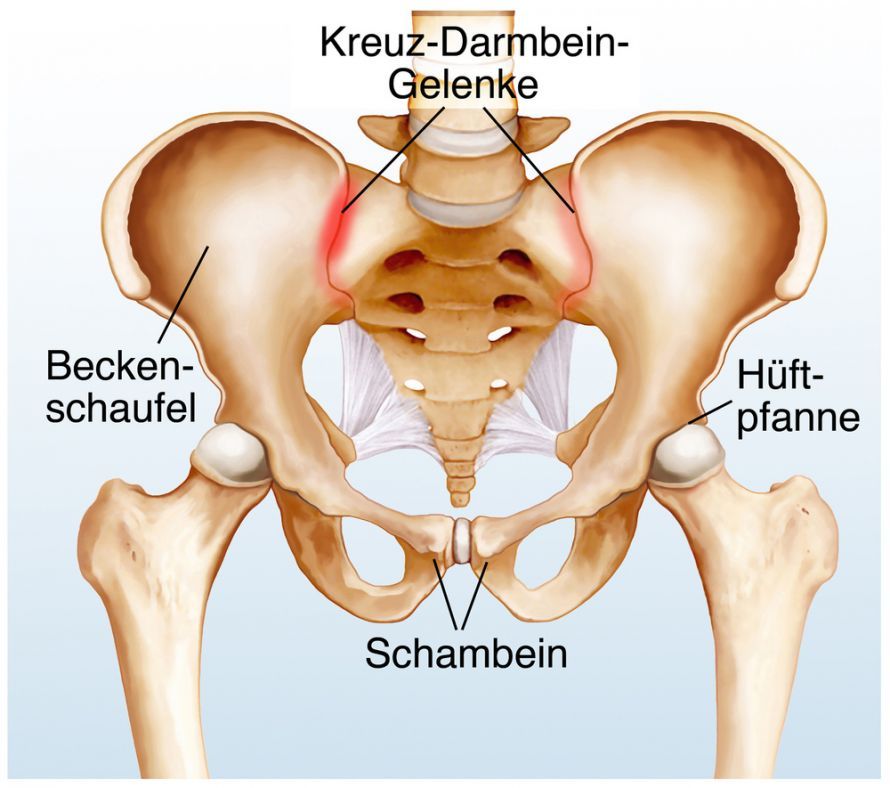 There is a left and a right pubic bone; the pubic symphysis connects the two @ Henrie /AdobeStock
What are the symptoms of pubic bone inflammation?
Typical symptoms of pubic bone inflammation include pain in the pubic bone. The diagnosis is often difficult for doctors because the pain radiates. As a result, doctors are often unable to pinpoint the cause.
In addition, the intensity of the pain increases gradually. What you currently perceive as merely uncomfortable may become painful in a few weeks or months.
It often starts with an uncomfortable pulling sensation in the thighs, similar to muscle soreness. Treatment is rarely initiated at this stage, which is why the next stage usually involves diffuse hip pain.
This pain may affect the groin or the adductors (which are part of the hip musculature). It’s also possible for the pain to radiate to the lower back or abdomen.
Another characteristic is that certain movements intensify the pain. These include placing one-sided strain on the hip, such as when you lift your knee while standing.
Climbing stairs, standing up after sitting for a long time, or doing sit-ups can also trigger sharp pain in the lower abdomen in cases of pubic bone inflammation.
In addition, the pubic bone and the symphysis become increasingly sensitive to pressure. This is due to fluid retention (edema) associated with the inflammation in the bone.
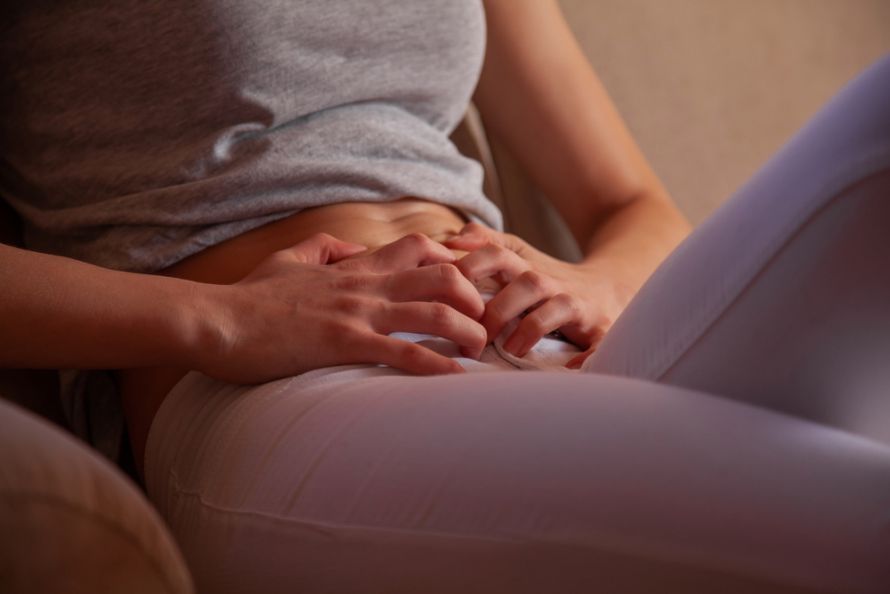 The cause of pubic bone inflammation is usually overuse @ georgpfluegl /AdobeStock
Causes and Risk Factors: How Does Pubic Bone Inflammation Develop?
The most common cause of pubic bone inflammation is prolonged overuse. This leads to microtears in the tissue surrounding the symphysis and ultimately to inflammation.
The strain comes primarily from muscular tension acting on the pelvis. Both the abdominal and adductor muscles run along the pubic symphysis.
For this reason, sports medicine specialists long believed that pubic symphysis inflammation primarily affected athletes. The condition occurs particularly frequently among soccer players, hockey or rugby players, hurdlers, and tennis players. This is because these sports involve jerky movements in the hip area.
However, it is now known that prolonged sitting also places one-sided strain on the abdominal muscles. This strain can likewise cause pubic bone inflammation.
Another, much rarer cause is a pubic bone fracture. This is caused by violent kicks or blows. In this case, however, more severe symptoms such as nerve pain and restricted movement occur.
In women, the condition sometimes occurs during pregnancy or after childbirth. This is due to hormonal changes that cause the ligaments to loosen and the symphysis to widen. The increasing weight of the fetus can ultimately lead to strain on the pubic bone.
Examination and Diagnosis: Identifying Pubic Bone Inflammation
Since the pain often radiates, it is sometimes difficult for sports medicine specialists and orthopedic surgeons to make the correct diagnosis. In any case, a detailed medical history—that is, a discussion of the patient’s lifestyle—is part of the examination. This allows the doctor to identify risk factors.
This discussion is supplemented by a physical examination. During this examination, the patient should perform certain movements, such as standing on one leg.
During this time, the patient should describe the intensity of the pain. The symphysis pubis gap test is also one of the standard examination methods. In this test, the doctor applies pressure to the pubic symphysis and assesses the level of pain.
To get a better picture of the structures in the pelvic area, the doctor often orders an X-ray or an MRI. This allows the doctor to assess the condition of the symphysis—such as widening—as well as the bone and any possible fluid accumulation (bone marrow edema).
Treatments for Pubic Symphysis Inflammation
Treatment for pubic symphysis inflammation is often a lengthy process. The condition rarely heals on its own. For this reason, orthopedic surgeons typically take a conservative approach initially.
Physical therapy and at-home exercises are intended to counteract the inflammation. Pain relievers and cortisone support the treatment. Taking a break from sports is most helpful.
If these measures are insufficient, you can try injections of cortisone or a local anesthetic. Most patients experience significant improvement afterward. Additionally, shock wave therapy is beneficial for reducing bone marrow edema and promoting healing of the tendon insertions.
As a last resort, surgery may be performed to treat pubic symphysis inflammation. During the procedure, doctors either debride the tissue around the symphysis. In particularly stubborn cases, stabilization of the pubic symphysis is performed in conjunction with groin stabilization.
Course and Prognosis: What Is the Course of Pubic Symphysis Inflammation?
Pubic symphysis inflammation rarely heals on its own, and when it does, it is usually in conjunction with rest. If left untreated, the pain can become chronic and increasingly impair the patient’s quality of life. Everyday movements then become limited.
Conclusion
The sooner a doctor diagnoses pubic symphysis inflammation, the faster it usually heals. Therefore, do not hesitate to see a sports medicine specialist or orthopedic surgeon if you experience pain!
If you’re suffering from pubic bone inflammation, conservative or minimally invasive surgical treatments can help you become pain-free soon.
Share this article

About the medical author
Sabine Schneider
Editor-in-Chief
Sabine Schneider – medical author: Explore expert articles and medical expertise in the Leading Medicine Guide.
View full expert profile →