Hyperhidrosis refers to pathological, excessive sweating that can occur regardless of physical activity or ambient temperature. While normal sweating is necessary for regulating body temperature, hyperhidrosis causes those affected to sweat profusely all the time—often on the hands, feet, underarms, or face. Sweat production is so pronounced that it can significantly interfere with daily life, social interactions, and even professional situations. Medical professionals distinguish between primary and secondary hyperhidrosis, depending on whether the cause lies in the sweat glands themselves or is triggered by other medical conditions. An accurate diagnosis is essential for selecting the appropriate treatment. Treatment options range from topical treatments and medications to minimally invasive or surgical procedures. Understanding the causes and treatment options allows individuals to better assess their hyperhidrosis and seek targeted treatment.
What Is Hyperhidrosis? Definition, Types, and Typical Symptoms
Hyperhidrosis (ICD code: R61) is excessive sweating caused by a dysfunction in sweat secretion. People who exercise a lot or engage in other forms of physical activity sweat more during these activities—a completely normal process.
However, when this increased sweating occurs for no apparent reason, doctors refer to it as hyperhidrosis. Common areas affected include the armpits, hands, and feet.
Hyperhidrosis can also manifest on the face. This is unpleasant for those affected, as it results in clearly visible beads of sweat on the face or large sweat stains on clothing.
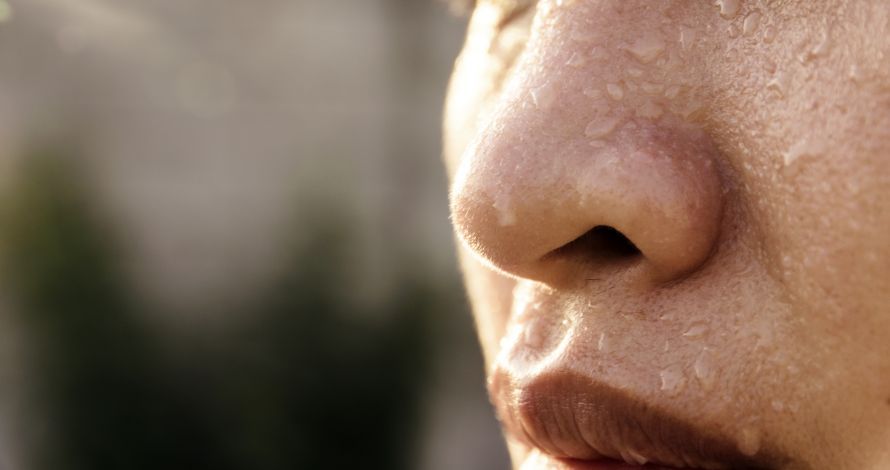
Excessive sweating on the face is typical of hyperhidrosis @ werayuth/Fotolia
Types of Hyperhidrosis
Depending on the cause and the affected areas of the body, doctors distinguish between different forms of hyperhidrosis. Primary hyperhidrosis is usually a congenital disorder in which the sweat glands are overactive without any underlying medical condition. The hands, feet, or armpits are frequently affected—this is known as focal hyperhidrosis.
Secondary hyperhidrosis occurs as a result of other triggers, such as hormonal changes, infections, metabolic disorders, or as a side effect of certain medications. In this form, those affected often experience generalized sweating, meaning it occurs all over the body. Accurate classification is important because it significantly influences the choice of treatment.
Diagnosis of Hyperhidrosis
Not all increased sweating is pathological or constitutes hyperhidrosis. Therefore, the physician conducts several tests to determine whether the condition actually matches this clinical picture.
One such test is the so-called iodine-starch test. This test helps identify areas of severe sweating. The mixture of iodine solution and starch powder applied to the skin turns brown where there is increased sweat production.
Doctors diagnose hyperhidrosis when certain threshold values are exceeded over a specific period of time.
To determine this, the gravimetric test is used. In this test, the doctor places a piece of paper on the affected area of skin. After a certain amount of time, the doctor removes it. The doctor compares the weight of the paper before and after the measurement to determine the value.
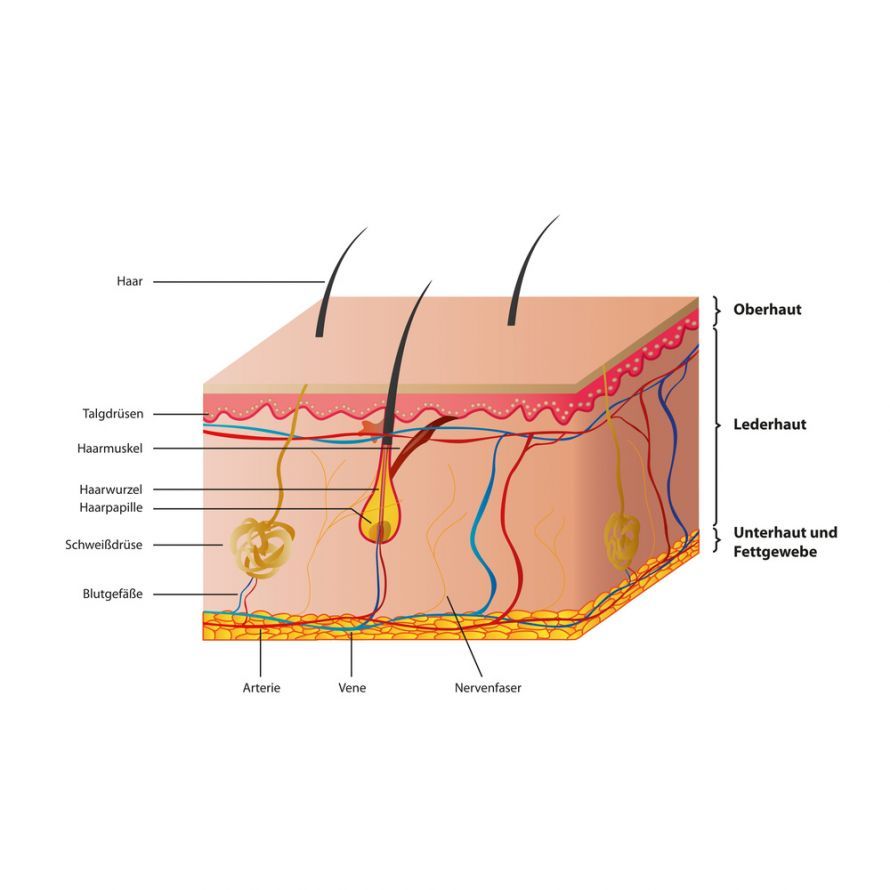
Layers of the skin @ bilderzwerg / Fotolia
Diagnostic Procedures for Evaluating Hyperhidrosis
In addition to the clinical examination, various tests are used to objectively determine the amount of sweat. The commonly used iodine-starch test visibly marks areas of heavy sweating and is particularly suitable for focal hyperhidrosis of the armpits, hands, or feet. In addition, gravimetry measures the actual amount of sweat produced by placing a filter paper on the skin for a defined period of time and then weighing it.
These values allow for a better assessment and documentation of the severity of hyperhidrosis. In addition, the doctor checks for possible triggers of a secondary form, such as hormonal disorders or the effects of medications. A structured diagnostic approach enables targeted treatment planning and helps avoid unnecessary treatments.
Hyperhidrosis – Causes and Treatment
In primary hyperhidrosis, the causes are unclear. Medical professionals assume that a certain predisposition is involved.
In secondary hyperhidrosis, however, other factors may also play a role. For example, menopause can be a cause in women, as hormonal balance changes significantly during this time.
Circulatory disorders or chronic infections are also among the possible causes of hyperhidrosis.
In extreme cases, however, malignant diseases such as lymphomas or other cancers may also contribute to the development of hyperhidrosis. Another cause is obesity.
Treatment of Hyperhidrosis
There are various ways to treat hyperhidrosis. If hyperhidrosis occurs primarily in the underarm area, you can try products such as antiperspirants.
These are available as sprays, roll-ons, or creams. Initially, you should apply the product daily. With long-term use, you can later reduce the frequency to once or twice a week. This is referred to as topical therapy.
There are also other options. Treatment with a neurotoxin is used to reduce sweating.
The doctor injects the toxin directly into the skin under the armpits. However, results may vary from patient to patient. This treatment falls under the category of systemic denervation.
Systemic therapy, on the other hand, relies on the use of psychotropic medications. However, there are no conclusive studies on this approach yet.
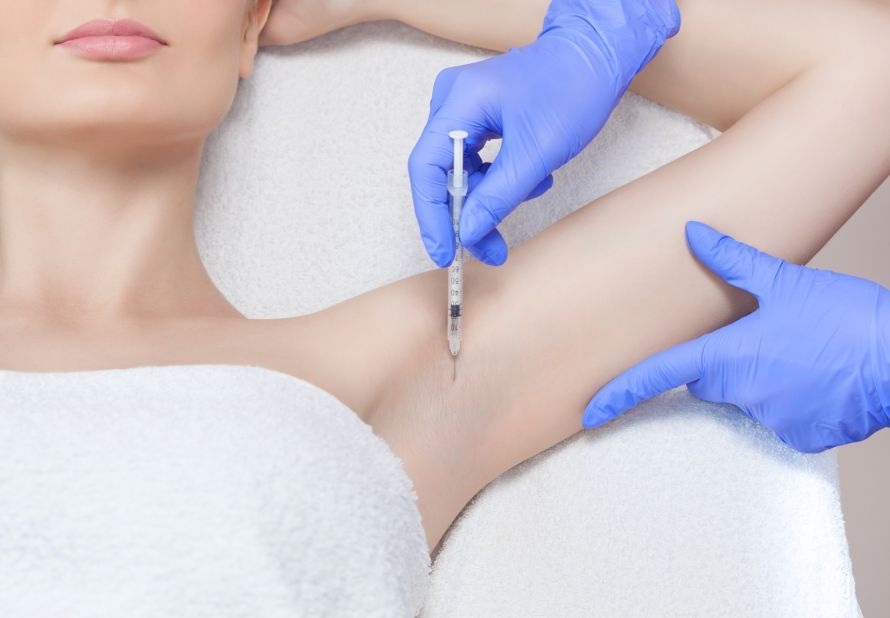 Treatment with a neurotoxin @ Dimid / Fotolia
Surgical methods can also be used to treat hyperhidrosis. The removal of skin areas and sweat glands is no longer standard practice today; the reason being that it can lead to scarring and impaired wound healing.
Other surgical methods include suction removal of sweat glands (subcutaneous sweat gland suction curettage) and endoscopic transthoracic sympathectomy (ETS).
However, this method should only be used if other treatment methods have proven ineffective. This is because it can lead to potential complications such as compensatory sweating in other areas.
In addition, doctors should treat the underlying condition in cases of secondary hyperhidrosis. Individuals who sweat excessively due to severe obesity can benefit from weight loss as a supportive measure.
Possible treatment options:
- topical therapy
- Medications
- Surgery
- For secondary hyperhidrosis: treatment of the underlying conditions,
- weight loss
Prognosis for hyperhidrosis
The prognosis for hyperhidrosis depends largely on whether it is primary or secondary hyperhidrosis and on how well the underlying causes are identified and treated. In the primary form, the tendency toward excessive sweating often persists for life. Nevertheless, excessive sweat production can be significantly reduced in many patients through appropriate therapies, such as antiperspirants, tap-water iontophoresis, botulinum toxin injections, or surgical procedures like sympathectomy.
In cases of secondary hyperhidrosis, the prognosis is usually more favorable, as sweating often results from underlying medical conditions, hormonal changes, or the use of certain medications. Once the triggering factor is treated or eliminated, excessive sweating in daily life often improves noticeably.
In the long term, however, untreated severe hyperhidrosis can lead to significant distress—both physical (skin irritation, infections, body odor, eczema) and psychological (social avoidance, shame, stress). Early diagnosis of hyperhidrosis, precise identification of the affected body areas, and a personalized treatment plan for hyperhidrosis have been shown to improve quality of life. Close monitoring by a dermatologist is particularly helpful to ensure optimal management of treatment effectiveness, side effects, changes in therapy, and long-term outcomes.
Impact on Daily Life and Psychosocial Consequences
Hyperhidrosis can significantly impair daily life. Many people affected experience excessive sweating not only as physically distressing but also as psychologically distressing. Visible sweat stains, damp hands, or wet clothing often lead to social insecurity and withdrawal in both professional and personal settings. Especially when experiencing heavy sweating on the hands, feet, or under the arms, many people avoid shaking hands, wearing tight clothing, or physical closeness.
The psychological distress can increase further when excessive sweating occurs unpredictably in daily life—for example, at rest, without heat or physical exertion. In these situations, many people perceive their sweating as a pathological symptom that they can no longer control. An early diagnosis and targeted treatment help reduce symptoms and restore self-confidence when interacting with others.
FAQ on Hyperhidrosis
What is the main symptom of hyperhidrosis, and how does it manifest?
The most important symptom of hyperhidrosis is excessive sweating that occurs regardless of temperature or physical activity. Those affected often notice visible sweat on their hands and feet, in their armpits, or on their face. In generalized hyperhidrosis, the entire body sweats, whereas focal hyperhidrosis affects only specific areas of the body, such as the palms, soles of the feet, or armpits. If such symptoms occur, those affected should consider the possibility of hyperhidrosis.
What are the possible causes of excessive sweating, and when is it considered hyperhidrosis?
The causes of hyperhidrosis are varied. In the primary form, it is believed to result from a dysfunction of the sweat glands, which are overactivated by the neurotransmitter acetylcholine. The secondary form arises from various causes, such as hormonal changes, infections, or the use of certain medications. Doctors diagnose hyperhidrosis when the amount of sweat is significantly above physiological needs and the excessive sweating interferes with daily life.
What forms of hyperhidrosis are there?
Medically, several forms are distinguished:
• Primary hyperhidrosis – congenital, usually focal, and without an identifiable underlying condition.
• Secondary hyperhidrosis – resulting from other medical conditions or external factors.
• Axillary hyperhidrosis – heavy sweating in the armpits.
• Palmar hyperhidrosis – sweating of the palms.
• Plantar hyperhidrosis – sweating of the soles of the feet.
• Generalized hyperhidrosis – widespread sweating over the entire body.
The diagnosis and treatment of primary hyperhidrosis are primarily based on the severity of the condition and the level of distress it causes.
How is hyperhidrosis diagnosed?
Hyperhidrosis is diagnosed clinically and using standardized tests. One method used is the iodine-starch test, in which affected areas are coated with an iodine solution and then dusted with starch powder. If the skin turns dark, this indicates increased sweat production. Gravimetric measurements or imaging techniques may also be used to more accurately assess the affected glands and body regions.
What treatment options are available for hyperhidrosis?
The treatment of hyperhidrosis depends on the severity and the affected body area. Options include antiperspirants containing aluminum chloride, which locally reduce sweat production in the glands, as well as tap-water iontophoresis for the hands and feet. Botulinum toxin injections can also temporarily block the sweat glands. In severe cases, surgical procedures such as sympathectomy may be considered. Doctors select the most appropriate treatment from among the various options available to best suit the individual’s situation.
What can people with hyperhidrosis do on their own to alleviate their symptoms?
People with hyperhidrosis can significantly reduce their symptoms by wearing breathable clothing, losing excess weight, practicing regular skin care, and avoiding triggers that cause sweating. Aluminum chloride preparations often help with axillary hyperhidrosis, while regular use of iontophoresis is effective for palmar or plantar forms. If individuals continue to suffer from severe sweating despite these measures, dermatologists can initiate further treatment for hyperhidrosis.
When should you seek medical help?
Medical evaluation is advisable if everyday symptoms and treatment options are insufficient, if those affected suffer from severe hyperhidrosis, or if the symptoms appear suddenly. Generalized hyperhidrosis, in particular, may indicate hormonal or internal medical conditions. If sweating also affects the tops of the hands or feet, or if the condition significantly limits daily activities, targeted medical treatment should be considered.
Share this article