
Neurology is an important branch of medicine. The human nervous system is extremely complex. Disorders can manifest in a variety of ways. Pediatric neurology deals exclusively with the nervous system of children and nervous system disorders. The focus is on the physical and mental development of infants, children, and adolescents, as well as potential disorders of the nervous system.
Pediatric neurologists are specialists in the nervous system of children
Pediatric neurologists—more correctly referred to as pediatric neurologists—specialize in neurological disorders in children and adolescents. Their residency training lasts three years and follows the five-year residency program to become a board-certified pediatrician.
During their training to become pediatric neurologists, physicians learn:
- diagnostic and treatment options for disorders of the central, peripheral, and autonomic nervous systems, as well as
- musculature in childhood and adolescence
An important part of neuropediatrics is developmental neurology.
Neurodevelopmental disorders can affect the following areas:
- Language
- Social interaction
- Memory, or
- Perception
- Learning disabilities such as dyslexia or dyscalculia
- intellectual disabilities, as well as
- ADHD (Attention-Deficit/Hyperactivity Disorder)
 2 to 6 percent of children and adolescents suffer from pathological attention deficits and motor restlessness (ADHD) @ Photographee.eu /AdobeStock
Using various diagnostic methods, the pediatric neurologist can assess the child’s physical and mental development. If necessary, the neurologist can also develop a treatment plan to support the child’s development.
Another relevant area of focus in children is movement disorders. These usually originate in the motor nervous system.
In contrast, cerebral movement disorders are usually caused by congenital or acquired brain damage. Premature infants are particularly frequently affected.
Pediatric neurologists also deal with seizure disorders. In this context, the pediatric neurologist evaluates acute seizures and chronic seizure disorders such as epilepsy.
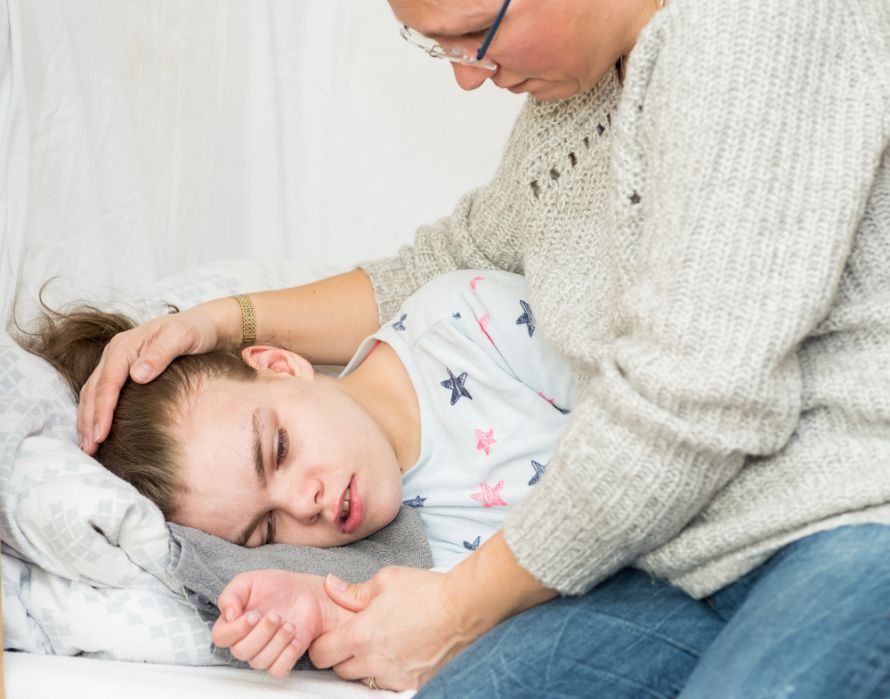 In children, epilepsy usually begins between the ages of 5 and 8 @ mjowra /AdobeStock
Common conditions treated by a pediatric neurologist
As soon as there is suspicion that a neurological disorder is causing the symptoms, the doctor refers the child to a pediatric neurologist.
Pediatric neurologists are experts in the following conditions and disorders:
- Diseases and damage to the nervous system caused by inflammation (facial nerve palsy), injury (nerve transection, traumatic brain injury), or poisoning (medications, heavy metals, solvents)
-
Congenital malformations of the central nervous system: enlargement of the fluid-filled spaces in the brain (hydrocephalus), Dandy-Walker cyst, spina bifida, or meningomyelocele; abnormalities in head shape
-
Motor and sensory impairments: hearing and vision impairments
-
Cerebral (originating in the brain) seizures and epilepsy
-
Neuromuscular and muscle disorders: Friedreich’s ataxia, multiple sclerosis, myelitis, muscle atrophy, myasthenia gravis, muscular dystrophy
-
Cerebral circulatory disorders: stroke, thrombosis, and vascular malformations
-
Neurometabolic disorders: diabetes mellitus and chronic kidney disease Neurodegenerative and neurogenetic disorders
-
Movement disorders and cerebral palsy: paralysis
-
Mental, motor, speech, and psychological developmental disorders and disabilities: autism spectrum disorders
-
Tumors of the nervous system: medulloblastoma, glioblastoma
- Headaches, neuropathic pain (nerve pain), and dizziness
 Spinal muscular atrophy type 1 is a congenital neurological disorder characterized by severe muscle weakness and muscle wasting @ Satjawat /AdobeStock
Diagnostic Methods in Pediatric Neurology
The process begins with a patient interview (medical history), behavioral observation, and a physical examination (reflexes, motor function, and sensation).
Afterward, the pediatric neurologist has various diagnostic procedures at their disposal.
Laboratory tests of blood and cerebrospinal fluid (CSF) can provide evidence of pathological changes.
An important neurological diagnostic procedure is the electroencephalogram (EEG). In this test, special electrodes measure the brain’s electrical activity. The EEG is used, for example, in the diagnosis of epilepsy.
Electroneurography can be used to examine peripheral nerves. Nerve conduction velocity and electromyography reveal electrical muscle activity in cases of muscle disorders.
Ultrasound examinations of muscles, the brain, and peripheral nerves can also provide clues to a possible cause of the symptoms.
Other imaging techniques used in collaboration with a radiologist include:
- X-ray examination
- Computed tomography (CT) and
- Magnetic resonance imaging (MRI)
Depending on the suspected diagnosis or condition, additional diagnostic methods may be performed, such as:
- ophthalmological procedures
- ENT procedures
- histological (microscopic) procedures
- endocrinological procedures (hormone testing, etc.)
- molecular genetic procedures
- Orthopedic or
- psychological procedures
Treatment Methods in Neuropediatrics
The therapeutic options are as diverse as the conditions in neuropediatrics. Treatment is therefore primarily based on the cause of the symptoms.
Since disorders of the nervous system often present a very complex clinical picture, care for these conditions is provided through an interdisciplinary approach.
For example, pediatric endocrinologists, neurosurgeons, orthopedic surgeons, or behavioral therapists may be involved in the child’s treatment.
In every case, the pediatric neurologist, in consultation with colleagues from other specialties, develops a treatment plan tailored to the individual patient.
In the case of a developmental disorder, for example, the doctor may draw on various support options. They may prescribe speech therapy or refer the patient to physical therapy or occupational therapy.
 A boy doing physical therapy @ phoenix021 /AdobeStock
Movement disorders also generally require interdisciplinary care from pediatric neurologists, occupational therapists, speech-language pathologists, and physical therapists.
Children who suffer from seizures are usually prescribed medication. Depending on the severity, surgery may be necessary.
About the medical author
Dr. Claus Puhlmann
Medical Author · Medical journalist
Dr. Claus Puhlmann – medical author: expert articles, professional insights and medical knowledge in the Leading Medicine Guide.
More about the medical author →Sources
- Bundesärztekammer (2013) (Muster-)Weiterbildungsordnung 2003 in der Fassung vom 28.06.2013. https://www.bundesaerztekammer.de/fileadmin/user_upload/downloads/20130628-MWBO_V6.pdf
- Gesellschaft für Pädiatrische Onkologie und Hämatologie, Gesellschaft für Neuropädiatrie (2016) Leitsymptome und Diagnostik der ZNS-Tumoren im Kindes- und Jugendalter. S1-Leitlinie. AWMF-Register-Nr.025/022. https://www.awmf.org/uploads/tx_szleitlinien/025-022l_S1_ZNS-Tumoren_Kinder_Jugendliche_2016-09.pdf
- Gesellschaft für Neuropädiatrie et al. (2015) Hereditäre und erworbene Neuropathien im Kindes- und Jugendalter, Differentialdiagnose. AWMF-Register-Nr. 022-027. https://www.awmf.org/uploads/tx_szleitlinien/022-027l_S1_Neuropathien_hereditaer_erworben_Kinder_Jugendliche_Differentialdiagnose_2015-04.pdf
- Heinen F., Berweck S. (2019) Neurologische Untersuchung bei Kindern und Jugendlichen. In: Hoffmann G., Lentze M., Spranger J., Zepp F., Berner R. (eds) Pädiatrie. Springer Reference Medizin. Springer, Berlin
- Kaindl A., Boltshauser E., Schwabe G.C., Bächli H. (2019) Entwicklungsstörungen des Nervensystems. In: Hoffmann G., Lentze M., Spranger J., Zepp F., Berner R. (eds) Pädiatrie. Springer Reference Medizin. Springer, Berlin
- Moog U., Blank R. (2019) Entwicklungsstörungen und Behinderungen. In: Hoffmann G., Lentze M., Spranger J., Zepp F., Berner R. (eds) Pädiatrie. Springer Reference Medizin. Springer, Berlin