The general term “finger prostheses” encompasses two different types of prostheses: the finger prosthesis, used when a finger is lost, and the finger joint prosthesis, which replaces a damaged finger joint in cases of rheumatism or osteoarthritis.
You can find more information here, including where to find finger prosthesis specialists.
When are finger prostheses used?
Finger prostheses can be used in a variety of situations:
- When fingers are lost as a result of a traumatic incident or a workplace accident. Partial amputations following crush injuries or other trauma are also possible.
- In cases of inflammatory conditions such as rheumatism, age-related wear and tear, and osteoarthritis, which lead to joint destruction in the fingers. Doctors can replace a damaged joint with a finger joint prosthesis.
Limitations in finger function can be life-altering. Both the loss of a finger and the limitations caused by joint damage lead to functional limitations of the hands in everyday life. Even simple tasks can become difficult or impossible.
In addition, the loss of finger joints or entire fingers can be a major psychological burden. Nevertheless, those affected may react to it in very different ways. For a pianist, for example, the loss of a finger can feel like the world is falling apart.
For many people affected, this ultimately leads to a desire for a replacement for the lost finger: a finger prosthesis. First and foremost, a finger prosthesis is intended to cosmetically replace the missing finger, as the artificial silicone finger is not functional. Therefore, psychological distress can be a medical indication for a finger prosthesis. Health insurance companies cover the costs only if there is a medical indication.
But it’s not just the loss of a finger that reduces quality of life. Joint damage caused by rheumatism or osteoarthritis can also cause fingers to stiffen quickly, making simple everyday tasks a challenge. In such cases, there is the option of implanting a joint replacement—a so-called finger joint prosthesis.
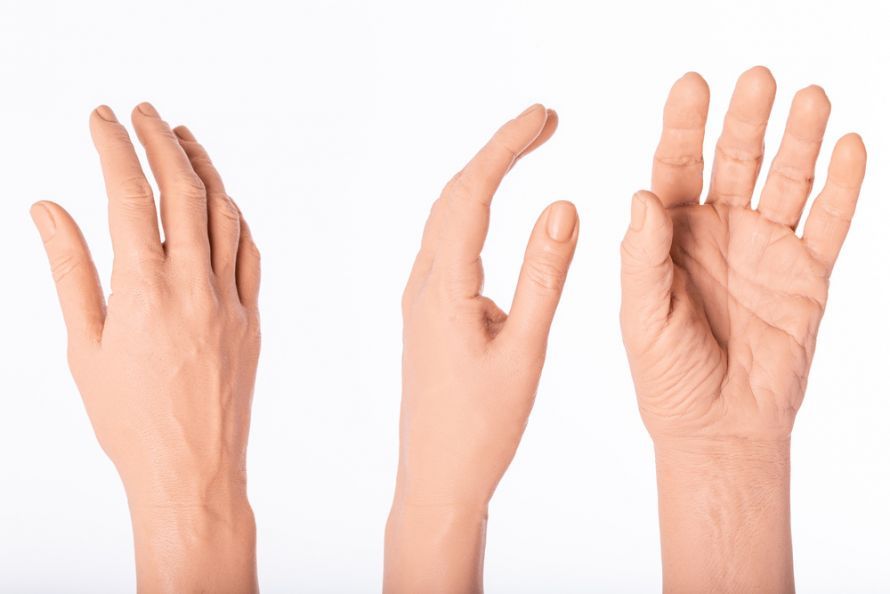 A finger prosthesis serves as a functional and cosmetic replacement for the missing finger @ sytnik /AdobeStock
The Process of Fitting a Finger Prosthesis
Several steps are required to create a finger prosthesis:
- Impression
- Fitting and
- Stump preparation
However, this requires close collaboration between doctors and prosthetic specialists to ensure that everything fits properly in the end.
The finger prosthesis takes over certain functions of the hand. At the same time, it serves an aesthetic purpose, as the artificial finger should resemble the original. This makes the finger prosthesis less noticeable in everyday life.
In finger joint replacement, doctors surgically replace an inflamed or damaged finger joint with an artificial joint. Through a small incision, finger joint prosthesis specialists gain access to the joint and can replace it. The natural finger retains its function.
What are the benefits of a finger prosthesis?
Many patients who have undergone finger amputations are reluctant to raise the affected hand or use it when gesturing. With a finger prosthesis, this becomes possible again. Patients can use both hands to point, gesture, or make signs.
In addition, a patient with a finger prosthesis can once again work with both hands. Natural grasping movements and previously lost types of grips are also possible again.
The situation is very similar with a finger joint prosthesis for rheumatism or osteoarthritis. Patients with a finger joint prosthesis can also grip again and work with both hands after healing and physical therapy.
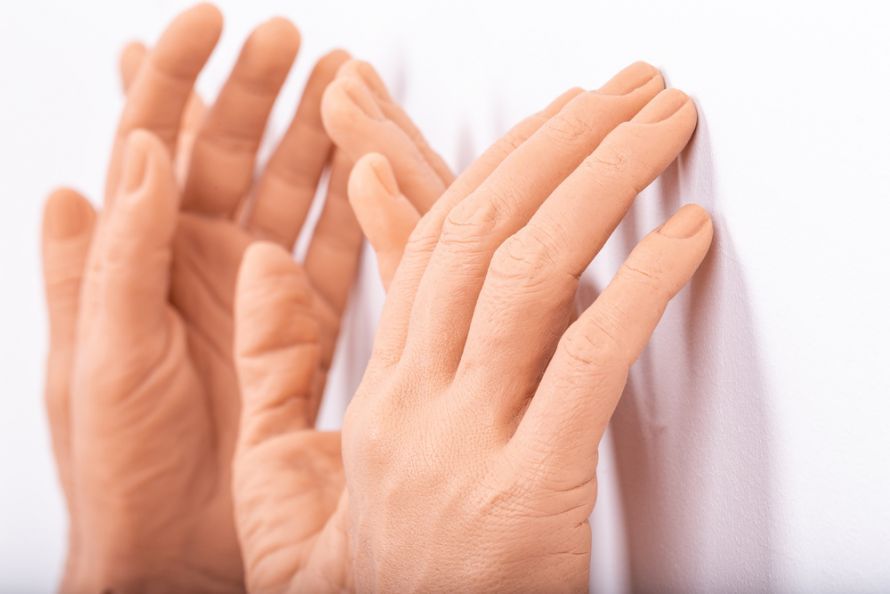 A silicone finger prosthesis realistically replicates the missing finger @ sytnik /AdobeStock
Follow-up Care for Finger Prostheses
A finger prosthesis requires follow-up care for the amputation stump. Doctors must monitor it and regularly check for pressure points or changes.
Since a finger joint prosthesis involves surgery, aftercare primarily consists of wound care and infection prevention.
Specific splints and physical therapy exercises are designed to speed up the rehabilitation of the hand and fingers.
Where can you find finger prosthesis specialists?
Specialists in orthopedics and trauma surgery are the go-to professionals for finger prostheses or finger joint prostheses. Finger prosthesis specialists work at experienced orthopedic and surgical centers.

Sources
gesundheitskompass-mittelhessen.de/810-moglichkeiten-der-versorgung-mit-fingerprothesen-nach-amputation-eines-oder-mehrerer-finger/
lexikon-orthopaedie.com/pdx.pl?dv=0&id=00438
prothesen-orthesen.de/leistungen/prothetik/handprothese/
springermedizin.de/oedeme/postoperative-behandlung-von-fingergelenkprothesen/13303960