Stress incontinence is the most common form of urinary incontinence. It occurs when urine leaks involuntarily during physical exertion—such as coughing, sneezing, or climbing stairs. The cause is usually weakness of the urethral sphincter or reduced stability of the pelvic floor. Women, particularly those who have given birth or are going through menopause, are frequently affected, but men can also suffer from stress incontinence following prostate surgery. Targeted treatment for stress incontinence—ranging from pelvic floor exercises to surgical procedures—can significantly improve quality of life.
What Is Stress Incontinence? Causes and Treatment
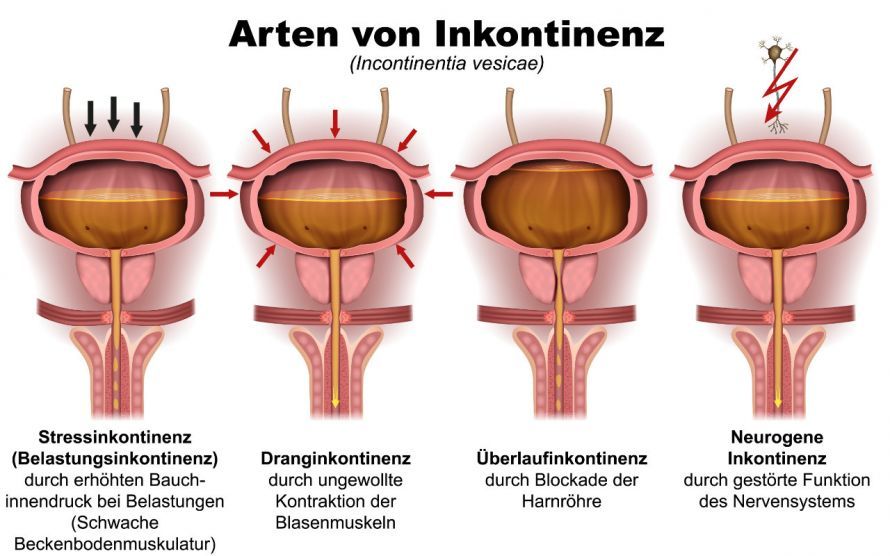
Stress incontinence is the most common form of urinary incontinence and affects both women and men. It occurs when the bladder sphincter or the pelvic floor muscles are weakened. As a result, the urethra can no longer remain closed during physical exertion such as coughing, sneezing, laughing, or climbing stairs.
A typical symptom is the involuntary loss of urine without a prior urge to urinate. The problem occurs when pressure builds up in the abdomen, causing a brief increase in pressure on the bladder—for example, during exercise or heavy lifting.
The most common cause is damage to the pelvic floor muscles following childbirth or abdominal surgery. Being overweight, hormonal changes during menopause, or prostate surgery in men can also trigger stress incontinence.
Medically, a distinction is made between different forms of stress incontinence. The condition is considered a highly relevant issue, as it affects approximately 20–30 percent of women and can significantly impair quality of life.
Thanks to modern diagnostic methods—such as urodynamics, cystoscopy, or an examination of the bladder neck—the cause can usually be determined with a high degree of accuracy. This allows doctors to recommend targeted forms of treatment—ranging from conservative therapy to surgical intervention.
Stress incontinence occurs during physical exertion © bilderzwerg | AdobeStock
Staging and Severity Grades of Stress Incontinence
Stress incontinence is classified into grades 1 through 3 based on severity. This classification helps in selecting the appropriate treatment for stress incontinence:
| Grade | Description | Typical triggers |
|---|---|---|
| Grade 1 | Mild urine leakage only during strenuous physical activity | e.g., coughing, sneezing, laughing |
| Grade 2 | Urine leakage during everyday activities | e.g., walking, climbing stairs, exercising |
| Grade 3 | Urine leakage without physical exertion, even while lying down or at rest | indicates an advanced form of stress incontinence |
For grades 1 and 2, conservative treatment—such as targeted pelvic floor exercises, electrical stimulation, or biofeedback—can usually lead to a significant improvement in symptoms.
For Grade 3, surgery is often necessary—such as a sling or tape procedure, which stabilizes the bladder neck and supports the urethral closure mechanism.
This form of stress incontinence differs significantly from urge incontinence, in which a sudden urge to urinate is the primary symptom.
Risk Factors for Stress Incontinence
Stress incontinence frequently occurs in older adults, but it can also affect younger women and men. Women, particularly after pregnancy and childbirth, often suffer from weakened pelvic floor muscles, which means the bladder sphincter is no longer adequately stabilized. Stress incontinence can also occur in men following prostate surgery.
Several risk factors increase the likelihood of developing stress incontinence:
- Excess weight (obesity): Pressure on the abdomen and bladder increases, which can lead to involuntary urine leakage.
- Hormonal changes: After menopause, estrogen levels drop, which can weaken the pelvic floor and the urethra.
- Pregnancy and childbirth: The stretching of the pelvic floor and potential damage to the muscles or the bladder neck significantly increase the risk of stress incontinence in women.
- Pelvic surgery or abdominal surgery: Procedures involving the bladder or uterus can impair the urethra’s closure mechanism.
- Physical strain: Frequent lifting, coughing, or sneezing lead to a recurring increase in abdominal pressure, which weakens the pelvic floor over time.
- Chronic lung diseases or smoking can lead to persistent coughing, which places additional strain on the pelvic floor muscles.
Ethnicity also plays a role: Studies show that Caucasian women are affected more frequently than Asian or African women. Overall, stress incontinence is considered the most common form of urinary incontinence in women, while in men it usually occurs following prostate surgery.
Diagnosis of Stress Incontinence
The diagnosis of stress incontinence involves several steps. The goal is to determine the causes and severity of the condition in order to plan the appropriate treatment for stress incontinence.
1. Medical History and Physical Examination
The process begins with a detailed discussion of the symptoms of stress incontinence:
- When does urine leakage occur (e.g., when coughing, sneezing, laughing, or during physical exertion)?
- How strong is the urge to urinate, or how often does urine leakage occur?
- Are there any pre-existing conditions, such as obesity, childbirth, or abdominal surgery?
The doctor will palpate the pelvic floor to check whether the pelvic floor muscles are weakened.
2. Functional Tests
Various tests are used to diagnose stress incontinence:
- Voiding diary: Recording fluid intake, bathroom visits, and involuntary urine leakage
- Cough provocation test: Observation of potential urine leakage when coughing
- Pad test: Measurement of the amount of urine lost
- Urinalysis (Stix, Uricult): To rule out a urinary tract infection
3. Imaging and Instrumental Diagnostics
In unclear cases or to prepare for surgical treatment, additional tests may be performed:
- Urodynamic testing: Measurement of pressure in the bladder and urethra to assess the closure mechanism
- Cystoscopy (bladder examination): Examination of the bladder and urethra for structural changes
- Pelvic floor ultrasound: Assessment of the musculature and the position of the bladder and urethra
4. Assessment of Severity
Following the examination, stress incontinence is classified as Grade 1, 2, or 3.
This diagnosis is crucial for deciding between conservative therapy (e.g., pelvic floor exercises) and possible surgical treatment.
Treatment of stress incontinence
Treatment for stress incontinence depends on the severity (Grades 1–3), the cause, and the patient’s overall health. A basic distinction is made between conservative therapy and surgical treatment.
Conservative Treatment
In the early stages (usually grades 1 and 2), conservative therapy is the primary approach:
- Targeted pelvic floor exercises: strengthen the pelvic floor muscles and support the bladder sphincter. This is considered the most important measure for reducing involuntary urine leakage.
- Biofeedback or electrostimulation: promote proper muscle awareness and improve muscle function.
- Medication: The active ingredient duloxetine can increase the closure pressure of the urethra and alleviate urinary leakage.
- General measures: Weight loss, quitting smoking, and avoiding severe coughing relieve pressure on the pelvic floor.
Surgical Treatment
If conservative methods are insufficient or if grade 3 stress incontinence is present, surgery may be appropriate.
The most common procedures are:
- Sling or tape procedures (TVT/TOT): A small tape-like structure is placed under the urethra to stabilize the closure mechanism.
- Burch colposuspension: Lifts the bladder neck to restore urinary closure.
- Surgical Treatment for Men: Following prostate surgery, an artificial sphincter or a sling implant can help treat stress incontinence in men.
These procedures are minimally invasive, usually performed under general anesthesia, and result in significant improvement or complete continence for most patients.
Pelvic floor exercises for the treatment of stress incontinence
Pelvic floor exercises form the basis of any treatment for stress incontinence—in both women and men. It strengthens the pelvic floor muscles and the bladder sphincter, allowing for better urine retention.
Targeted exercises can significantly reduce urine leakage when coughing, sneezing, or laughing.
Regular training over several weeks can effectively alleviate symptoms in cases of mild to moderate urinary incontinence (Grades 1–2). Specialized physical therapists help patients engage the correct muscles and perform pelvic floor exercises correctly.
Men also benefit from this—especially when stress incontinence occurs following prostate surgery. In these cases, the training supports the function of the bladder sphincter and can help restore continence more quickly.
Additional Treatment Options
If stress incontinence persists despite training, there are complementary options:
- Biofeedback or electrostimulation can enhance the effectiveness of the exercises.
- In cases of severe stress incontinence in men or women, a tape or sling can be surgically implanted to stabilize the bladder neck.
- A surgical solution is usually recommended only after conservative measures have been exhausted.
Depending on the diagnosis of stress incontinence, the doctor will determine whether surgical treatment is necessary. However, if stress incontinence occurs early on, the symptoms can usually be managed with targeted exercises and behavioral therapy.
Stress incontinence should be discussed openly—the earlier treatment begins, the better the chances of success.
FAQ: Common Questions About Stress Incontinence
What exactly is stress incontinence?
Stress incontinence—also known as strain incontinence—refers to involuntary urine leakage that occurs during physical exertion, coughing, sneezing, or laughing. The cause is usually a weakened bladder sphincter or weakened pelvic floor muscles, which prevents the pressure in the abdominal cavity from being balanced.
How is stress incontinence diagnosed?
Depending on the type of incontinence, the diagnosis is made through a combination of medical history, physical examination, and specialized tests such as the cough provocation test or urodynamics. The goal is to determine the severity (grades 1–3) and initiate targeted treatment.
What treatment options are available?
Treatment options for stress incontinence include pelvic floor exercises, biofeedback, electrical stimulation, and, in severe cases, surgical intervention. In such cases, a sling may be placed under the urethra or at the bladder neck to stabilize the closure mechanism. Medication with duloxetine can also provide additional support.
Who is particularly affected by stress incontinence?
Stress incontinence often affects women after childbirth or during menopause, as hormonal changes can weaken the pelvic floor muscles. However, men—especially after prostate surgery—can also suffer from stress incontinence. Overall, up to 30 percent of women are affected at some point in their lives.
Can stress incontinence be prevented or cured?
Yes—in many cases, stress incontinence can be improved or even completely cured. Early pelvic floor exercises, maintaining a healthy weight, and minimizing severe coughing relieve pressure on the pelvic floor and help prevent urinary incontinence. In severe cases, surgical treatment can permanently restore continence.
Share this article