
A parathyroid adenoma is a benign growth of the parathyroid gland. This leads to overactivity of the parathyroid gland (hyperparathyroidism) and an increase in blood calcium levels (hypercalcemia).
Learn more about parathyroid adenomas here and find selected specialists for the treatment of this parathyroid disorder.
What is a parathyroid adenoma?
A parathyroid adenoma is a benign growth of the parathyroid gland. Doctors refer to the parathyroid glands as endocrine glands located on either side of the thyroid gland.
Like the thyroid gland, they produce hormones. The hormone produced by the parathyroid glands is parathyroid hormone.
A parathyroid adenoma causes excessive secretion of parathyroid hormone, leading to overactivity of the parathyroid gland (hyperparathyroidism).
Parathyroid hormone increases the concentration of calcium in the blood and promotes the release of calcium from the bones, kidneys, and intestines. As a result, patients with a parathyroid adenoma experience an increase in blood calcium levels (hypercalcemia).
A healthy parathyroid gland regulates calcium balance via parathyroid hormone and a feedback mechanism. Once a physiological calcium level is reached, parathyroid hormone production decreases.
In the case of an adenoma, this feedback mechanism does not function properly. The hormone is produced uncontrollably, leading to:
- Increased calcium release from the bones
- Calcium absorption in the intestines
Symptoms of a parathyroid adenoma
If high levels of calcium remain in the blood over the long term, pathological changes occur.
The following are frequently affected:
- Kidneys
- Stomach
- Intestines
- Musculoskeletal system
Hyperparathyroidism causes symptoms that are often very nonspecific. As a result, patients usually go through a long course of illness before a diagnosis is made.
The following symptoms may occur with a parathyroid adenoma:
- Vomiting and nausea
- Muscle weakness, tremors, bone pain, nonspecific joint and muscle pain
- Depressive moods
- Memory problems and confusion
- Kidney pain and kidney stones
- Gastrointestinal ulcers and stomach pain
- Fatigue and exhaustion
Development of Parathyroid Adenoma – Causes & Risk Factors
A parathyroid adenoma is a tumor in the tissue of the parathyroid gland. It can occur on one side or both sides.
Tumors develop when cells become abnormal due to persistent inflammation or genetic mutations. Uncontrolled cell division leads to cell proliferation and, consequently, tissue overgrowth. The abnormal adenoma cells continuously produce parathyroid hormone.
In most cases, parathyroid adenomas occur sporadically and usually affect a single parathyroid gland (solitary parathyroid adenoma).
Less commonly, all parathyroid glands may be affected (multiglandular hyperplasia). In most cases, the cause of the degeneration and the development of the adenoma remains unknown.
Risk factors include:
- Trauma
- Injuries
- Radiation exposure to the neck region
- In rare cases, a parathyroid adenoma is associated with a genetic predisposition, such as:
- MEN (multiple endocrine neoplasia)
- FIHP (familial isolated hyperparathyroidism)
Women are affected by parathyroid adenomas more frequently than men. When it occurs, it usually develops between the ages of 50 and 60.
Examination Procedure and Diagnostic Methods
If a doctor detects elevated calcium levels during a routine blood test, a parathyroid adenoma may be a possible cause.
If patients report symptoms of hyperparathyroidism, a parathyroid hormone-producing adenoma is present in approximately 80 percent of cases.
Parathyroid hyperplasia or parathyroid carcinoma are less likely causes.
These conditions are initially considered in the differential diagnosis. Further tests will determine whether the diagnosis is correct or not.
To detect a parathyroid adenoma, the doctor uses the results of blood tests. In addition to the laboratory values (elevated calcium and parathyroid hormone), an imaging procedure (ultrasound) is usually performed.
In most cases, ultrasound can be used to locate and measure the enlarged parathyroid glands.
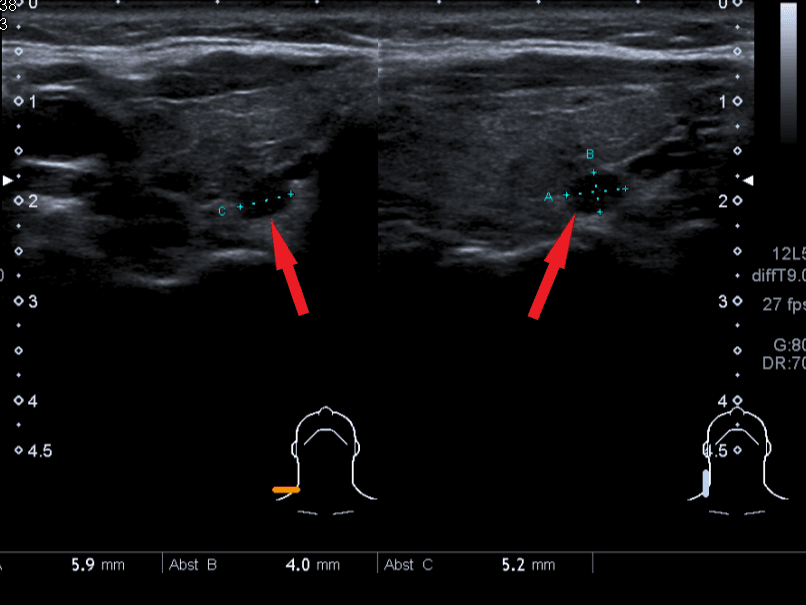
Fig. 1: Ultrasound showing a parathyroid adenoma (courtesy of Dr. Diekmeyer, OFA, Clinical Director of Nuclear Medicine, Bundeswehr Central Hospital, Koblenz)
An additional parathyroid scintigraphy confirms the location suspected on ultrasound in 90 percent of cases (Fig. 2).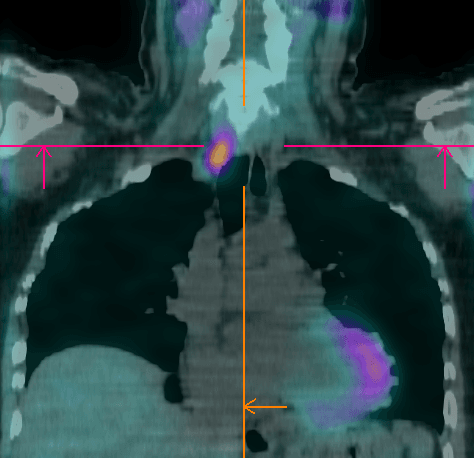
Fig. 2: Conventional parathyroid scintigraphy (late scan with SPECT/CT) showing a parathyroid adenoma (courtesy of Ms. OFA Dr. Diekmeyer, Clinical Director of Nuclear Medicine, Bundeswehr Central Hospital Koblenz)
If ultrasound and scintigraphy fail to definitively localize the adenoma, the following imaging modalities are used:
- 4D computed tomography (Fig. 3)
- 4D magnetic resonance imaging
- Choline PET-CT (Fig. 4)
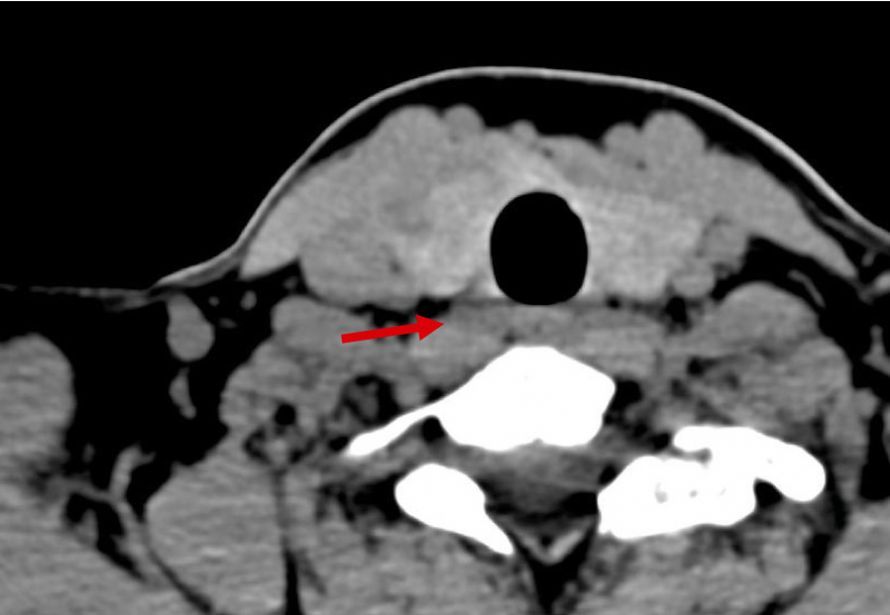
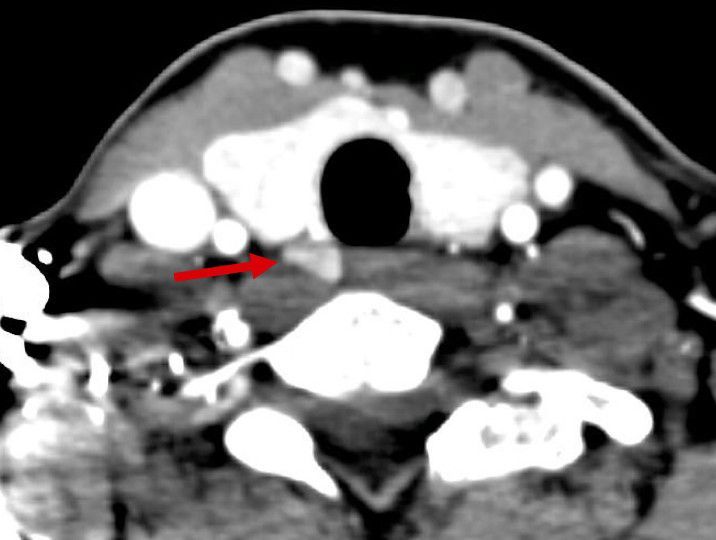
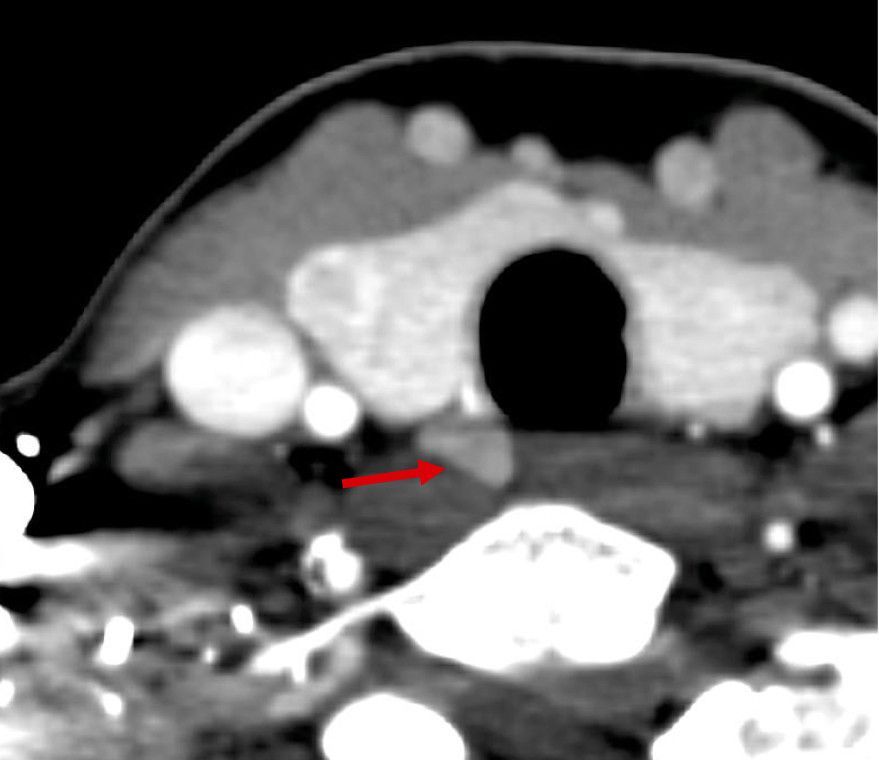
Fig. 3 a–c: Imaging of a parathyroid adenoma on 4D CT in the native, arterial, and venous phases, after neither ultrasound nor parathyroid scintigraphy could definitively localize the adenoma (reproduced with kind permission from Mr. OTA PD Dr. Waldeck, Clinical Director of Radiology and Neuroradiology, Bundeswehr Central Hospital Koblenz)

Fig. 4: Imaging of a parathyroid adenoma on choline PET-CT, after neither ultrasound nor parathyroid scintigraphy nor 4D-CT could definitively localize the adenoma (courtesy of Ms. OFA Dr. Diekmeyer, Clinical Director of Nuclear Medicine, Bundeswehr Central Hospital Koblenz)
Hyperparathyroidism is a consequence of a parathyroid adenoma. It can affect and damage many organs. Therefore, the physician orders additional examinations of all affected organs.
These range from urine analyses and ultrasound examinations of the kidneys and abdominal organs to X-rays of the bones (bone density) and an ECG.
Treatment Options and Specialists
In the case of a parathyroid adenoma, the primary care physician will refer the patient to a specialist. In addition to an endocrinologist, a nuclear medicine specialist may also be consulted. Depending on the symptoms and which organs are affected, treatment by other specialists—such as gastroenterologists, nephrologists, or neurologists—may be necessary.
Surgery on the parathyroid gland is the treatment of choice for managing the effects of primary hyperparathyroidism. Monitoring a parathyroid adenoma through regular medical checkups is only possible in asymptomatic cases.
For surgical removal of the adenoma, patients should seek treatment at a hospital specializing in endocrine surgery. These include certified centers for thyroid and parathyroid surgery (http://www.dgav.de/zertifizierung/zertifizierte-zentren.html).
In the case of a parathyroid adenoma, the surgeon removes the affected parathyroid gland (Fig. 5). In over 85 percent of cases, the tumor is unilateral and located in one of the caudal (lower) lobules of the gland.
To preserve parathyroid function and prevent a deficiency of parathyroid hormone, the healthy parathyroid glands are left attached to the thyroid tissue. A deficiency of parathyroid hormone is also referred to by physicians as hypoparathyroidism.
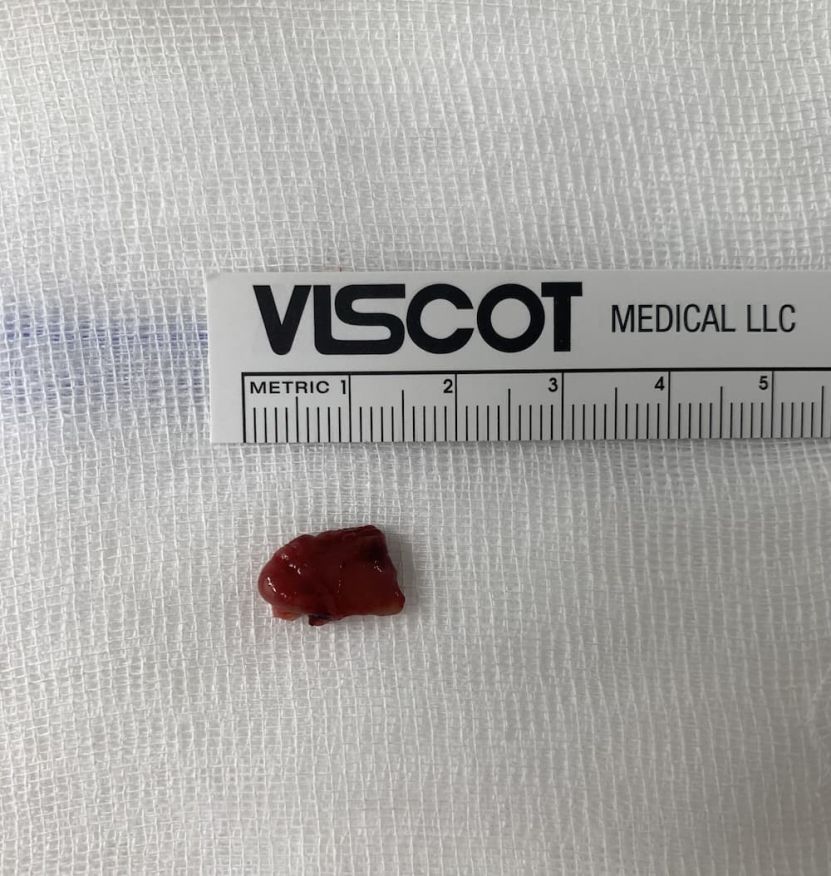
Fig. 5: Typical macroscopic appearance of a parathyroid adenoma following surgical removal (courtesy of Mr. OTA Prof. Dr. Schwab, Clinical Director of General, Visceral, and Thoracic Surgery, Bundeswehr Central Hospital Koblenz)
The surgery to remove the adenoma is performed under general anesthesia. The procedure can be carried out as a minimally invasive technique if a solitary adenoma is present.
Minimally invasive methods have the advantage of causing minimal damage to the tissue. In addition, the healing phase and recovery time after surgery are shorter. In cases of multiple adenomas and involvement of other thyroid lobules, the surgeon opts for a conservative surgical approach.
The vocal cord nerves and thyroid vessels run through the surgical area and are spared during tissue removal. To monitor the vocal cord nerves, doctors perform intraoperative neuromonitoring of the nerve.
A pathological examination of the removed parathyroid gland and measurement of parathyroid hormone levels are performed during the surgery. This allows doctors to ensure the success of the treatment.
Course of the Disease and Prognosis for a Parathyroid Adenoma
Primary hyperparathyroidism can be successfully treated by removing the overactive parathyroid tissue.
In the case of a solitary adenoma without severe organ damage, the patient has a chance of a full recovery. Parathyroid hormone levels and the function of the affected organs return to normal. After surgery, patients are given vitamin D and calcium supplements to compensate for the lack of parathyroid hormone and to stabilize calcium levels.
The prognosis is less favorable if there is organ damage to the kidneys or bones. Such damage is generally irreversible.
After the removal of the four parathyroid glands, it may be difficult to maintain stable calcium levels. This worsens the overall prognosis.
Long-term replacement therapy with calcium and vitamin D is insufficient in some cases. Therefore, in these instances, hormone replacement therapy with recombinant parathyroid hormone is the only option. Hormone replacement therapy has been in use since 2017, but it requires extensive endocrinological monitoring.
For parathyroid adenomas, treatment consists of removing the diseased tissue. Since the healthy part of the parathyroid glands takes over the function, many patients are symptom-free after surgery and a short recovery period.
However, regular follow-up visits are important to monitor calcium levels.
Share this article