Couples who have been unable to conceive can give their hopes of starting a family a boost with the help of modern reproductive medicine. Insemination plays a major role in this as a method of artificial insemination. There is a great need for information before undergoing such treatment. During the procedure, doctors use a catheter to insert processed, high-quality sperm into the uterus.
Here you’ll find more information and specialists.
Insemination (sperm transfer) is a method of artificial insemination used to treat infertility.
During the procedure, the treating physician uses a small catheter to insert sperm into the woman’s uterus. This makes successful fertilization—and thus pregnancy—more likely than with natural conception.
During mild hormonal stimulation, multiple follicles may mature. This results in an increased likelihood of a multiple pregnancy.
If significantly more than two follicles are detected during ultrasound monitoring, doctors will terminate the cycle. Insemination cannot take place. It is very unlikely that hyperstimulation syndrome will develop with mild hormonal stimulation.
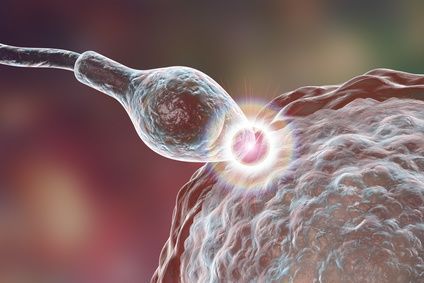
The beginning of a pregnancy: The sperm meets a female egg © Kateryna_Kon / Fotolia
Insemination (sperm transfer) is a method of artificial insemination for couples struggling to conceive.
During the procedure, the treating physician uses a small catheter to insert sperm into the woman’s uterus. This makes successful fertilization—and thus pregnancy—more likely than with natural conception.
Mild hormonal stimulation may result in the maturation of multiple follicles. This increases the likelihood of a multiple pregnancy.
If significantly more than two follicles are detected during ultrasound monitoring, doctors will terminate the cycle. Insemination cannot take place. It is very unlikely that hyperstimulation syndrome will develop with mild hormonal stimulation.
Requirements and Preparation for Insemination
Prerequisites for successful insemination include healthy (patent) fallopian tubes and a sufficient number of motile, fertilizing sperm.
Doctors first examine the anatomy of the female reproductive organs, such as:
- Vagina
- Cervix
- Uterus
This is done as part of a gynecological examination and a transvaginal ultrasound. This allows doctors to rule out anatomical causes of infertility.
The fallopian tubes are normally not visible on an ultrasound. To check for fallopian tube patency, a follow-up examination may be performed if necessary.
Options include a sonographic examination of fallopian tube patency using a contrast agent or a laparoscopy with chromopertubation and hysteroscopy.
In addition, doctors determine the woman’s hormone levels through blood tests.
For men, a laboratory analysis of the semen is performed first. This is done using a semen analysis, which assesses the characteristics of sperm quality.
A semen analysis includes:
- Sperm concentration and count
- Sperm motility
- Sperm morphology
However, insemination should not be performed in cases of blocked fallopian tubes or inflammation of the cervix.
Mild hormonal stimulation of the woman is usually administered before insemination. The goal is to allow 1–2 eggs to mature in the ovaries. However, this is associated with an increased likelihood of a multiple pregnancy.
Therefore, regular ultrasound examinations are necessary to determine the number and size of the stimulated follicles (follicles containing eggs).
Performing the Insemination
After doctors induce ovulation in the woman using medication, they insert the prepared sperm into the uterus. This is done using a catheter.
The processed sperm contains the most motile and fertile sperm cells.
Women can check the success of the treatment after about 14 days using a pregnancy test.
The first confirmation of pregnancy via ultrasound is possible only 3 weeks after insemination.

Having the Child You Want Through Insemination © AK-DigiArt / Fotolia
Chances of Success and Risks of Insemination
Very few women become pregnant after the first treatment. In most cases, three or four attempts are necessary before this artificial insemination leads to the desired outcome.
For one in five women, however, this method remains unsuccessful even in the long term. In such cases, these couples still have the option of undergoing IVF (in vitro fertilization) or ICSI therapy.
There are also risks, however. After the woman undergoes ovarian stimulation, the likelihood of a multiple pregnancy increases.
In extremely rare cases, hyperstimulation syndrome may also occur.
The following symptoms occur with hyperstimulation syndrome:
- Abdominal pain
- Nausea and
- Shortness of breath
In such cases, the patient should see a doctor immediately. However, this typically does not occur with mild hormonal stimulation, such as that commonly used in insemination procedures.
Ovarian hyperstimulation syndrome is typical of the hormonal stimulation used in IVF and ICSI treatments.
Requirements for coverage by statutory health insurance in Germany
The cost of insemination—per treatment and cycle—is approximately 200 euros. In addition, there are costs for medications.
Statutory health insurance plans cover 50% of the costs for:
- up to three inseminations with stimulation and
- up to eight inseminations without stimulation
The legal requirements set by statutory health insurance plans for sperm insemination in Germany are:
- The couple must be married
- Minimum age for both partners: 25 years
- Maximum age for the woman: 40 years
- Maximum age for the man: 50 years
- Both partners must test negative for HIV
- The woman must have immunity to rubella
- The doctor must draw up a treatment plan
Which specialists and specialized clinics perform insemination?
Insemination specialists are typically specialists in reproductive medicine. In addition, gynecologists and urologists can serve as points of contact for questions regarding fertility.
Inseminations are performed at reproductive medicine centers, university women’s hospitals, and private fertility clinics.

About the medical author
Dr. Stephanie Hübner
Medical Author · Tuebingen