Microneedling is a popular aesthetic treatment designed to improve skin texture and promote skin regeneration. During the procedure, a fine needle is used to create targeted micro-injuries in the skin layers.
This natural healing process stimulates the production of collagen and elastin. Microneedling is frequently used to treat wrinkles, acne scars, stretch marks, and pigmentation spots. The procedure can be performed using a dermaroller or a Dermapen.
The targeted stimulation of the skin boosts collagen production and improves the skin’s appearance over the long term. Microneedling is considered effective and can be used to treat various skin problems.
Microneedling: The Revolution in Anti-Aging Methods
There is still no magic formula for a lasting youthful appearance with beautiful, firm, and wrinkle-free skin. As we age, our skin inevitably develops larger pores.
However, many men and women want to conceal their age and radiate a youthful freshness.
Laser treatment makes the skin thinner with each session. Microneedling is a new and effective treatment method in anti-aging medicine for
- wrinkles on the face and décolletage,
- enlarged pores,
- thinning hair, or
- stretch marks.
Microneedling, also known as medical needling, does not require surgery.
There are no risks associated with microneedling treatment. Therefore, the procedure is an excellent alternative to a facelift.
- Microneedling for facial wrinkles: For facial wrinkles that aren’t extremely pronounced, microneedling acts like a facelift without a scalpel.
- Microneedling for thinning hair: Microneedling stimulates blood flow to the scalp, which can make hair significantly thicker.
- Microneedling for stretch marks and scar treatment
How exactly does microneedling work?
Microneedling involves making slight needle punctures in the upper layer of the skin. A so-called needle roller is used for this purpose. This is a roller equipped with hundreds of very fine, small needles. Needle pens are also suitable for microneedling.
These punctures trigger the skin’s natural wound-healing process. As a result, the body produces more collagen. Collagen is primarily responsible for the skin’s firmness and elasticity.
However, the effect of collagen production through microneedling is not visible immediately after the procedure. The body needs a certain amount of time to produce the collagen.
In general, microneedling with a derma roller can be used universally: on all areas of the body and for all skin types.
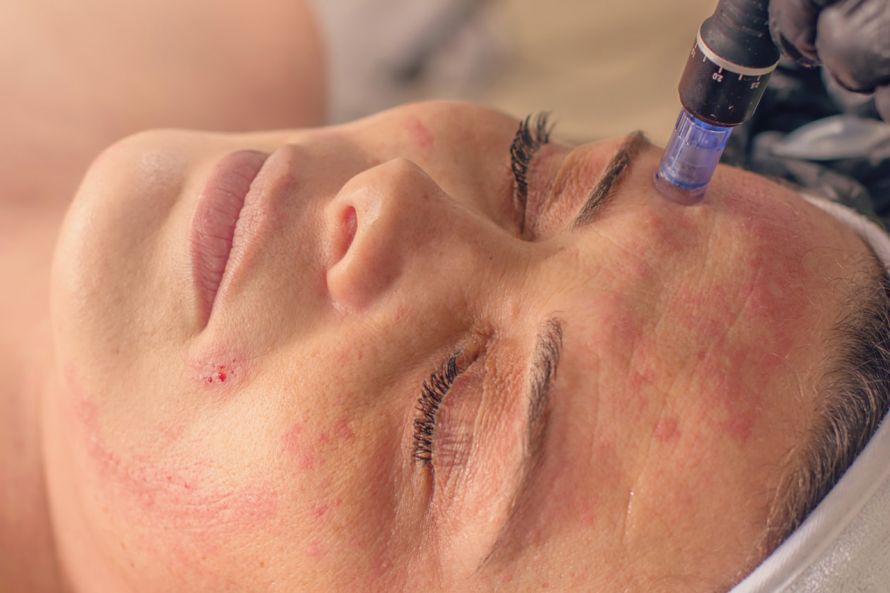
The Process of Medical Needling
In practice, a microneedling session proceeds as follows: The patient is applied a topical anesthetic cream to the areas to be treated. This must be left on for about 20 minutes.
The Dermaroller is then used to “roll” over the wrinkled skin vertically, horizontally, and diagonally.
This creates thousands of tiny micro-wounds. Deep within these invisible micro-wounds, collagen forms as part of the body’s natural wound-healing process. The very small puncture sites, approximately 1.5 to 2 mm deep, heal quickly and without scarring.
The skin will be slightly swollen and red afterward. The next day, the area will look like a mild sunburn. Avoid direct sunlight for a few days. You can continue working as usual.
The patient can apply a cream containing vitamins A and C to the treated skin areas daily. These vitamins support skin renewal and thus promote optimal results.
Benefits of Microneedling
With dermabrasion or laser treatment, layers of skin are removed. The thinner the skin becomes, the more sensitive it is to environmental factors, such as the sun. This can cause spots to appear on the skin or give it a parchment-like texture.
Microneedling is a so-called non-ablative procedure: Unlike other skin rejuvenation methods, microneedling does not thin the skin. Instead, medical professionals harness the skin’s natural regenerative abilities.
No artificial substances need to be injected into the skin.
Microneedling for Home Use
There are also rollers available for home use. However, the needles on these are not as long and do not actually penetrate the skin. It is a complementary measure, but the effect is by no means comparable to medical microneedling.
How often should microneedling be performed?
Microneedling is typically performed just once. If wrinkles are more pronounced, the treatment can be repeated after six months. For hair loss, four sessions are conducted at intervals of two to three months.
What is the cost of microneedling?
Depending on the extent of the treatment, the cost of microneedling ranges from €400 to €1,200 per session.
FAQ
What is microneedling, and how does the treatment work?
Microneedling is a cosmetic treatment in which fine needles create tiny micro-injuries in the skin. These stimulate the natural healing process as well as collagen production. Microneedling stimulates skin cells, which supports skin regeneration and promotes collagen production.
What skin problems can be treated with microneedling?
Microneedling is frequently used to treat facial wrinkles, acne scars, stretch marks, pigmentation spots, and enlarged pores. This effective method can also lead to visible improvements in sensitive skin or other skin concerns. The treatment of wrinkles is one of the most common applications.
What is the difference between the Dermapen and the Dermaroller?
In microneedling with the Dermaroller, a needle-tipped roller is rolled over the skin. Microneedling with the Dermapen, on the other hand, is performed using an electric pen whose needle operates vertically and can be applied with great precision. Both methods are considered effective, although the Dermapen often allows for more precise application.
What side effects can occur after microneedling?
After a microneedling treatment, temporary redness, mild swelling, and increased skin sensitivity may occur. These reactions are part of the natural healing process. To prevent infection and inflammation, the skin should be carefully cared for after the treatment, and makeup should be avoided initially.
How does microneedling improve the skin in the long term?
Microneedling is an effective method for promoting skin firmness and elasticity. The regeneration of collagen and elastin strengthens the outermost layer of the skin. Active ingredients such as hyaluronic acid or vitamin C can penetrate the skin more effectively after treatment. This improves the complexion, makes the skin appear firmer, and can increase the skin’s elasticity over the long term.