Coronary artery bypass surgery—whether minimally invasive or open—is a procedure capable of fully restoring the heart’s function in cases of coronary artery disease. In coronary artery disease, the coronary arteries are narrowed. During bypass surgery, the blood supply is rerouted. Today, heart surgery is a routine procedure with a high success rate. After the procedure, however, patients must make drastic changes to their previous lifestyle. For example, they should eat a healthy diet, exercise regularly, and monitor their blood pressure.
The Heart: Anatomy and Function
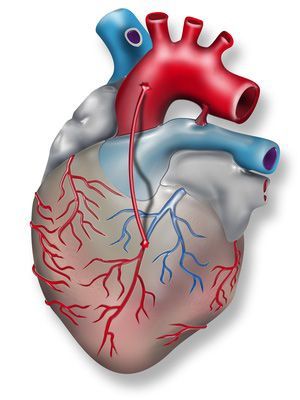 The heart is a muscle weighing approximately 300 grams, located between the two lungs, slightly to the left behind the sternum. The lower part of the heart rests on the diaphragm, which separates the chest cavity from the abdominal cavity. It is surrounded on both sides by lung tissue.
The heart consists of two chambers. The left side of the heart pumps blood through the aorta into the systemic circulation, while the right side supplies the pulmonary circulation. Each half of the heart consists of an atrium and a ventricle, and they are separated from one another by a septum. The ventricles are closed off by heart valves, which direct blood flow and prevent backflow into the atria. The coronary arteries surround the heart and supply the heart muscle with energy. The pericardium is the protective sac surrounding the heart; it is a double-walled sac into which the heart is enclosed from above.
Heart and circulatory diseases have been the leading cause of death in Germany for years. In most cases, those affected suffer from arrhythmias, heart failure, or coronary heart disease.
Definition, Symptoms, and Treatment of Coronary Heart Disease
Coronary heart disease (CHD) refers to the narrowing of the coronary arteries. This is caused by atherosclerotic deposits. As a result, the heart muscle can no longer be adequately supplied with blood and oxygen. This negatively impacts heart function. If multiple coronary arteries are narrowed, cardiac surgery experts typically recommend open-heart or minimally invasive bypass surgery.
Definition and Symptoms of Coronary Heart Disease
Coronary heart disease is a narrowing of the coronary arteries, which prevents the heart muscle from receiving an adequate supply of blood and oxygen. The narrowing is caused by atherosclerosis of the coronary arteries. Poor diet, smoking, alcohol, stress, and lack of exercise remain the main causes of coronary heart disease. Depending on the extent and location of the atherosclerotic deposits, the disease can manifest in very different ways. Shortness of breath, chest pain, or a feeling of tightness in the chest may be signs of coronary heart disease. As the disease progresses, the likelihood of developing arrhythmias, heart failure, a heart attack, or sudden cardiac death increases.
Treatment Options for Coronary Heart Disease
Cardiac surgeons typically diagnose coronary heart disease with certainty using ultrasound and/or MRI, which can visualize the non-functioning areas of the heart muscle. If the disease is still in its early stages, eliminating risk factors—such as smoking, lack of exercise, obesity, and an unhealthy diet—can go a long way toward preventing the disease from progressing further. In addition, medications can support heart function at this stage.
If the disease is more advanced, the procedures mentioned above are usually no longer sufficient. Cardiac surgery specialists recommend treating the narrowed areas with a balloon catheter and a stent. The area is first dilated and then stabilized with a stent (a metal mesh vascular support) to keep it open. However, the use of a stent always carries risks. The formation of blood clots or scarring, along with inflammation, are the most common side effects of a stent. It is therefore used only when there is just one or a few narrowings in the coronary arteries.
If the coronary arteries have atherosclerotic deposits in multiple locations, the cardiac surgeon will recommend a low-risk bypass procedure to achieve a lasting improvement in the blood and oxygen supply to the heart muscle. Bypass surgery may be considered if there is a risk of a heart attack, if all three coronary arteries show atherosclerotic narrowing, or if the main branch of the left coronary artery is blocked.
What is bypass surgery?
Bypass surgery is a procedure capable of fully restoring the heart’s function in cases of narrowing of the coronary arteries. During bypass surgery, the surgeon ensures the blood supply to the heart by creating a detour. Today, segments of veins or arteries are used as bypass grafts; artificial materials are used less frequently.
Bypass surgery has now become a routine procedure and is one of the most common types of heart surgery. Depending on the extent and location of the bypass, the procedure takes between two and five hours. In most cases, it is performed as open-heart surgery, but it can also be performed as minimally invasive bypass surgery.
Several types of graft material are available for bypass surgery.
- In an arterial bypass, the cardiac surgeon exposes an artery running along the inside of the chest and connects it to the coronary artery. The heart muscle, which previously received insufficient blood flow, can once again be adequately supplied with blood and oxygen. The advantage of an arterial bypass lies in its proximity to the heart, the long lifespan of the bypass, and the comparatively low risk of reocclusion.
- In a vein bypass, a small vein (about 5 cm long) is removed from the fatty tissue of the upper or lower leg. This vein is sutured to the coronary artery above and below the narrowing using thin sutures. Over time, the vein adapts to its new environment and transforms into an artery.
- An artificial bypass is now used only very rarely, as its functionality is quickly impaired by deposits. There is a risk of reocclusion.
Open-Heart Bypass Surgery
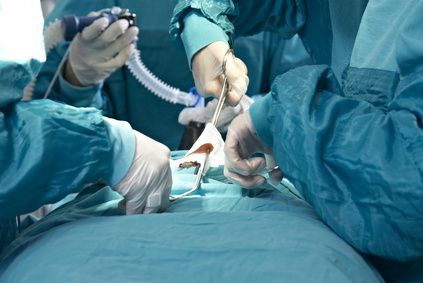 During open-heart bypass surgery, the patient is first placed under general anesthesia. The cardiac surgeon makes a longitudinal incision in the chest to expose the heart, and the pericardium is opened. Meanwhile, an assistant harvests the vein(s) from the arm or leg as needed.
To precisely implant the bypass grafts, the coronary arteries must be temporarily shut off. Two methods have become standard practice for this.
Heart-Lung Machine (HLM)
The patient is connected to a heart-lung machine (HLM). The HLM takes over the heart’s pumping function as well as lung function for a specific period of time, thereby maintaining circulation. The blood is pumped out through a system of tubes and returned to the body enriched with oxygen. The heart is immobilized with a cardioplegic solution for the specified duration.
OPCAB Method (Off-Pump Coronary Artery Bypass)
With the OPCAB method, the use of an HLM is not necessary. Stabilizers keep the heart’s surface over the coronary artery as still as possible. The bypass surgery can thus be performed while the heart is beating, and cardiovascular function is not impaired.
The bypass grafts are then placed and sutured to the coronary arteries using fine sutures. Blood flow to the coronary arteries is subsequently restored, and the chest is closed. Several drains are used to remove wound secretions.
After the surgery, the patient is monitored in the cardiac surgery intensive care unit for at least three days. Follow-up physical therapy begins there. About three weeks later, patients are discharged from the hospital to specialized rehabilitation facilities.
Advantages and Disadvantages of Minimally Invasive Bypass Surgery
Minimally Invasive Bypass Surgery (MIDCAB = Minimally Invasive Direct Coronary Artery Bypass)
In minimally invasive bypass surgery, the surgeon does not open the chest. The bypass is inserted endoscopically into the chest cavity through small incisions. The endoscope is a tubular instrument that allows the cardiac surgeon to view the inside of the body during minimally invasive bypass surgery. Using specially designed, scaled-down instruments, the
During minimally invasive bypass surgery, blood flow can be restored to a maximum of three narrowed coronary arteries by connecting them to a healthy artery. The material used for the bypass in minimally invasive bypass surgery is always an artery. Veins and artificial materials cannot be used in this procedure.
Access to the heart is gained through a skin incision approximately 8–10 cm long below the left nipple. Through this incision, the bypass surgeon enters the patient’s chest cavity. In most cases, the left internal mammary artery is then exposed with the aid of an endoscope equipped with a camera. The pericardium is then opened. The narrowed section of the coronary artery is temporarily clamped with a ligature and connected to the left internal mammary artery. The ligatures are subsequently removed, and drains are placed to remove wound secretions.
Minimally invasive bypass surgery is performed on a beating heart. The section of the coronary artery where the bypass is to be placed is stabilized with a holding device. A heart-lung machine is not required during minimally invasive bypass surgery.
The Advantages of Minimally Invasive Bypass Surgery
In recent years, minimally invasive bypass surgeries have become increasingly common. For patients, they offer a number of advantages over conventional methods of heart surgery.
- Minimally invasive heart surgery is generally less invasive than open surgery. For one thing, the recovery process is shorter compared to conventional methods. The length of stay in the intensive care unit is reduced, and patients who undergo minimally invasive bypass surgery are also discharged from the hospital sooner. Additionally, the smaller incision area reduces the risk of infection and results in less scarring.
- Minimally invasive bypass surgery does not require the use of a heart-lung machine. The heart continues to beat throughout the entire procedure, and the cardiovascular system remains stable. The overall strain on the body is therefore less than with open bypass surgery.
The Disadvantages of Minimally Invasive Bypass Surgery
Despite the lack of long-term results, there are currently high hopes for minimally invasive bypass surgery. So far, the following disadvantages are known.
- Minimally invasive bypass surgery poses a significantly greater challenge for the anesthesiologist and cardiac surgeon. Due to the confined space of the surgical incision, the cardiac surgeon must work very calmly and with intense concentration. Because the heart is still beating and functioning during the procedure, the anesthesiologist must ensure very close monitoring of the circulatory system.
- With minimally invasive bypass surgery, only the coronary arteries of the heart’s anterior wall are accessible. The applicability of the method therefore depends on the location and extent of the blockages.
- Since the ribs are spread apart during minimally invasive bypass surgery, the overstretching and irritation of the pleura often cause severe pain.
- In minimally invasive bypass surgery, blood flow can be restored to a maximum of three narrowed coronary arteries by connecting them to a healthy artery. However, in cases of severe coronary artery disease, bypasses are needed for multiple vessels.
The Risks of Bypass Surgery
Bypass surgery is now a routine procedure. The mortality rate is only 1–3 percent, which is very low compared to other heart procedures. Nevertheless, as with any surgical procedure, patients must be aware of the risks. Regardless of whether the bypass surgery is performed using a minimally invasive or open approach, the following complications may occur.
- Infections can occur during bypass surgery despite prior administration of antibiotics. The risk is lower with minimally invasive bypass surgery
- There is a possibility that the suture connecting the bypass graft to the coronary artery could tear, causing blood to flow into the pericardium. The heart would then be unable to pump blood. In this case, immediate emergency surgery is required.
- The bypass surgery can lead to inflammation of the surrounding tissue.
- During bypass surgery, deposited blood clots may break loose and block an artery elsewhere.
- Heart function may be adversely affected due to the duration of the surgery.
- In rare cases, patients may experience heart attacks during bypass surgery. However, these can be treated effectively right away.
In most cases, (minimally invasive) bypass surgery is a life-saving procedure with excellent prospects for success. According to a statistical analysis, the arterial bypasses remain patent in about 90 percent of patients even after 20 years. After bypass surgery, however, patients must realize that adopting a healthier lifestyle is essential.