Pediatric hand surgery presents physicians with very different challenges than hand surgery for adults: children’s hands are still growing. Hand surgery may be considered when conventional methods do not produce the desired results. Due to the complexity of the hand, especially in children, you should consult a certified specialist in pediatric hand surgery.
Here you will find further information as well as a list of selected pediatric hand surgeons.
What sets pediatric hand surgery apart?
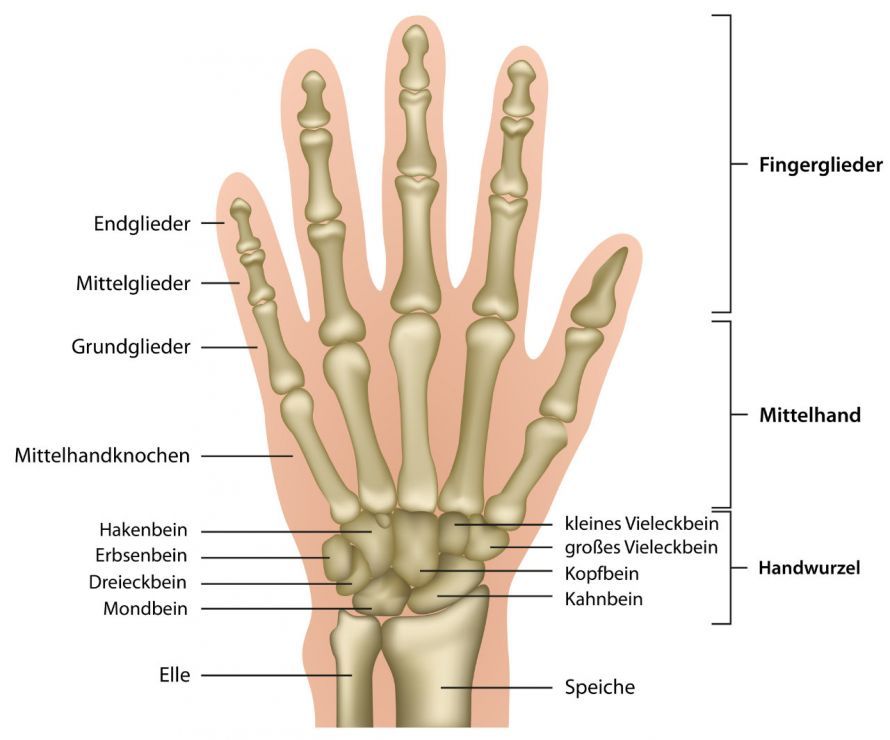
The hand is not only a highly complex structure consisting of bones, muscles, tendons, blood vessels, and nerves; it is also the human body’s most important tool. We rely on our hands to perform fine motor movements.
In children, there is the additional factor that the hand has not yet fully developed. Surgical procedures must allow the hand to continue growing after the operation. This makes hand surgery in children even more challenging than in adults.
Surgeons specializing in the following fields are primarily responsible for hand surgery in children:
Since a large number of nerve pathways run through the hand, a neurologist is often consulted as well.
When is hand surgery performed on children?
Surgery on the hand may be considered if conservative treatment does not produce the desired results.
The most common condition treated with hand surgery in both children and adults is tendovaginitis. It is also known as “trigger finger” or “stuck finger.” Tendovaginitis is a blockage that prevents the flexor tendons in the hand from gliding normally. At first, the finger cannot be straightened (it is “locked”), but then “snaps” out suddenly.
Conservative treatments include rest, massage, and cortisone. If these are not sufficiently effective, outpatient surgery under local anesthesia is usually performed.
Another common condition requiring hand surgery is a ganglion cyst. A ganglion is a hemispherical swelling on the extensor or flexor side of the wrist in the thumb area. The swelling is harmless; it is a bulge in the joint capsule filled with a gelatinous fluid.
If the child finds the ganglion cyst bothersome or if it is painful over an extended period, it is surgically removed.
Another area of application for pediatric hand surgery involves congenital malformations of the fingers or the hand itself. The most common are
- fused fingers (syndactyly) and
- extra fingers (polydactyly).
Overall, however, hand malformations occur in only one out of every 2,500 births. They are often associated with other physical malformations.
In such cases, the specialist performs corrective surgery so that the hand can grow without hindrance.
Other situations in which pediatric hand surgery is performed include
- complex fractures,
- injuries involving tendons, muscles, or nerves, as well as
- infections that cannot be treated with antibiotics
Surgical Procedures in Pediatric Hand Surgery
Hand surgery procedures in adults are usually performed under local anesthesia. However, general anesthesia is unavoidable, particularly in infants and toddlers. This is the only way to ensure that the child does not move their hand during the surgery. The treating physician decides, in close consultation with the parents, whether general anesthesia is also necessary for older children.
Hand surgeries are usually minimally invasive—meaning only a very small incision is required. This results in only a small, inconspicuous scar.
The surgical procedure used depends on the type and severity of the condition.
In cases of malformations, such as fused or extra fingers, the doctor cuts the skin between the fingers or amputates the extra fingers.
In the case of a ganglion cyst, the surgeon removes the affected tissue. This procedure is quite minor and causes little discomfort for the patient. However, some experience is necessary to
- the joint capsule and
- the ligaments between the carpal bones, and
- the extensor tendons
are not damaged during the operation. Therefore, it is essential to consult a recognized specialist in pediatric hand surgery.
After the surgery, the joint is immobilized for a period of time. Afterward, the hand’s range of motion may still be limited for several weeks. Thanks to modern techniques, ganglion surgery yields good results. Unfortunately, ganglions recur in about 20 percent of cases, either at the same site or in the immediate vicinity of the original ganglion.
Children diagnosed with tendovaginitis can also undergo hand surgery. This is a minor, outpatient procedure that—if the child’s age permits—is performed under local anesthesia.
During the procedure, the surgeon cuts the ring-shaped band and removes the affected tissue to restore full range of motion.
After Surgery: Complications and Follow-Up Care
Every surgical procedure carries a risk of complications, including hand surgery in children.
After surgery, wound healing problems and infections may occur, which can delay the healing process.
Another challenge is keeping the hand immobilized after the procedure. Children have a strong urge to move and are often difficult to persuade to rest. The risk of the surgical wound reopening—for example, due to a fall—is higher than in adults.
Most hand surgeries are performed on an outpatient basis. A prolonged hospital stay is therefore generally not necessary after hand surgery in children. Parents can usually take their child home the same day, or the next day at the latest.
Follow-up care consists of regular checkups during which the doctor verifies that the surgical wound is healing as expected.
Depending on the type of procedure, the doctor also performs various range-of-motion tests to ensure that the surgery has not impaired the hand’s mobility. In some cases, the doctor may prescribe physical therapy to help the child’s hand regain full function as quickly as possible.