Blood plasma is a clear, yellowish liquid that makes up about 55 percent of total blood volume. Blood plasma itself is 91 percent water. The remainder contains nutrients, hormones, minerals, and more than 120 different proteins. Experts also refer to the total plasma in the blood as plasma volume.
Blood plasma primarily serves as a transport medium for metabolic products, hormones, glucose, lipids, and carbon dioxide. Blood plasma transports metabolic waste products out of the body. These waste products include carbon dioxide, which the body excretes via the lungs, and various urea compounds.
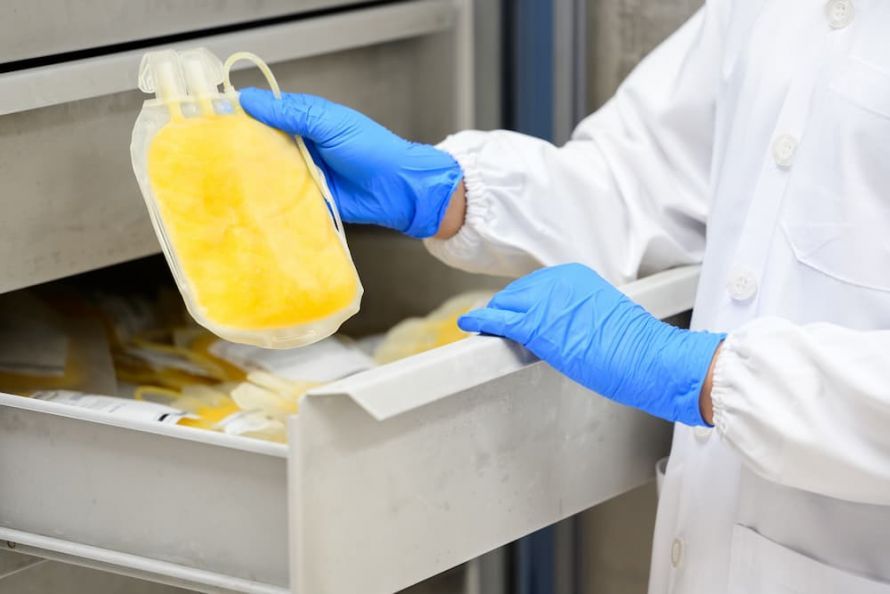 Blood plasma no longer contains any blood cells @ arcyto /AdobeStock
What is preparative plasmapheresis?
Preparative plasmapheresis is a medical procedure used by specialists to collect donor plasma (plasma donation).
Plasma is collected using plasmapheresis machines. Medical professionals insert a needle into the donor’s vein. The donor is now connected to the plasmapheresis machine. This machine separates the plasma from the rest of the blood. To prevent the blood from clotting during the procedure, experts add citrate.
Afterward, the donor receives the returned blood cells. Infused cell fluid compensates for the donor’s fluid loss.
Afterward, the medical staff freezes the collected plasma as quickly as possible. The entire donation process takes about 30 to 70 minutes.
Plasma donation is less taxing than whole blood donation, as the donor loses less fluid (and red blood cells). Plasma is replenished within two days, which is why you can donate blood plasma much more frequently.
The proteins contained in the plasma are particularly important. The deep-frozen plasma can be further processed for therapeutic purposes or for industrial use.
 Women and men may donate plasma up to 60 times a year @ Seventyfour /AdobeStock
Blood plasma donations are used for:
- Patients with coagulation disorders
- Plasma exchange
- Massive transfusions (replacement of the entire blood volume within 24 hours)
- Industry: Here, blood plasma serves as a raw material for plasma derivatives such as human albumin solutions, clotting factors, and immunoglobulins.
What is therapeutic plasmapheresis?
Therapeutic plasmapheresis is an exchange therapy. It works similarly to plasma donation:
Plasmapheresis machines separate the plasma from the other components of the blood. Specialists also distinguish between nonspecific and specific plasma exchange.
- Non-specific plasma exchange
In nonspecific plasma exchange, experts replace the removed plasma with a solution that mimics the body’s own plasma. The replacement solution consists of electrolytes, buffer substances (bicarbonate), and approximately 5% albumin or fresh plasma concentrates.
- Specific plasma exchange
In specific plasma exchange, only certain antibodies are extracted from the plasma. Experts also refer to this method as immunoadsorption therapy. Plasma loss is minimal with this procedure.
Indications for therapeutic plasmapheresis
Nonspecific plasma exchange is used when plasma components are pathologically elevated or structurally altered.
This can be the case with the following diseases:
- Thyrotoxic crisis (life-threatening hormonal poisoning, usually associated with hyperthyroidism)
- Waldenström’s macroglobulinemia (a rare form of leukemia)
- Schnitzler syndrome (a combination of a skin condition, joint pain, and elevated antibody levels)
- Thrombotic thrombocytopenic purpura (TTP) (a combination of low platelet count, anemia, and central nervous system symptoms)
- Hepatopulmonary syndrome: a disorder of gas exchange in the pulmonary circulation characterized by hypoxia and dilation of the pulmonary vessels in the context of existing liver disease
- Hemolytic-Uremic Syndrome (HUS): A combination of acute kidney failure, low platelet count, and the breakdown of red blood cells in the smallest blood vessels
Specific plasma exchange is primarily used in the treatment of autoimmune diseases.
These include:
- Various forms of glomerulonephritis (inflammation of small clusters of nerves or blood vessels in both kidneys)
- Rheumatic diseases (for example, rheumatoid arthritis)
- Various neuroimmunological disorders (e.g., multiple sclerosis)
- Goodpasture syndrome (attack and destruction of the alveoli and the renal basement membrane)
- Myasthenia gravis (muscle weakness caused by a neuromuscular transmission disorder)
- Lupus-associated complications (e.g., antiphospholipid syndrome, an increased tendency toward thrombosis due to changes in blood components)
- Autoimmune hemolytic anemia (breakdown of red blood cells by antibodies)
Complications of plasmapheresis
Overall, plasmapheresis is a procedure with few complications.
However, the following complications may occur:
- Bruising, infections, or nerve damage at the puncture site
- Inflammation or damage to the punctured blood vessel
- Reaction to citrate: During plasmapheresis, citrate prevents the blood from clotting until it is returned to the body. Although the body breaks down citrate quickly, it can lead to a brief, acute calcium deficiency. A calcium deficiency manifests as chills and a tingling sensation in the tongue, fingertips, and toes. If the calcium deficiency remains untreated, it can lead to cardiac arrhythmias, which may be life-threatening under certain circumstances. Therefore, the patient should notify staff immediately if symptoms occur. These symptoms should subside after taking calcium.
- Circulatory problems: For this reason, those affected should avoid strenuous activity on this day. Both recipients and donors should consume sufficient food and fluids, in part to compensate for fluid loss. It is also recommended to wait about 30 minutes before returning to driving.