An external auditory canal exostosis is a localized bony growth in the external auditory canal. It results in a progressive narrowing of the external auditory canal. An external auditory canal exostosis is typically treated surgically, during which the exostosis is removed using a diamond drill.
Below you will find further information as well as a selection of specialists for ear canal exostosis.
What is an exostosis in the ear canal?
The ear canal is a passageway in the skull through which sound waves travel from the outside to the eardrum. The outer two-thirds of the ear canal consist of flexible cartilage, while one-third is bony.
In the case of an external auditory canal exostosis, a bony growth forms here, narrowing the ear canal. This can be caused by irritation of the periosteum, such as when cool water enters the ear canal in swimmers.
An external auditory canal exostosis is not malignant, unlike a tumor. The problem lies rather in the progressive narrowing of the ear canal.
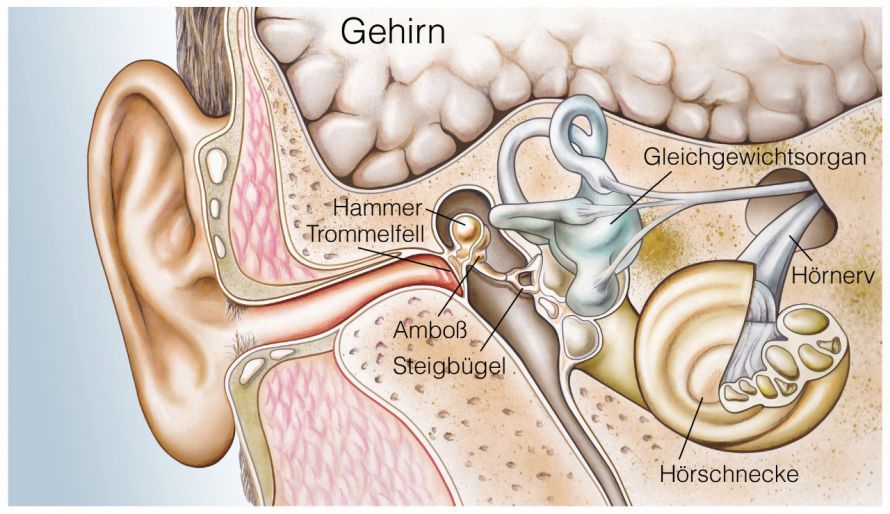
Symptoms and Consequences of an External Auditory Canal Exostosis
Due to the narrowing of the ear canal, water often remains in the ear canal area after bathing or showering.
Earwax can also accumulate more easily, leading to recurrent ear canal infections.
Additional difficulties may arise for users of hearing aids or noise-canceling devices.
Diagnosis of external auditory canal exostosis
The appropriate specialist to consult for problems with the ear or hearing is an ear, nose, and throat (ENT) doctor. He or she performs a routine inspection of the ear canal and a microscopic examination of the eardrum. They compare the findings with the opposite side—that is, the other ear. This makes individual differences in the patient more clearly visible.
During these examinations, the doctor may also diagnose other conditions, such as
- skin cysts (epithelial cysts) or
- cholesteatoma.
Bone exostoses feel hard upon palpation and are relatively tender due to the periosteum.
A routine hearing test should be performed preoperatively in cases of external auditory canal exostosis. A CT scan is necessary only in exceptional cases involving malformations or bone diseases.
Treatment of an Exostosis in the External Auditory Canal
If symptoms are present, treatment of an exostosis in the external auditory canal involves surgical removal (external auditory canal plasty). This is usually performed under general anesthesia, but can also be done under local anesthesia.
Access to the bony ear canal is gained via an incision made either in front of or behind the outer ear. This is followed by careful dissection and separation of the ear canal skin from the bony growths—the excess bone tissue. The primary goal is to preserve the ear canal skin.
The bone is removed using diamond burs of various sizes under microscopic visualization. The doctor uses these to grind away the bone and widen the ear canal.
The skin of the ear canal is then repositioned over the smoothly ground bone. The doctor splints the ear canal using silicone sheets.
Finally, the doctor inserts an ear canal tamponade made of cotton gauze or a gel. The tamponade presses the skin of the ear canal against the bone, thereby promoting better wound healing.
The procedure is completed by closing the skin incision and applying a head bandage with gauze wraps.
Follow-up Care After External Auditory Canal Exostosis Surgery
Regular wound checks are performed after the procedure. A hearing test is also necessary to assess the outcome of the surgery.
The sutures are removed after 8 to 10 days.
The ear canal tamponade remains in the ear for a few days to a few weeks. The duration depends on the tamponade material used and the surgeon’s assessment. In most cases, the tamponade is removed between the 5th and 21st day after surgery.
After a split-thickness skin graft, the use of ointments may be beneficial. They promote wound healing and help prevent scarring in the ear canal.
Complications and Risks of External Auditory Canal Exostosis Surgery
Risks associated with exostosis removal include injury
- the eardrum,
- the facial nerve (N. facialis),
- the chorda tympani nerve, as well as
- inflammation of the wound site with scarring, impaired wound healing, and exposure of the ear canal bone.
Hearing loss caused by the noise and the transmission of drilling noise through the bone to the cochlea is rare, as is dizziness caused by vibrations.
During surgery, the facial nerve is routinely monitored using neuromonitoring. The risk of injuring the facial nerve (N. facialis) is therefore a very rare complication.
If portions of the bone are exposed due to ear canal skin that cannot be preserved, split-thickness skin can be harvested from behind the ear. The surgeon then transplants it into the defect.
Conclusion on Surgery for an Exostosis in the External Auditory Canal
Ear canal reconstruction using diamond drills is an effective method for removing exostoses. The patient benefits from significant improvement in their ear canal narrowing.
Share this article