Sacroiliac joint (SIJ) syndrome causes pain and limited mobility in the lower back.
It is often triggered by a blockage in the sacroiliac joint (SIJ), which connects the spine to the pelvis. The pain can radiate into the surrounding muscles and down into the leg. Tension or overuse of the muscles that stabilize the sacroiliac joint and the ilium are often contributing factors. Poor posture, muscular imbalances, or excessive strain on the muscles can also contribute to the development of pain in the SIJ area.
Learn more here about the causes, diagnosis, and treatment of SIJ syndrome, and find selected specialists in SIJ syndrome.
Definition: What is SI Joint Syndrome?
Back pain is a common condition. In most cases, the lower back—that is, the lumbar spine—is affected by the symptoms. Often, no organic causes for pain in the sacroiliac joint can be identified.
In some cases, however, the sacroiliac joint itself (the joint between the sacrum and the ilium) is the source of the symptoms. The joint connects the sacrum to the ilium. If this joint is diagnosed as the cause of the back pain, doctors use the term “SI joint syndrome.” Even the slightest misalignment in the sacroiliac joint can trigger an SI joint blockage.
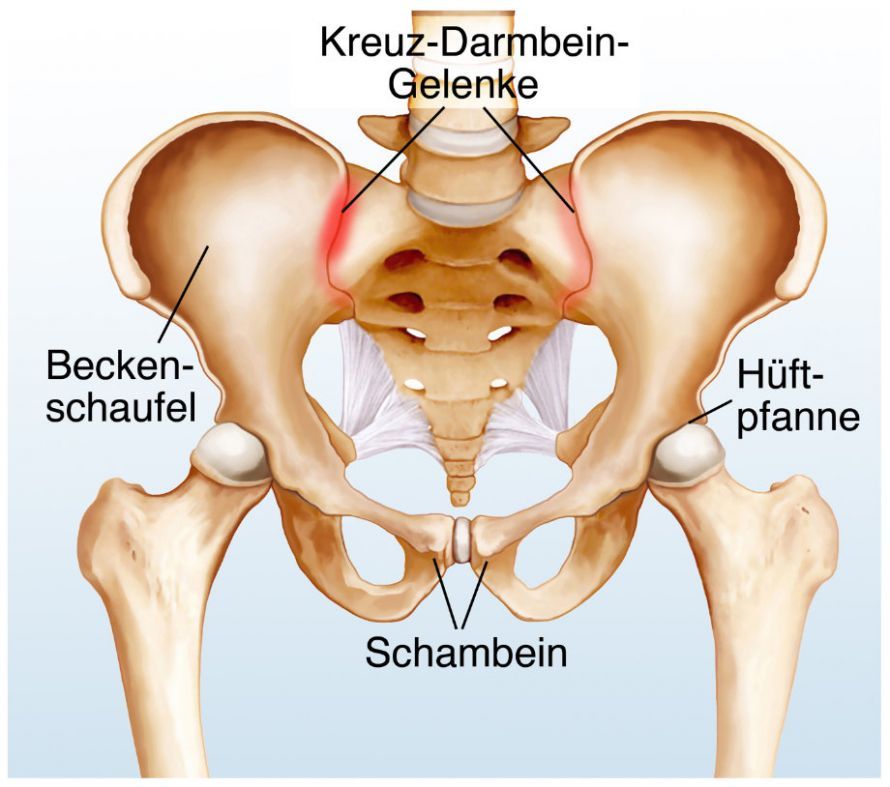
What are the symptoms of SI joint syndrome?
Pain in the lower back—particularly in the sacrum region—is very typical of SI joint syndrome. The pain often radiates to the groin, buttocks, or even the thigh. In most cases, the pain is more severe on one side, even though the joint is present on both sides.
The symptoms often occur in episodes, as well as when stretching, bending, or twisting the torso. They usually worsen after prolonged physical exertion or prolonged sitting. In women, SI joint dysfunction can also affect the pelvic floor, leading to an increased urge to urinate.
In most cases, SI joint syndrome causes pain on one side of the lower back. It can easily be mistaken for lumbago or a herniated disc. Many patients exhibit restless sitting, frequently changing their position. Bending and rotating the leg outward can also be very painful in cases of sacroiliac joint syndrome.
Causes & Risk Factors for Sacroiliac Joint Blockage
Since the sacroiliac joint is not very mobile, symptoms can develop relatively quickly. Overuse can trigger pain just as much as a misalignment of the joints. Similar to lumbago, SI joint syndrome can also be triggered by an incorrect or jerky movement or by lifting heavy loads improperly.
In general, any overuse of the joint is a risk factor. SI joint syndrome can therefore be triggered by uneven strain during sports as well as by poor sitting posture.
Chronic conditions such as ankylosing spondylitis or osteoarthritis are also considered risk factors. Leg length discrepancy can also trigger SI joint syndrome.
Pregnant women are particularly prone to SI joint syndrome. Due to hormonal changes during pregnancy, the ligaments around the joints loosen. The sacroiliac joint is particularly commonly affected. After childbirth, the blockage usually resolves on its own, as the ligaments tighten up again naturally.
Examination & Diagnosis of Sacroiliac Joint Syndrome
First, the doctor will ask where exactly and when the pain occurs. Then, they will examine the mobility of the SI joint by moving, pulling, and pressing on it. This physical examination alone can often resolve the blockage, and you may leave the office pain-free afterward.
X-rays, CT scans, or MRIs are not useful for SI joint syndrome, as they cannot visualize the joint locks. Instead, the treating doctor will first try to rule out other conditions. This primarily includes
- ankylosing spondylitis,
- various hip conditions,
- bone fractures, and
- tumors of the spine.
Pain provocation tests are frequently used. The Faber test is particularly common. The patient lies on their back while the doctor crosses the foot on the affected side over the opposite thigh. At the same time, the doctor stabilizes the opposite leg by applying gentle pressure to the iliac crest. If the knee is then pressed slightly downward, this movement causes pain in the sacroiliac joint.
Dysfunction in the sacroiliac joint can also be detected through a palpation test. During this test, the doctor carefully palpates the bony structures beneath the skin.
Treatment of SIJ Syndrome—Does Manual Therapy Provide Relief, or Is Surgery Necessary?
The recommended treatment for SIJ syndrome depends on the severity of the symptoms. The first step is to eliminate all risk factors. To allow the inflammation to subside, movements that exacerbate pain—such as climbing stairs—should be avoided initially.
Doctors often recommend physical therapy to stabilize the affected joint and strengthen the muscles surrounding the SIJ.
The therapy specifically targets the tight muscles around the sacroiliac joint. Through techniques such as mobilization and manipulation, blockages can be released using stretching and targeted pressure. In addition, the physical therapist shows the patient appropriate stretching exercises that can be performed independently at home. Surgical treatment is generally not necessary.
Movement is important for sacroiliac joint syndrome: so try to keep moving even when you’re in pain. As with most types of back pain, bed rest is not recommended.
If patients are struggling with severe pain, the doctor may inject anti-inflammatory cortisone directly into the joint. This is known as infiltration therapy. However, the patient should first take standard pain relievers to at least restore mobility.
Many patients find that heat helps. It doesn’t matter whether you prefer heat patches from the pharmacy, a hot water bottle, or a red light lamp.
Surgery is necessary only in very rare cases, when the symptoms do not improve with the aforementioned treatments. During the procedure, the SI joint is fused, thereby permanently stabilizing it.
Course and Prognosis of SI Joint Syndrome
Patients can initially try to relieve the pain with well-known over-the-counter medications. Heat has also proven effective for SI joint syndrome. If the symptoms in the SI joint area do not improve noticeably after a few days, it is best to consult an orthopedic surgeon.
As a general rule: If you have back pain in the lumbar region, do not wait too long to see a doctor. The sooner treatment begins, the better the chances of recovery.
If left untreated, SI joint syndrome can lead to chronic back pain. Treatment for SI joint syndrome is therefore very important. You should also take steps to prevent the condition: Make sure to get enough exercise in your daily routine and avoid repetitive or one-sided strain.
Share this article

About the medical author
Sabine Schneider
Editor-in-Chief
Sabine Schneider – medical author: Explore expert articles and medical expertise in the Leading Medicine Guide.
View full expert profile →