Causes of Bladder Emptying Disorders
Medical professionals distinguish between two main groups of causes: mechanical and neurogenic bladder emptying disorders.
| Cause | Description | Examples |
|---|---|---|
| Mechanical Causes | An obstruction in the urinary tract blocks the flow of urine. | Urinary stones, urethral stricture, tumors, or scarring following pelvic surgery |
| Neurogenic causes | The nerve supply to the bladder is disrupted, preventing the bladder muscles and sphincter from working together properly. | Spinal cord injury, neurological disorders, diabetic neuropathy |
Bladder overdistension, psychogenic factors, or damage to the nerves in the lower back can also impair bladder function. In severe cases, a neurogenic voiding disorder develops, leading to persistent urinary retention or overflow incontinence.
Urethral obstruction or damage to the nerves supplying the bladder can also cause impaired bladder emptying. In neurogenic forms, there is often an abnormal contraction of the bladder wall or incomplete relaxation of the sphincter muscle. This increases the risk of urinary stasis, residual urine, and recurrent urinary tract infections.
How does normal bladder emptying work?
Bladder emptying is a complex process controlled by the interaction of the bladder muscles, the sphincter, and the nerves in the sacral region. These nerve fibers form the so-called pelvic plexus, which transmits signals between the brain and the bladder.
During urination, the bladder first expands until a normal sensation of bladder fullness is reached. As pressure in the bladder increases, the sphincter relaxes while the bladder wall contracts simultaneously. This allows urine to be released in a controlled manner.
Impaired nerve transmission or damage to the plexus can lead to difficulty urinating, changes in urination frequency, or urinary retention. Those affected often feel the urge to urinate too late or experience involuntary urine leakage.
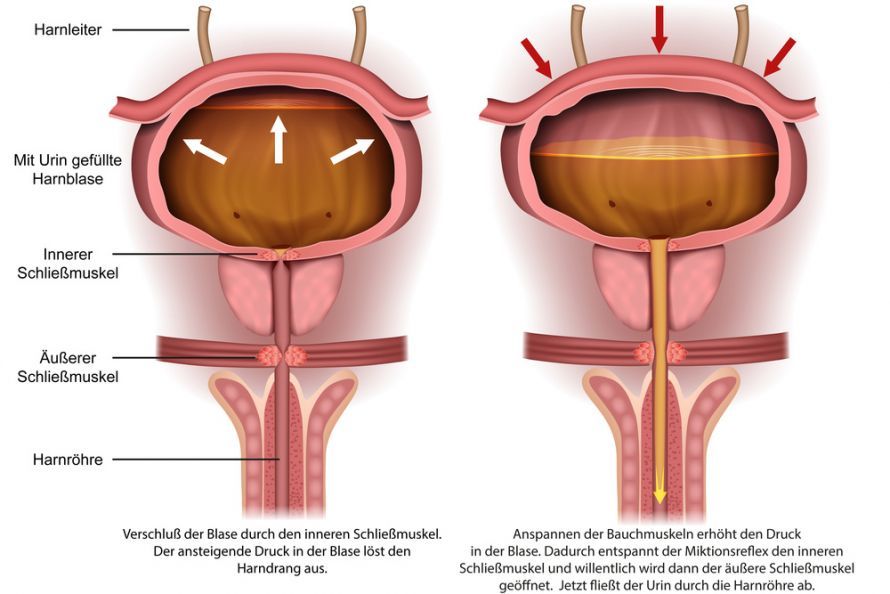
Urge to urinate in a healthy bladder @ bilderzwerg /AdobeStock
Diagnosis of Bladder Emptying Disorders
Diagnosis begins with a detailed medical interview and a physical examination. Patients are often asked to keep a voiding diary to record fluid intake and urination times.
Important tests include:
- Urinalysis and urine culture to detect bacteria
- Ultrasound of the bladder and kidneys to assess residual urine
- Urodynamic testing (measurement of bladder pressure and voiding function)
- Cystoscopy, if structural causes need to be ruled out or confirmed
These findings help determine the severity of the voiding disorder and plan the appropriate treatment.
Urodynamics with bladder pressure measurement provides precise information about the functional processes in the urinary tract. It helps distinguish between mechanical causes and a neurogenic bladder dysfunction. The renal pelvis and ureters are also evaluated via ultrasound to rule out possible urinary stasis.
Treatment of Bladder Emptying Disorders
The goal of treatment is to restore regular and complete bladder emptying and to prevent urinary tract infections.
Depending on the cause, various forms of therapy may be considered:
- Behavioral therapy and bladder training: Regular trips to the bathroom at set times help improve bladder control.
- Pelvic floor exercises: Strengthen the bladder muscles and the sphincter.
- Medication: Use of anticholinergics or botulinum toxin to relax overactive bladder muscles and increase bladder capacity. Urologists also recommend specific abdominal exercises to support bladder emptying.
- Catheterization or self-catheterization: Relieves pressure on the bladder in cases of urinary retention. If necessary, an intermittent catheter, a continuous drainage system, or an abdominal catheter is used to ensure regular and complete bladder emptying.
- Surgical procedures: These include the implantation of a bladder pacemaker or minimally invasive procedures to remove mechanical obstructions. In addition to implanting a bladder pacemaker, specialists may also use electrical stimulation of the bladder. This form of therapy improves the transmission of nerve impulses between the nervous system and the bladder muscles. In rare cases, procedures are necessary following radical pelvic surgery to restore normal function.
In most cases, symptoms can be significantly improved. About 15% of patients achieve a complete cure, while another 50–70% experience lasting improvement.

Pelvic floor therapy helps with bladder dysfunction @ Kzenon /AdobeStock
When should you see a doctor?
If you experience frequent urges to urinate, pain when urinating, or the feeling that your bladder isn’t emptying completely, you should consult a urologist. Only through targeted diagnosis and treatment of bladder emptying disorders can permanent damage to the bladder and kidneys be prevented.
Bladder Overstretching and Modern Treatment Methods
Bladder overdistension can occur when residual urine accumulates over an extended period, causing the bladder muscles to become overloaded. As a result, the bladder and sphincter lose their coordination, and the sensation of bladder fullness changes. Persistent overdistension can limit the organ’s elasticity and lead to chronic urinary retention.
In advanced cases, minimally invasive procedures are now available to restore bladder function. These include electrical stimulation of the plexus or the implantation of a bladder pacemaker, which improve communication between the nerves and muscles. These modern techniques often result in a significant reduction in symptoms and a return to normal bladder function.
FAQ Frequently Asked Questions About Bladder Emptying Disorders
What exactly are bladder emptying disorders?
The term “bladder emptying disorder” refers to various forms of impaired urination. In these cases, the bladder may not empty at all, empty only partially, or empty too frequently. Residual urine often occurs simultaneously, which increases the risk of urinary tract infections and kidney damage. Causes may include mechanical obstructions in the urinary tract or a disorder of the nervous system leading to a neurogenic bladder dysfunction.
What symptoms indicate a bladder emptying disorder?
Typical signs of a bladder emptying disorder include a weak urine stream, delayed onset of urination, urinary retention, or urinary leakage. A constant urge to urinate, overflow incontinence, or pain during urination may also indicate a bladder emptying disorder. If the bladder muscles become overstretched, there is a risk of bladder atony, in which the bladder can no longer empty on its own. Affected individuals should therefore consult a urologist at an early stage to determine the exact cause.
How is a bladder emptying disorder diagnosed?
Diagnosis is based on medical history, a physical examination, and specialized tests. Urodynamic testing is particularly important; it measures the pressure in the bladder and the process of voiding. Additional tests may include a urinalysis, an ultrasound of the ureters and kidneys, a cystoscopy, and a voiding diary. This helps determine whether the condition is a neurogenic bladder dysfunction or has a mechanical cause, such as an obstruction.
What treatment options are available for bladder emptying disorders?
Treatment for bladder emptying disorders depends on the underlying cause. Pelvic floor therapy, targeted bladder training, and medications that relax the bladder muscles are often helpful. In cases of urinary retention or significant residual urine, catheterization or self-catheterization may be necessary to allow the urine to drain completely. In severe cases, electrical stimulation of the bladder, a bladder pacemaker, or surgical procedures may be considered. The goal of treatment is regular and complete bladder emptying to maintain bladder and kidney function.
When is a neurogenic voiding disorder likely?
A neurogenic voiding disorder is diagnosed when the coordination between the nervous system, the bladder wall, and the sphincter muscle is disrupted. This often occurs following spinal cord injuries, neurological disorders, or pelvic surgery. Those affected lose control over bladder function and develop either urinary retention or incontinence. Targeted medication, electrical stimulation, or botulinum toxin injections can alleviate symptoms and improve quality of life.
Share this article

About the medical author
Sabine Schneider
Editor-in-Chief
Sabine Schneider – medical author: Explore expert articles and medical expertise in the Leading Medicine Guide.
View full expert profile →