News
Dr. Michael Lichtenberg, M.D.: Head to the hospital if you have vascular disease!

Sabine Schneider ·
Despite the call to “Stay home!”—if you have severe vascular diseases, you should go to the hospital immediately, even during the COVID-19 pandemic. For example, anyone suffering from what is known as “intermittent claudication” should not waste any time and seek treatment immediately. The fact remains that by no means are all hospital beds occupied. Renowned specialist Dr. med. Dipl. oec. med. Michael Lichtenberg, FESC, therefore advises: “If you have a serious vascular condition, come to the hospital!”
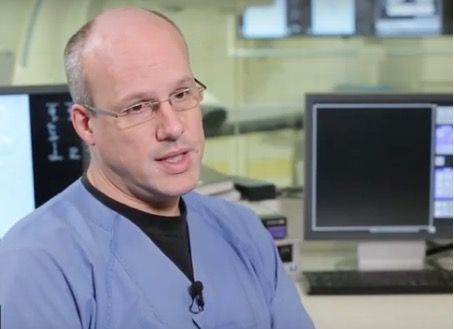
Photo from the highly informative hospital profile, available on the Leading Medicine Guide’s profile page.
Severe pain in your legs? Head to the hospital!
It’s the dominant topic worldwide: The coronavirus has put us in a situation unlike anything we’ve ever experienced. Who would have thought that governments in Germany, Austria, or Switzerland could one day impose curfews? That restaurants and stores would be closed—and that even many doctors’ offices could only carry out their much-needed daily work under difficult conditions?
Empty city centers, largely deserted parks, and large distances between people: When it comes to preventing the virus from spreading, these are important measures. However, they are also restrictions that can have side effects on our health.
Too much caution can have serious consequences
This is precisely what Dr. Michael Lichtenberg, chief physician of the Department of Angiology at the Hochsauerland Hospital in Arnsberg, warns against: “The coronavirus is dominating everything right now. But we must not forget that many people suffer from other illnesses.”
Because of the COVID-19 crisis, which dominates not only the news, many patients are putting their own conditions on the back burner. But: “It is absolutely essential that patients continue to take these conditions seriously,” says Dr. Lichtenberg, who, as president of the German Society for Angiology, is one of the leading specialists in his field. Among other things, this leading professional society organizes annual conferences where angiologists and vascular physicians engage in scientific exchange at the highest international level.
“It’s not that bad”—as if!
There are several reasons why patients with acute symptoms are now not going to the doctor or the hospital. The primary concern is the fear of infection. However, this fear is unfounded, as Dr. Lichtenberg emphasizes, “since COVID-19 patients are immediately housed in separate hospital buildings. Patients with vascular diseases are on the regular angiology ward.” In any case, the following applies to the hospital in Arnsberg: “We always have room for emergencies!”
Another reason for this—misguided—caution: Many people believe that all hospitals are currently fully occupied with COVID-19 patients, meaning that there are no beds left even for patients with acute vascular diseases. “That is a major misconception,” Dr. Lichtenberg clarifies: “No beds for patients with vascular diseases are being withheld here; we angiologists are continuing to work as usual.”
“Prevent amputations!”
Unfortunately, another common reason why people aren’t coming to the hospital right now is this: “Patients think their vascular disease can wait—that it’s not that serious,” says Dr. Michael Lichtenberg. As a result, there are currently many cancellations from patients with vascular diseases.
This is a misjudgment that can have serious consequences. Because: “Only a doctor can decide whether treatment can still wait or whether the condition has progressed to the point where an amputation is imminent if the blood vessels aren’t treated promptly,” says the internationally recognized specialist. He therefore strongly recommends that patients attend any scheduled appointments without fail.
A Call Especially to Diabetics
The fact that people with diabetes and patients with peripheral arterial disease—commonly known as “intermittent claudication”—arrive at the clinic far too late is an enormous problem for Dr. Michael Lichtenberg, even under normal circumstances. But now this situation is becoming more common—and for the specialist, who sets international standards with his Center for Pelvic Vein Obstructions in Arnsberg, this is unacceptable: “Come to the hospital in time,” the specialist advises, “if you have pain in your feet or legs! This also applies if your toes and feet are changing color or if you have open wounds on your legs.”
In fact, Dr. Lichtenberg is currently seeing more cases than usual where the vascular disease has already progressed so far by the time patients arrive at the clinic that amputation of the toes or foot is the only option. In short: “Only if patients with vascular diseases come to the hospital in time can limb necrosis—and thus an amputation—be prevented.”
About the author: Dr. Lichtenberg is a specialist in angiology, cardiology, internal intensive care medicine, and hypertensiology (DHL), and also holds a degree in health economics. For those wondering about the FECS designation: It stands for “Fellow of the European Society of Cardiology”—an honorary title awarded only to specialists who have made exceptional contributions to the field of vascular diseases.
Learn more about Dr. med. Dipl. oec. med. Michael Lichtenberg, FESC, here.
Share this article
About the medical author
Sabine Schneider
Editor-in-Chief
Sabine Schneider – medical author: Explore expert articles and medical expertise in the Leading Medicine Guide.
More about the medical author →News
Read next
- News
Kidney Stones – Modern Treatments, from Shock Waves to Lasers
Oct 7, 2026
Why Sudden, Severe Flank Pain Can Be a Warning Sign
Read more - News
Retinal Detachment: Flashes of Light Can Jeopardize Vision
Oct 5, 2026
Retinal Detachment: Quick Action Can Save Your Eyesight
Read more - News
The waiting period for a semen analysis prior to planned fertility treatment
Oct 5, 2026
Semen analysis: The effects of short waiting periods
Read more