News
Innovative Cartilage Therapy: Dr. Hoppert Focuses on Pain-Free Mobility

Sabine Schneider ·
When Dr. Matthias Hoppert became director of the Department of Orthopedics and Trauma Surgery at ISAR Klinikum Munich in 2017, the medical community took notice. With this proven specialist in shoulder and knee surgery, the renowned institution—which also enjoys an outstanding international reputation for the quality of its medical care and nursing—was able to recruit a particularly dedicated specialist. Time and again, Dr. Hoppert drives innovation in high-performance medicine: with novel cartilage therapies, he is taking the treatment of cartilage damage in recreational and competitive athletes to a new level.
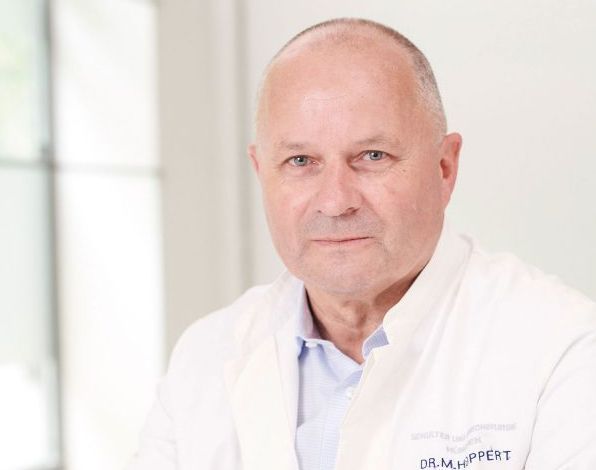
Anyone in the Munich area looking for a specialist in the treatment of cartilage damage is welcome to contact the ISAR Klinikum. Here, Chief Physician Dr. Matthias Hoppert, M.D., a true expert trusted by numerous professional athletes, is available to provide care. This comes as no surprise for several reasons.
Former Pro with Experience: An Empathetic Clinic Director
For one thing, Dr. Hoppert is regarded as an internationally renowned specialist, particularly for knee and shoulder injuries. In addition, he knows from personal experience just how important it is for joints to function properly: As a former professional athlete, he was known as a fearless goalkeeper. And he was successful: During the 1981–1982 season, when the Second Bundesliga was a single-division league for the first time, he played in goal for Spielvereinigung Bayreuth no fewer than five times. But then came a life-changing decision: he decided to focus on his medical studies at Friedrich-Alexander University Erlangen-Nuremberg.
As a result, the clinic director can empathize deeply with his patients when they complain of pain in their major joints—and thus of a reduced quality of life. This applies equally to recreational athletes as it does to professionals: Only those who can move without pain and without restrictions can truly enjoy everyday life.
Cartilage Therapy: Individualized Options
For Dr. Hoppert, it has always been important not only to use innovative therapies but also to advance modern medicine. As chief physician, he and his team therefore regularly participate in international multicenter studies so that he can contribute to the development of innovative treatment concepts. He also benefits from the fact that he and his team are active in renowned national and international professional societies. Through this network alone, he always stays up to date on the latest developments in the world of orthopedics and trauma surgery.
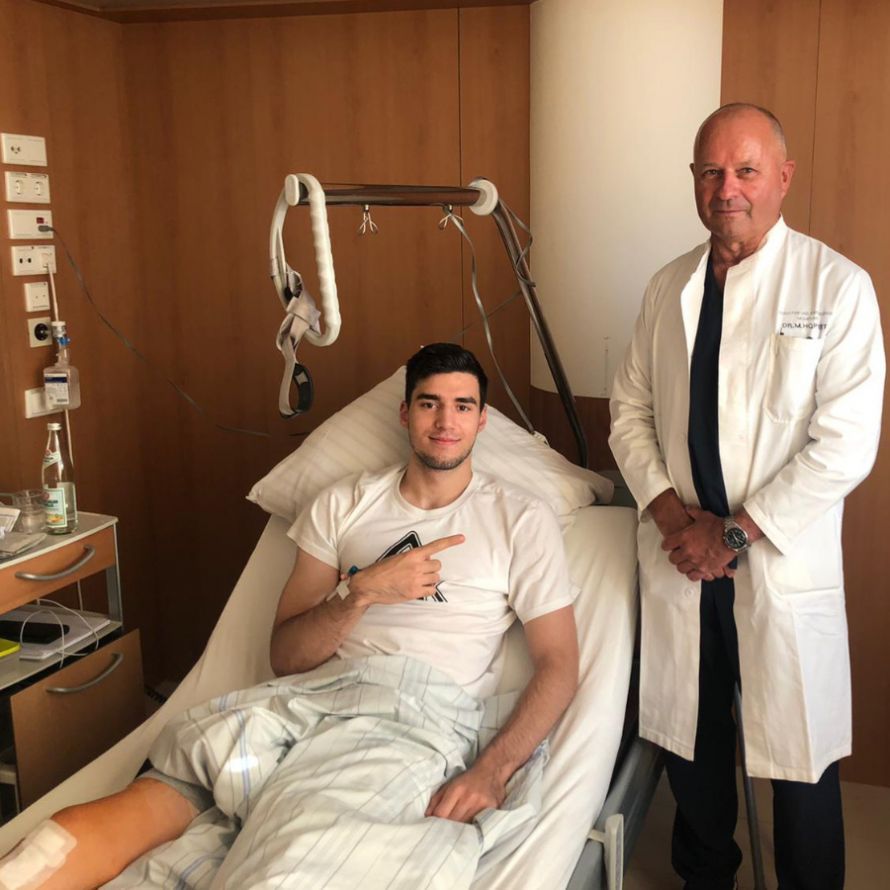
A major area of his work, in which his name is frequently mentioned in international professional circles, is the development of novel cartilage therapies. To this end, he has also established an important program at the clinic: To restore mobility and athletic ability as quickly as possible, the clinic offers a specialized “Cartilage Therapy” consultation. During this consultation, an analysis of the underlying causes is first conducted, leading to a comprehensive diagnosis. Only with a precise assessment can a personalized treatment option be implemented.
Three Treatment Options to Choose From
There are exactly three cartilage therapies used in Munich, depending on the injury or condition. With autologous chondrocyte transplantation, cartilage damage can be regenerated using cartilage cells specifically cultured from the patient’s own body. Dr. Hoppert’s team uses arthroscopy to extract healthy cartilage cells from the joint. These cells are then cultured in a specialized laboratory and multiplied accordingly. After a waiting period of about six weeks, the time has come: The new cartilage cells are reimplanted into the defect. This is done using a minimally invasive procedure.
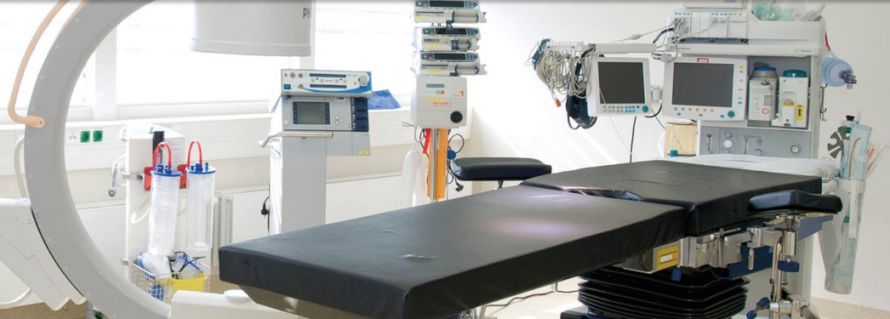
The second cartilage therapy, with which Dr. Matthias Hoppert’s team is also very familiar, is called “autologous matrix-induced chondrogenesis”—AMIC for short. This procedure specifically harnesses the body’s own regenerative capacity. This process is supported by a special collagen membrane—the matrix. Collagen, incidentally, is widely found in the body—for example, in the gums—but can even be derived from animal sources and used in humans without causing rejection reactions. Dr. Hoppert, however, uses the body’s own stem cells, which “migrate” precisely into the cartilage defect. There, the growth of new cartilage cells is then stimulated. Even though Dr. Hoppert is a master of minimally invasive surgery, a major advantage of AMIC therapy is that it requires only a single operation.
Autologous Cartilage Regeneration—Using the Body’s Own Growth Factors
The third type of cartilage therapy is autologous cartilage regeneration—known as “All Autologous Cartilage Regeneration.” This method is particularly in demand among knee specialists like Dr. Hoppert. This is because the procedure can successfully treat large cartilage defects, such as those commonly found in the knee joint. The basic idea behind this innovative cartilage procedure is anything but new: the so-called “cartilage chip” technique, on which autologous cartilage regeneration is now based, was established as early as the 1980s.
Here’s how the method works: Cartilage is ground into tiny particles and then transplanted into the defect. Since then, however, this method has been continuously refined, so that today—in combination with the body’s own growth factors—it achieves a level of effectiveness that was scarcely imaginable back then. Today, Dr. Hoppert and his team have access to an innovative arthroscopic procedure that actually uses the body’s own cartilage tissue to regenerate the cartilage defect.
An additional advantage of the clinic: state-of-the-art orthobiology
It is these three procedures that, in the hands of an experienced specialist, enable many people with sports injuries to regain their mobility. Even though minimally invasive techniques are used here, compared to traditional orthopedic surgery, these can hardly be called “surgeries.” It is therefore no surprise that Dr. Hoppert and his team are setting new standards in another field—namely, orthobiology.
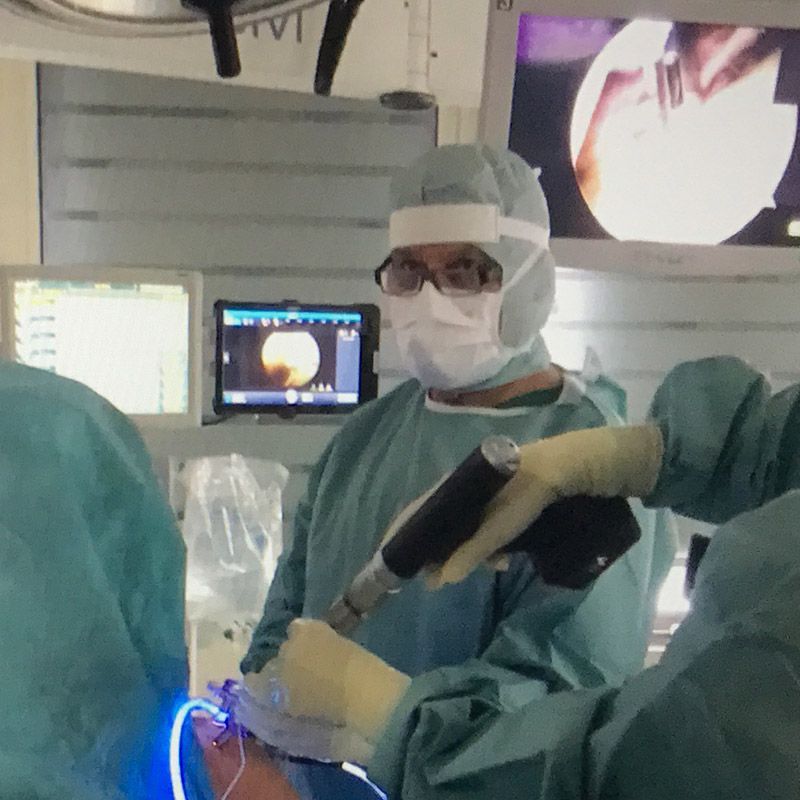
This modern field focuses on healing joint injuries entirely without surgery. At the Clinic for Orthopedics and Trauma Surgery at ISAR Klinikum Munich, orthobiological treatment methods—that is, outpatient, non-surgical therapies—are therefore also performed. For example, in autologous blood therapy, the body’s own plasma—which is rich in platelets—is extracted. This plasma releases special proteins—namely, growth factors. In this way, the body’s own regenerative processes in Munich are used primarily to inhibit painful inflammatory processes and to restore joint function. Autologous blood therapy, also known as PRP therapy, is used to treat many sports injuries and to support wound healing.
Orthopedics of the Future: A Wider Range of Procedures—and Fewer Surgeries
Orthobiological methods can also slow down cartilage wear in cases of osteoarthritis. Fundamentally, treatment approaches such as cartilage therapies and the still relatively new field of orthobiology are the right path forward. This is because they increasingly give patients the opportunity to recover from diseases and injuries relatively quickly and, above all, extremely gently.
Dr. Hoppert and his team are constantly finding new answers to questions that were hardly even asked just a few years ago: How can the body’s own cell regeneration processes be accelerated? Which stem cells can be converted into which tissue types? And: How can injuries be treated even faster—so that complete regeneration can take place in the shortest possible time? These are the questions that will shape the future of modern orthopedics. It’s good to know that dedicated specialists are fully committed to reimagining this vital field through fewer surgeries and innovative cartilage regeneration techniques. This is good news not only for recreational athletes and professionals across all sports—but for everyone for whom unrestricted movement is synonymous with a high quality of life.
Anyone wishing to contact Dr. Matthias Hoppert can easily do so via his profile page in the Leading Medicine Guide.
Share this article
About the medical author
Sabine Schneider
Editor-in-Chief
Sabine Schneider – medical author: Explore expert articles and medical expertise in the Leading Medicine Guide.
More about the medical author →News
Read next
- News
Kidney Stones – Modern Treatments, from Shock Waves to Lasers
Oct 7, 2026
Why Sudden, Severe Flank Pain Can Be a Warning Sign
Read more - News
Retinal Detachment: Flashes of Light Can Jeopardize Vision
Oct 5, 2026
Retinal Detachment: Quick Action Can Save Your Eyesight
Read more - News
The waiting period for a semen analysis prior to planned fertility treatment
Oct 5, 2026
Semen analysis: The effects of short waiting periods
Read more