News
Sleep Deprivation in the Digital World: When Your Cell Phone Keeps You Awake

Melanie Al Tikriti, BSc ·
How Constant Availability and Screen Time Affect Our Sleep—and How to Protect Ourselves
Sleep is a basic need that is crucial for health, performance, and well-being. Nevertheless, more and more people are suffering from chronic sleep deprivation. This is often caused not only by the stresses of daily life but also by the constant use of digital devices. Smartphones, tablets, and laptops keep us awake, distract us, and disrupt our natural sleep cycle.
Sleep deprivation has a noticeable impact on both body and mind. Difficulty concentrating, mood swings, and an increased risk of cardiovascular disease are just a few of the consequences. What’s particularly problematic is that many people ignore the signs for a long time and grow accustomed to this state. In a digitally driven world, the problem is often downplayed, even though sufficient sleep is essential for long-term health.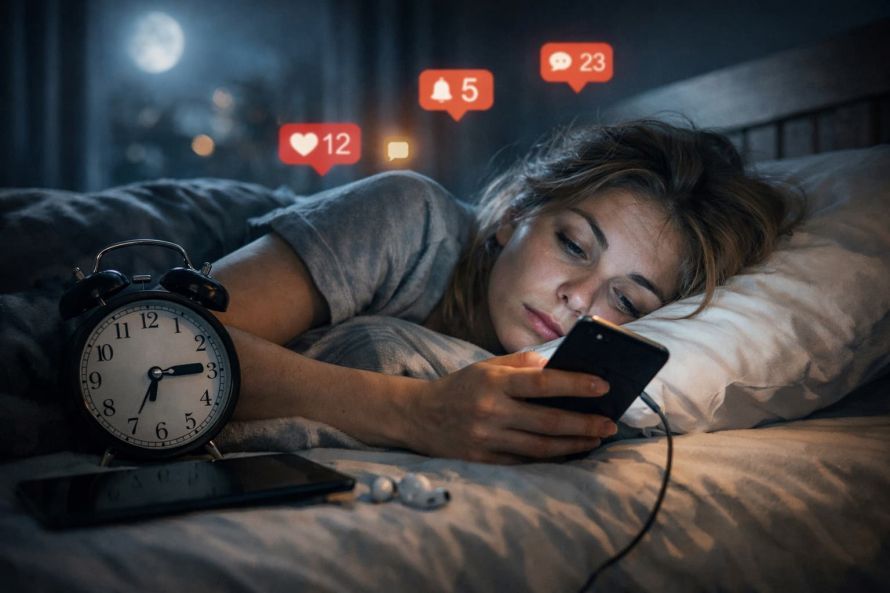
How Digital Devices Affect Sleep
Blue light, constant notifications, and the feeling of having to be available at all times disrupt the natural day-night rhythm. Especially in the evening, smartphone use delays the release of the sleep hormone melatonin. The result: trouble falling asleep, less deep sleep, and frequent nighttime awakenings.
Social media and the news can also trigger stress, encourage rumination, and disrupt inner peace. Many people are still scrolling through feeds or answering last-minute emails late at night—without realizing that their bodies actually need rest. Even those who are physically exhausted find it difficult to wind down due to the constant barrage of digital stimuli. Adults, teens, and children are equally affected—only the severity of the symptoms varies.
The Consequences of Chronic Sleep Deprivation
Chronic sleep deprivation affects all areas of life:
- Reduced concentration and performance at work or school
- Mood swings
- Irritability
- Depressive moods
- Increased risk of cardiovascular disease, diabetes, and obesity
- Weaker immune system, increased susceptibility to infections
- In the long term, even impaired memory and learning ability
The consequences are particularly serious for children and adolescents. Their need for sleep is high, but media use in the evening disrupts their natural rhythm. Many parents report that their children are irritable, tired, and unable to concentrate the next day. Adults, on the other hand, often struggle with fatigue at work, pressure to perform, and increasing stress.
Recognizing the stress spiral
Many people affected don’t even notice how chronic sleep deprivation slowly creeps in. At first, a few hours less sleep is enough, but over time, fatigue intensifies, concentration wanes, and even small decisions become more difficult. Added to this is the so-called stress spiral: People who don’t get enough sleep produce more stress hormones, become more irritable, and subsequently sleep even worse.
Emotional factors also play a role. Dwelling on work, family, or personal problems keeps the brain active—even in bed. Constant digital connectivity amplifies this effect, as messages or notifications can intrude on your consciousness at any time.
Practical Tips for Better Sleep
A mindful approach to digital devices and routines can significantly reduce sleep problems. Many small changes in daily life often have an amazing effect:
- Screen-free time before bed: Avoid using smartphones, tablets, or the TV for at least 60 minutes before going to bed
- Stick to a consistent sleep schedule: Regular bedtimes and wake-up times help stabilize your sleep-wake cycle
- Establish evening rituals: Reading, light stretching, or relaxation techniques help prepare the body for sleep
- Optimize your sleep environment: Dark, quiet, and cool—ideal for restful sleep
- Take breaks from news and social media: Turn off push notifications, especially in the evening
- Take advantage of daylight and exercise: Morning sunlight and daytime exercise support your body’s internal clock and improve sleep quality
- Keep a sleep diary: Record when and how long you sleep to identify patterns and make targeted changes
These measures are most effective when practiced regularly. Even small adjustments—such as putting your cell phone in another room in the evening or going to bed half an hour earlier—can significantly improve sleep quality.
Conclusion: Sleep is not a luxury, but a matter of health
In a digital world, it’s easy to lose track of your own sleep habits. Lack of sleep not only affects your performance the next day but can also have serious long-term health consequences. By consciously avoiding screens, respecting your own rhythm, and using relaxation techniques, you can significantly reduce sleep problems and sleep better again despite constant digital stress.
Share this article
Verified expertise
Recommended specialists
2 specialists
2 results

Thoraxklinik-Heidelberg gGmbH
Heidelberg


Prof. Dr. med. Christoph Bergmann
Dusseldorf
News
Read next
- News
Scabies: A contagious skin disease that is easily treatable
Oct 26, 2026
Severe itching and minor skin changes should be taken seriously
Read more - News
Heat Rash: What's Behind the Itchy Blisters
Oct 23, 2026
Heat Rash: Heat and Sweat Can Disrupt the Skin's Balance
Read more - News
Enlarged Prostate – When Medication Is Sufficient and When Surgery Is Recommended
Oct 21, 2026
Why Many Men Ignore Urinary Problems for Too Long
Read more