News
Most hornet stings are harmless—but some require immediate action

Melanie Al Tikriti, BSc · September 25, 2026
A sudden buzzing sound, a careless movement, and just like that, it’s happened: A hornet sting usually causes severe pain and often leads to anxiety. Numerous myths still surround hornets today. It’s often claimed that their stings are particularly venomous or even life-threatening. In fact, that’s not true. A hornet’s venom is no more dangerous than that of a wasp or honeybee.
In most cases, symptoms are limited to pain, redness, and swelling around the sting site. However, if an allergic reaction occurs, or if the sting is in the mouth or throat, it can become a medical emergency.
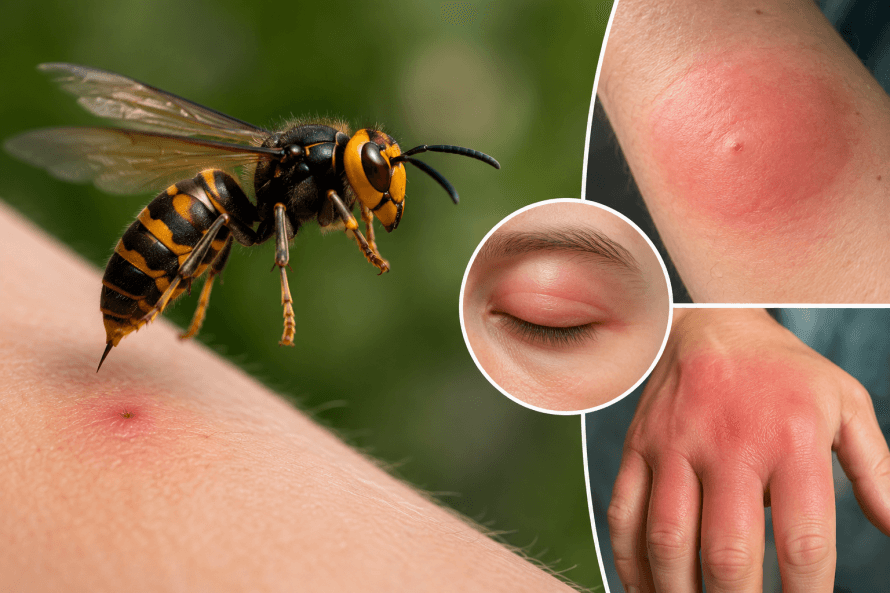
Image generated by AI
Hornets sting only in self-defense
Hornets are among the largest native hymenopterans and are protected in many countries. Contrary to their bad reputation, they are considered peaceful creatures. They do not normally attack humans without reason, but will sting primarily when they feel threatened or when their nest is threatened.
Unlike honeybees, hornets do not lose their stinger after a sting. They can therefore sting multiple times. Nevertheless, they usually try to avoid a threat first.
What Happens in the Body After a Sting
When stung, a small amount of venom enters the tissue. This venom contains various proteins and enzymes that trigger pain and an inflammatory response. The body responds by dilating the blood vessels, causing more fluid to leak into the tissue. This results in typical symptoms such as redness, swelling, and a sensation of warmth. This reaction is a normal defense response by the immune system and usually subsides within a few days.
Typical symptoms after a hornet sting
The severity of the symptoms depends, among other things, on the sting site and individual sensitivity.
The following symptoms often occur:
- stinging pain
- redness of the skin
- Swelling
- Warmth
- Itching
- Tenderness
- Mild pain on movement
Stings on the hands or feet, in particular, can cause more severe swelling because there is little room for the tissue to swell in those areas.
When a hornet sting can be dangerous
A hornet sting is dangerous not because of the amount of venom, but because of potential complications.
You should be especially vigilant if you experience:
- Shortness of breath
- Swelling in the face
- Swelling of the lips or tongue
- Difficulty swallowing
- Dizziness
- Rapid heartbeat
- Circulatory problems
- Altered consciousness
These symptoms may indicate a severe allergic reaction and require immediate medical attention. A sting in the mouth or throat should also always be evaluated by a doctor, as swelling can constrict the airways.
First Aid After a Sting
After a hornet sting, the first thing to do is stay calm. Unlike with a bee, no stinger remains in the skin. Cooling compresses or ice packs can relieve pain and swelling.
It’s also recommended to keep the affected area as still as possible and—if possible—elevate it. Please avoid scratching vigorously, as this can make it easier for germs to enter the skin.
What treatment options are available?
Most hornet stings heal within a few days without any special treatment. For more severe symptoms, pain-relieving or anti-inflammatory medications can be used. Antihistamines or cortisone-based ointments often help relieve severe itching. If you have a known allergy to insect venom, you should always carry your emergency kit with you and use it immediately at the first signs of an allergic reaction. You should then call emergency services right away.
How to Avoid Stings
Hornets are important beneficial insects and contribute to the natural regulation of other insects. Stings can often be avoided by following a few simple safety guidelines.
The following are helpful, among other things:
- Avoid sudden movements
- Do not blow on hornets
- Keep your distance from nests
- Cover sweet foods and drinks when outdoors
- Avoid walking barefoot in meadows
- Never remove nests yourself
If you stay calm and keep a safe distance from the insects, you’ll rarely get stung.
Conclusion: Most hornet stings heal without any problems.
A hornet sting is usually painful, but significantly less dangerous than many people assume. It becomes dangerous primarily in the event of an allergic reaction or if the sting occurs in the mouth or throat. If you know the warning signs and take the right action in an emergency, you can avoid complications and quickly receive the necessary medical help.
Share this article
About the medical author
Melanie Al Tikriti, BSc
Editor
Melanie Al-Tikriti, BSc – author: Explore expert medical articles in the Leading Medicine Guide.
More about the medical author →News
Read next
- News
Pacemakers—Who Are They Suitable For?
Sep 23, 2026
Why a Slow Heart Rate Isn't Just a Natural Part of Aging
Read more - News
Hallux valgus: Why the big toe continues to deform
Sep 21, 2026
Hallux valgus: Barely noticeable at first—but later, every step can be painful
Read more - News
Hagelkorn: How to Properly Treat a Swelling on the Eyelid
Sep 17, 2026
A small knot can be more stubborn than you might think
Read more