News
Oral thrush: A fungal infection is often the cause of these changes

Melanie Al Tikriti, BSc ·
White patches on the tongue or the inside of the mouth often seem harmless at first. People often assume at the outset that they are food particles or a mild irritation. However, if the patches can be wiped away and are accompanied by a burning sensation, pain, or changes in taste, oral thrush may be the cause. This is a fungal infection of the oral mucosa, primarily caused by yeast fungi of the genus Candida.
Oral thrush can affect people of all ages. However, the condition is particularly common in infants, older adults, or people with weakened immune systems. If the infection is detected early, it can usually be treated effectively.
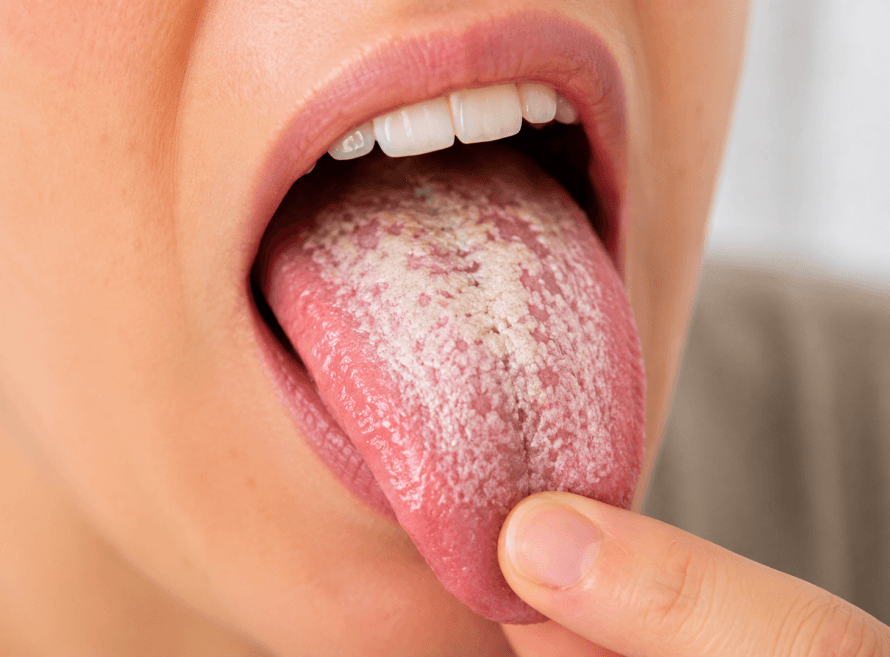
Image generated by AI
Yeast fungi are normally part of the oral flora
Numerous bacteria and fungi live in the mouth, which normally keep each other in balance. One of the most common yeasts is Candida albicans. This fungus does not cause any symptoms as long as the immune system is intact and the oral flora remains undisturbed. However, if this balance is disrupted, the fungus can multiply rapidly. This results in whitish coatings and inflammation of the oral mucosa. The condition is therefore usually not caused by an infection, but by the excessive proliferation of yeast fungi that are already present.
Various factors increase the risk
Oral thrush often develops when the body’s immune system is weakened or the oral flora is disrupted.
The most common risk factors include:
- Antibiotic therapy
- a weakened immune system
- Diabetes mellitus
- ill-fitting dentures
- Cortisone sprays for asthma
- Dry mouth
- Chemotherapy
- Infancy
- Older adults
After using a cortisone-containing asthma spray, the mouth should be rinsed thoroughly. This can significantly reduce the risk of oral thrush.
The symptoms go beyond white patches
The most noticeable symptom is a whitish coating on the tongue, the inside of the cheeks, or the roof of the mouth. This coating can often be scraped off, revealing a reddened, slightly bleeding mucous membrane underneath.
Typical symptoms include:
- white patches in the mouth
- reddened oral mucosa
- Burning sensation in the mouth
- Pain when eating
- Altered sense of taste
- Dry mouth
- Unpleasant taste
- Difficulty swallowing
In infants, it is often noticeable that they feed restlessly or refuse to feed at all.
Not every white coating is oral thrush
White lesions in the mouth can have various causes. They may also be harmless coatings, pressure sores caused by dentures, or other conditions affecting the oral mucosa. A dental or medical examination should only be sought if the lesions persist for several days or if pain develops.
How the diagnosis is made
In many cases, a visual examination of the oral mucosa is sufficient. The doctor assesses the appearance and extent of the patches as well as any possible underlying conditions. If the diagnosis is unclear, a swab may also be taken. Laboratory testing can determine which fungus is causing the infection and which treatment is appropriate.
What treatment options are available
Oral thrush is usually treated with antifungal medications. These are available as oral gels, solutions, or lozenges and act directly on the oral mucosa. It’s also important to address any underlying causes. Dentures should be thoroughly cleaned. After using corticosteroid-containing inhalation sprays, it is recommended to rinse your mouth.
Treatment should be continued consistently until completion—even if symptoms subside earlier.
What People with Oral Thrush Can Do Themselves
Careful oral hygiene supports healing and helps prevent recurrent infections. Simple measures help stabilize the oral flora and reduce the risk of recurrent oral thrush.
Helpful measures include:
- Brushing your teeth regularly
- Thoroughly cleaning dentures
- Rinsing your mouth after using cortisone sprays
- Drink plenty of fluids
- Consuming sugary foods only in moderation
- Replace your toothbrush after the infection has cleared up
Conclusion: A fungal infection detected early can usually be treated effectively.
Oral thrush is a common fungal infection of the oral mucosa that usually manifests as white patches and an unpleasant burning sensation. With the right treatment, the infection usually clears up completely. If symptoms persist or recur, the cause should be investigated by a doctor.
Share this article
About the medical author
Melanie Al Tikriti, BSc
Editor
Melanie Al-Tikriti, BSc – author: Explore expert medical articles in the Leading Medicine Guide.
More about the medical author →News
Read next
- News
When Your Knee Locks Up—Could It Be a Meniscus Tear?
Sep 30, 2026
Why a Meniscus Tear Isn't Always Detected Right Away
Read more - News
Suddenly, your knee makes a popping sound—could it be a torn cruciate ligament?
Sep 28, 2026
Why a torn cruciate ligament isn't always detected right away
Read more - News
Hornet Stings: When a Sting Can Be Dangerous
Sep 25, 2026
Most hornet stings are harmless—but some require immediate action
Read more