Anticoagulation is a medical treatment that uses medications to inhibit blood clotting. Anticoagulation can be used for both preventive and therapeutic purposes. The medication used to prevent blood clotting is called an anticoagulant or a blood-thinning agent. It affects plasma coagulation, specifically the clotting factors in blood plasma.
Here you will find further information as well as a selection of anticoagulation specialists.
What is anticoagulation?
Anticoagulation is commonly referred to as “blood thinning.” However, this does not mean that blood is diluted with additional liquid (as in cooking). Rather, it means that by taking certain medications (anticoagulants)
- in tablet form,
- as injections, or
- via an infusion
inhibit clotting factors in the blood. Literally translated, the technical term “anticoagulation” means “directed against (anti) clotting (coagulation).” It is therefore less a matter of thinning the blood and more a matter of inhibiting clotting.
What are anticoagulants?
Anticoagulants are medications whose active ingredients bind to enzymes in blood plasma, known as clotting factors. Through this specific binding—which fits together perfectly, like a key in a lock—the clotting factors are inhibited, thereby preventing clot formation.
Otherwise, activated clotting factors bind in several steps (cascades) to ultimately attach to blood cells (red and white) and blood platelets (thrombocytes), causing them to stick together. This leads to the formation of a blood clot. Coagulation is activated, for example, when the vessel wall is injured; the blood clot then seals the damage to the vessel wall—effectively “taping it shut”—and thus prevents further blood loss.
When is anticoagulation therapy necessary?
Treatment with anticoagulants is always necessary when there is increased clot formation in the blood. This can be caused by three conditions and risk factors, which are summarized by Virchow’s triad. Rudolf Virchow (1821–1902) was a German physician and pathologist who conducted extensive research on blood coagulation. In the course of his work, he identified three factors that lead to increased coagulation. These involve changes
- in the vessel wall (injury, calcium deposits)
- in blood flow (turbulence in narrow passages), and
- changes in blood composition (increased activity of clotting factors)
If one (or all three) of these factors is altered, this results in increased (pathological) clotting, which can lead to blood clots (thrombosis) and/or the displacement of these clots (embolism).
For which conditions is anticoagulation therapy indicated?
Anticoagulation therapy may be indicated for all conditions associated with a coagulation disorder. A distinction is made between prophylactic and therapeutic indications.
Prophylactic anticoagulation is primarily used in the context of surgery or in bedridden patients. The goal of thinning the blood is to prevent both thrombosis and pulmonary embolism.
When anticoagulation is used for therapeutic purposes, cardiac arrhythmia is the most common indication. Irregular heartbeats can cause clots to form in the heart, which are then carried through the bloodstream into the body. This is known as an embolism; a coagulation disorder thus leads to an increased risk of embolism.
An embolism can lead to serious complications, such as a stroke if the clot is carried upward to the brain, or a “cold leg” if it is carried downward. Blood-thinning therapy can significantly reduce the risk of embolism.
Another common reason for anticoagulation therapy is deep vein thrombosis in the legs. This can occur in cases of congenital clotting disorders, after major surgery, during prolonged sitting (e.g., air travel), or in patients with malignant tumors. In addition, women of childbearing age who smoke have an increased risk of thrombosis.
How long is anticoagulation therapy necessary?
In cases of thrombosis, temporary anticoagulation therapy for 3–6 months is often sufficient. In rare cases, however, lifelong anticoagulation may be necessary. This is the case, for example, with recurrent thrombosis or congenital blood clotting disorders. Patients who have had an artificial heart valve implanted also usually require lifelong anticoagulation. The same applies to cardiac arrhythmias
So what exactly is anticoagulation?
Although, as mentioned at the beginning, the various anticoagulants are often referred to colloquially and in patient education sessions as “blood thinners,” this is not strictly accurate. Anticoagulants neither reduce the viscosity (= flow properties) of the blood nor the concentration of blood cells or blood proteins.
Blood dilution involves increasing the liquid component of the blood, known as blood plasma. This can be achieved using special fluids called plasma expanders (“blood thinners”). This significantly increases the volume of plasma and thus dilutes it. However, these plasma expanders are not used to treat increased blood clot formation, but rather to address a volume deficit in the circulatory system. The most common cause of a blood volume deficit is blood loss due to an accident or injury. Plasma expanders are always administered via infusion.
Are there different types of anticoagulants?
There are various medications that inhibit blood clotting. The most obvious distinguishing feature is certainly the form of administration, namely as
- tablet
- injection, or
- infusion
Outside the hospital—which is also referred to as outpatient care—tablets are generally preferred. However, injections may also be administered on a temporary basis.
In the hospital—particularly in emergency situations or after surgery—infusions are the most common form of administration.
Many patients with circulatory disorders take tablets containing the active ingredient acetylsalicylic acid (ASS®, Godamed®, Aspirin®). However, this is not an anticoagulant in the strict sense, but rather what is known as an antiplatelet agent. This is a medication that inhibits platelets (thrombocytes) and thereby prevents them from clumping together.
How do anticoagulants differ based on their mechanism of action?
Based on their mechanism of action, they are classified as
- direct and
- indirect anticoagulants.
Direct anticoagulants inhibit clotting factors directly, whereas indirect anticoagulants do so indirectly.
What makes indirect anticoagulants special?
Indirect anticoagulants have been successfully administered since the middle of the last century and have revolutionized vascular medicine. Classic examples of indirect anticoagulants include phenprocoumon (Marcumar®) and heparin (e.g., Clexane®). Marcumar® is administered in tablet form and must be dosed based on blood test results that are determined at regular intervals. It inhibits the production of certain vitamin K-dependent clotting factors, which is why its full effect usually does not occur until after 5–10 days (sometimes even later). Marcumar® is also referred to as a vitamin K antagonist.
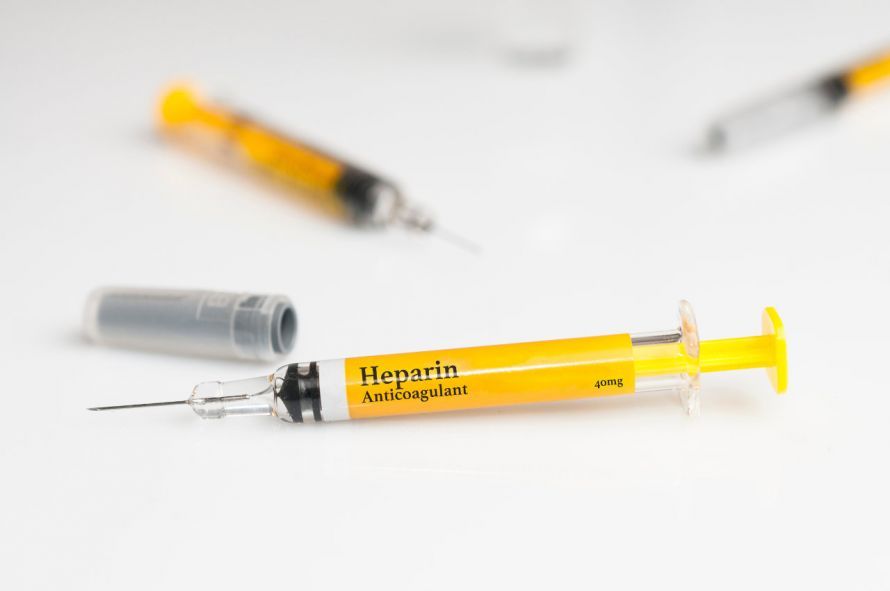
Heparins, on the other hand, take effect immediately and are administered as injections or infusions. They bind to clotting factors (so-called cofactors) present in the blood plasma, thereby inhibiting clotting, which occurs within a very short time. For this reason, heparins are primarily administered in emergency situations or as a temporary measure until emergency surgery can be performed. Vascular surgeries, such as bypass procedures, are only possible if heparin is administered during the operation; in this case, it is injected directly into the opened artery. Heparins offer the advantage of taking effect immediately, as well as the ability to reverse their effect using another medication called protamine.
Heparin is also administered after surgery (such as the implantation of an artificial joint) as so-called “thrombosis injections” to reduce the risk of thrombosis. The likelihood of thrombosis occurring is increased in the initial phase after surgery due to the naturally reduced physical activity.
What characterizes direct anticoagulants?
Direct anticoagulants are still relatively new, which is where the term “new oral anticoagulants” (NOACs) comes from. DOAC (direct oral anticoagulants) is also a common abbreviation.
The best-known medications in the class of direct anticoagulants are
- Apixaban (Eliquis®)
- Rivaroxaban (Xarelto®) and
- Dabigatran (Pradaxa®)
They are administered in tablet form, and their effects take effect after about 6–10 hours.
One advantage of direct anticoagulants is that they are easier to dose—typically 1–2 tablets per day, depending on the active ingredient. With Marcumar®, regular blood tests are required, and the dosage (typically 0.25–1.5 tablets per day) is adjusted accordingly.
What are the risks of anticoagulant therapy?
The greatest risk associated with anticoagulation therapy is the risk of bleeding. Cerebral hemorrhage, in which bleeding occurs inside the skull, is particularly dangerous.
Various risk scores are available to assess this risk in advance. They indicate how high the risk of a cerebral hemorrhage is in each individual case. The use of anticoagulants should be carefully evaluated, particularly in frail older adults who are prone to falls.