Cystoscopy is a well-established urological examination used to assess the lower urinary tract. During the procedure, the doctor carefully inserts a thin instrument with a camera—called a cystoscope—through the urethra into the bladder. This allows the doctor to view the inside of the bladder and detect pathological changes at an early stage. A cystoscopy is used both to diagnose symptoms such as blood in the urine or pain during urination and to perform minor therapeutic procedures. The procedure is typically performed on an outpatient basis under local anesthesia and takes only a few minutes. Modern flexible cystoscopes allow for a gentle procedure with minimal risk.
Below, you’ll learn when a cystoscopy is recommended, how it’s performed, and what rare complications may occur.
What is a cystoscopy?
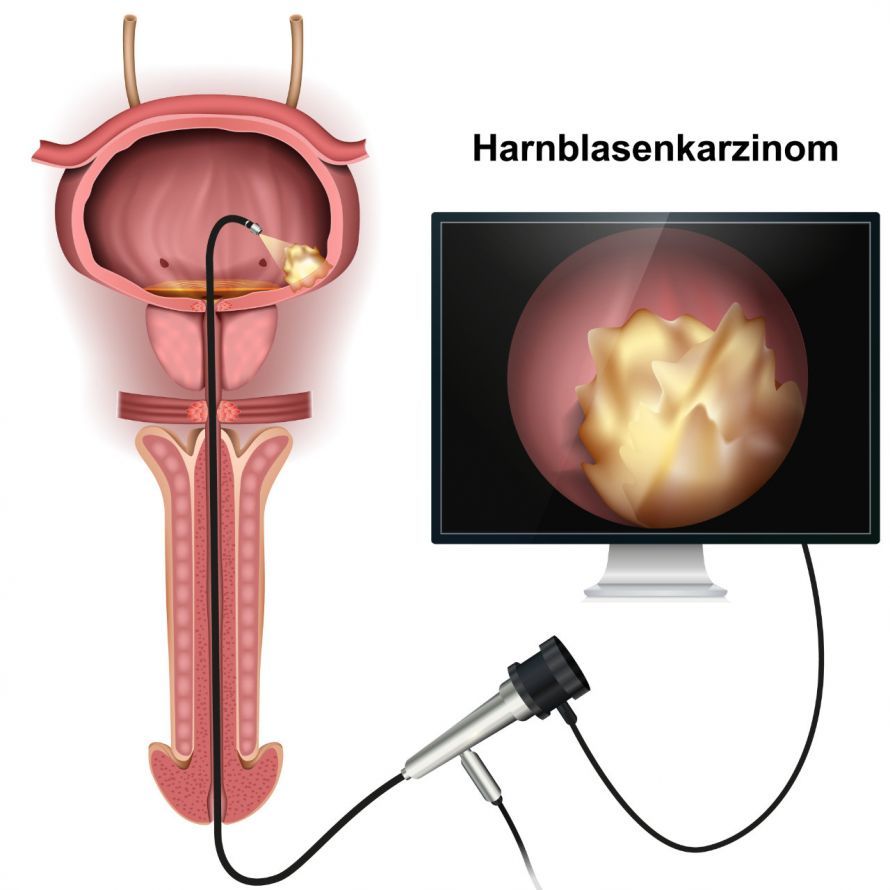
A cystoscopy is an endoscopic examination that allows the doctor to view the inside of the urethra and the bladder. During the procedure, a special instrument called a cystoscope is carefully inserted through the urethra into the bladder. The cystoscope consists of a thin, flexible or rigid tube with a small camera and light source at the tip. On a monitor, the doctor can view the mucous membrane of the urethra and bladder at high magnification and directly assess any potential pathological changes.
Cystoscopy is considered the standard procedure in urology and has been used for many decades. Despite modern imaging techniques such as ultrasound or computed tomography, it remains indispensable for evaluating the urethra and bladder, as it provides a direct view of the mucous membrane.
The procedure serves both diagnostic purposes and—as part of a therapeutic cystoscopy—allows for minor interventions. For example, tissue samples can be taken, bleeding can be stopped, or small bladder stones can be removed during the procedure.
Reasons for a Cystoscopy
A cystoscopy is always performed when changes in the urethra or bladder are suspected. It is often used to determine the cause of symptoms such as difficulty urinating, blood in the urine, or recurrent urinary tract infections. The procedure can also provide insight in cases of unexplained lower abdominal pain or urinary tract irritation.
Typical indications for a cystoscopy include:
- Suspected tumors of the bladder or urethra
- Bladder stones or foreign bodies in the bladder
- Bleeding of unknown origin
- Chronic inflammation of the bladder
- Narrowing of the urethra (strictures)
- Urinary incontinence or bladder dysfunction
- Follow-up after bladder surgery or tumor removal
In men, the procedure is also used to evaluate the internal structures of the prostate, for example, when urinary symptoms suggest an enlarged prostate.
Cystoscopy is considered particularly helpful when other imaging techniques—such as ultrasound or X-rays—do not provide clear results. It allows the doctor to view the bladder from the inside and immediately identify any changes. This enables an early decision on whether further treatment or a minor surgical procedure is necessary.
Preparation and Procedure for a Cystoscopy
No special preparation is usually required before a cystoscopy. The patient does not need to fast, but should ensure that the bladder is not completely empty. A slightly filled bladder makes it easier for the doctor to insert the cystoscope and reduces the risk of damaging the mucous membrane.
Before the procedure begins, the genital area is thoroughly disinfected to prevent infection. Next, the urethra is numbed with a local anesthetic using a special gel that also serves as a lubricant. In some cases, mild sedation or—especially for children or restless patients—brief general anesthesia may be necessary.
The doctor carefully inserts the cystoscope through the urethra into the bladder. In doing so, they follow the natural course of the urethra and take care not to irritate the mucous membrane. Once the instrument has reached the bladder, it is filled with saline solution at body temperature so that the inner walls expand and can be clearly assessed.
During the examination, the doctor observes the mucous membranes of the urethra and bladder on a monitor. This allows for the detection of pathological changes such as inflammation, tumors, or stones. A cystoscopy usually takes only a few minutes and is performed on an outpatient basis.
In women, the procedure is usually simpler than in men due to the shorter urethra, whereas in men, the urethra is longer and slightly curved. However, modern flexible cystoscopes allow for a gentle examination in these cases as well.
Possible Findings and Therapeutic Cystoscopy
A cystoscopy is not only used for diagnosis but can also be used immediately to treat certain abnormalities. This procedure is known as a therapeutic cystoscopy. Depending on the findings, the doctor can perform minor surgical procedures directly during the examination.
The most common diagnostic findings include:
- Bladder stones that obstruct urine flow or cause pain during urination,
- Inflammation of the bladder lining, such as in the context of a urinary tract infection,
- Tumors or suspicious growths on the bladder lining,
- Narrowing of the urethra, which leads to problems with urination,
- Bleeding of unknown origin or irritation of the mucous membrane.
During a therapeutic cystoscopy, the doctor can:
- take tissue samples (biopsy),
- stop or cauterize minor bleeding,
- remove urinary stones,
- dilate narrowings of the urethra, or
- inject medication directly into the bladder.
In men, cystoscopy also allows for a view of the inner parts of the prostate, enabling early detection of changes or inflammation.
The combination of direct diagnosis and immediate treatment makes cystoscopy a particularly efficient procedure. It helps to quickly identify diseases of the lower urinary tract and, if necessary, treat them in a single step.
Risks, Pain, and Complications
When performed by an experienced practitioner, cystoscopy is a safe and low-risk procedure. Nevertheless, as with any medical examination, side effects or complications may occur. These are usually harmless and resolve on their own after a short time.
Common, mostly harmless symptoms after the procedure:
- Burning or pain when urinating,
- traces of blood in the urine,
- a temporary sensation of a foreign object in the urethra, or
- an increased urge to urinate.
These symptoms are caused by temporary irritation of the mucous membrane and can usually be quickly relieved by drinking plenty of fluids.
In rare cases, an infection of the urinary tract or bladder may occur. If fever, severe pain, or blood in the urine develops after the examination, seek medical attention immediately. Antibiotic treatment may be necessary in these cases.
Very rarely, more serious complications may occur, such as
- injuries to the urethra,
- bleeding,
- allergic reactions to disinfectants, latex, or anesthetics, or
- urethral stricture as a long-term complication.
Local anesthesia is sufficient for most patients to ensure the procedure is virtually pain-free. General anesthesia is used only in isolated cases, such as with children, restless patients, or during complex procedures. Overall, cystoscopy is considered a minimally invasive routine examination that takes only a few minutes and can be performed on an outpatient basis.
Conclusion: When a Cystoscopy Is Recommended
Cystoscopy is an important diagnostic procedure in urology that provides valuable information for numerous symptoms and conditions of the lower urinary tract. It is primarily used when symptoms such as blood in the urine, pain during urination, frequent bladder infections, or unexplained pelvic discomfort occur.
Since the examination allows the doctor to view the bladder and urethra from the inside, pathological changes can be detected directly and—if necessary—treated immediately. Thanks to modern flexible cystoscopes, cystoscopy is generally a quick, relatively painless procedure performed on an outpatient basis.
Cystoscopy also plays an integral role in medical follow-up care, particularly for post-operative monitoring or after tumor treatments. Overall, it is considered a safe and efficient procedure that provides early indications of disease and helps avoid unnecessary interventions.
FAQs on Cystoscopy
How is a cystoscopy performed?
The cystoscopy procedure is simple and usually takes only a few minutes. After administering a local anesthetic, the doctor carefully inserts the cystoscope through the urethra into the bladder. The bladder is then filled with warm fluid so that the inner walls expand, allowing the doctor to examine the bladder from the inside. During the examination, minor surgical procedures—such as removing bladder stones or taking a tissue sample—can be performed if necessary. Cystoscopy is usually performed on an outpatient basis and rarely causes pain.
Is a cystoscopy painful?
Many patients wonder whether a cystoscopy is painful. Local anesthesia is usually administered to facilitate the insertion of the instrument. In only a few cases does the anesthesia fail to take full effect, which can result in a slight burning sensation when urinating or temporary irritation of the mucous membrane. Such symptoms usually subside after a short time. Thanks to modern flexible or rigid cystoscopes, the procedure is generally very gentle. If the anesthesia is effective enough, most patients find the cystoscopy uncomfortable but not painful.
Why is a cystoscopy performed?
A cystoscopy is recommended when other tests—such as ultrasound or urine analysis—do not reveal a clear cause for symptoms during urination or blood in the urine. It helps to reliably identify pathological changes such as inflammation, tumors, or bladder stones. Cystoscopy can provide clarity, particularly in cases of recurrent infections or chronic pain. During the procedure, tissue samples can also be taken or minor procedures performed without the need for surgery.
How long does a cystoscopy take?
A cystoscopy usually takes only a few minutes. Including preparation, disinfection, and recovery time, patients should plan for about 15 to 30 minutes in total. Since the procedure is performed on an outpatient basis, no hospital stay is necessary. After the cystoscopy, you should drink plenty of fluids to flush out the urinary tract and relieve any irritation.
Are there alternatives to a cystoscopy?
In some cases, imaging techniques such as ultrasound or computed tomography (CT) can be used as complementary methods. However, there is no complete alternative to a cystoscopy, as it is the only procedure that allows for a direct assessment of the mucous membrane. If you have questions about anesthesia or potential risks, you should discuss them with your doctor before the procedure. For many patients—particularly women—the procedure is often easier because their urethra is shorter and straighter.
About the medical author
Dr. med. Matthias Beintker
Medical writer