In this article, we explore the importance of fertility surgery for couples hoping to conceive, explain laparoscopic and hysteroscopic procedures, and highlight when surgery can be the path to having a child. You can also find experts in gynecological endocrinology and fertility disorders in the Leading Medicine Guide.
What is fertility surgery?
The term “fertility surgery” (also known as reproductive surgery) refers to all surgical procedures aimed at improving or restoring fertility. It is often indicated when purely conservative methods (such as hormone therapy) in gynecological endocrinology and reproductive medicine do not lead to success or when organic causes are suspected.
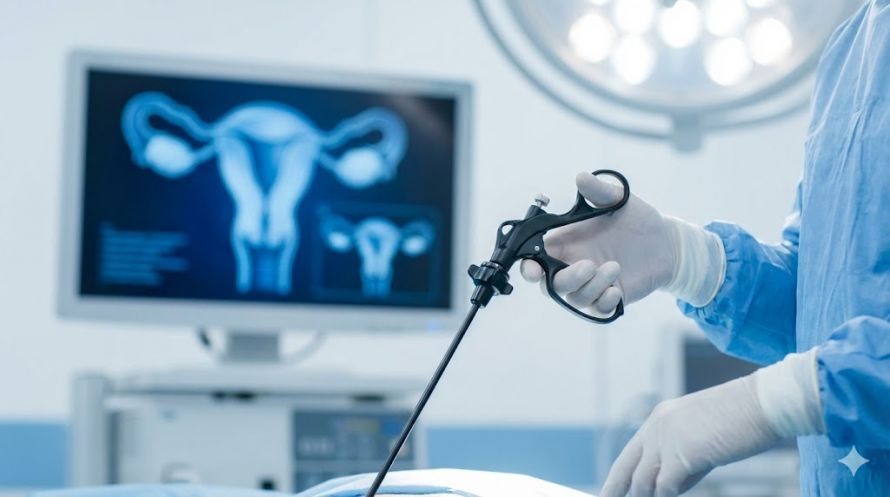
State-of-the-art fertility surgery: Minimally invasive procedures open up new possibilities for those struggling to conceive.
The Changing Role
In the past, surgery was often the first step. Due to the success of assisted reproductive technologies (such as IVF/ICSI), surgery has seemingly lost some of its importance in certain areas. But this is a fallacy: Fertility surgery for couples trying to conceive can often create the conditions necessary for IVF to succeed in the first place—or it may even render artificial insemination unnecessary by enabling a natural pregnancy.
Diagnosis and Evaluation: The First Step
Before treatment begins in conjunction with assisted reproductive technology, a diagnostic evaluation is required. The infertility evaluation must determine whether any anatomical abnormalities are present.
-
Ultrasound: Initial indications of fibroids or cysts.
-
Contrast-enhanced ultrasound: Compared to laparoscopy, a contrast-enhanced ultrasound often provides an initial assessment of fallopian tube patency but generally has poorer predictive power regarding adhesions in the pelvis.
-
Diagnostic laparoscopy (LSK): The gold standard. Only with this procedure can adhesions or small endometriosis lesions be reliably detected and often treated during the same session (“See and Treat”).
Common Clinical Presentations and Surgical Interventions
Numerous benign changes and conditions can lead to infertility. Here are the most important areas of application for fertility surgery:
1. Endometriosis and adhesions
Endometriosis is a common condition in which tissue similar to the uterine lining grows outside the uterus. Depending on their severity, endometriotic lesions can have a massive impact on fertility. Even minimal endometriosis (Stage I) can disrupt egg maturation or implantation due to inflammatory processes. The removal of adhesions (adhesiolysis) and the treatment of endometriotic lesions via laparoscopy are recommended in accordance with international guidelines to increase the chances of pregnancy (spontaneous conception).
2. Fibroids (Uterus myomatosus)
Fibroids are benign muscle tumors of the uterus. Whether they interfere with fertility depends heavily on their location and the depth of infiltration into both the uterine wall and the uterine cavity.
- Submucosal fibroids: Grow directly beneath the endometrium and displace the embryo from its space in the uterus. They should be removed via hysteroscopic resection.
- Intramural fibroids: Grow within the muscular wall. For large intramural fibroids, surgical removal is considered if they deform the uterine cavity.
- Removal of fibroids: During myomectomy, great care must be taken to preserve healthy tissue. Due to the risk of potential malignancy and morcellement (fragmentation of tissue within the abdominal cavity), strict safety standards are in place today.
3. Disorders of the Fallopian Tubes
A blockage of the fallopian tubes or an accumulation of fluid (hydrosalpinx) prevents the egg and sperm from meeting.
- Refertilization: Surgical reconstruction of the fallopian tubes (e.g., following a previous sterilization) is an option for women who do not wish to undergo IVF.
- Salpingectomy: In cases of hydrosalpinx, removing the damaged fallopian tube before IVF can improve the chances of implantation, as the inflammatory fluid no longer flows back into the uterus.
4. Uterine Malformations
Congenital malformations such as a septum (a partition within the uterus) are often identified as a cause of miscarriages. Intrauterine adhesiolysis or septum dissection via hysteroscopy is a standard procedure in fertility surgery and can usually be performed on an outpatient basis.
Methods: Laparoscopy and Hysteroscopy
Modern fertility surgery is almost exclusively minimally invasive.
- Laparoscopy (abdominal endoscopy): A camera and instruments are inserted through small incisions near the navel. This is ideal for procedures on the ovaries (note: ovarian reserve!), fallopian tubes, and in cases of endometriosis.
- Hysteroscopy (examination of the uterus): Surgical hysteroscopy is performed through the vagina. It is the method of choice for abnormalities in the uterine cavity (polyps, septa, fibroids).
Challenges in Care
Despite its high relevance, there are structural problems. The number of university hospitals specializing in gynecological endocrinology that offer comprehensive training in fertility surgery—including complex procedures—is declining. Furthermore, reimbursement as a passive participant in the healthcare system is often complicated, as fertility treatments are sometimes billed differently than medically indicated pain management (e.g., for endometriosis). Nevertheless, patients should insist on being referred to a specialized center (such as Heidelberg University Hospital or the University Clinic for Gynecological Endocrinology in other cities), where gynecological endocrinology and reproductive medicine are offered alongside surgical expertise.
Conclusion
The importance of fertility surgery remains as high as ever. It can not only diagnose the causes of infertility (diagnostically) but often resolve them during the same procedure. Whether through the removal of fibroids, treatment of endometriosis, or correction of uterine malformations: the procedure always aims to optimize the conditions for pregnancy—whether through natural conception or as preparation for assisted reproduction. Careful assessment of indications by experienced surgeons is crucial for the success and safety of the patient.
FAQ: Frequently Asked Questions About Fertility Surgery
When is a laparoscopy recommended for women trying to conceive?
A laparoscopy is recommended if endometriosis is suspected, in cases of unexplained lower abdominal pain, or if ultrasound reveals abnormalities in the fallopian tubes (e.g., hydrosalpinx) or ovaries. It can also provide clarity and resolve adhesions in cases of long-standing idiopathic infertility (infertility with no apparent cause).
What are the benefits of surgical hysteroscopy?
Hysteroscopy is used to remove obstructions directly within the uterine cavity. These include polyps, small fibroids, or a septum. Studies show that such corrective surgery can contribute to improved implantation and a higher live birth rate (LGR).
Does surgery on the ovaries affect the egg reserve?
Yes, any surgery on the ovaries (e.g., removal of cysts or endometriomas) can damage healthy tissue. Therefore, the criteria for surgery are very strict. The improvement in the pregnancy rate must be weighed against the risk of a reduced ovarian reserve.
How does endometriosis affect fertility?
Endometriosis lesions cause inflammation and adhesions. At the same time, excision (surgical removal) of the lesions is often more effective than ablation alone. In cases of severe endometriosis and pain, surgery is often unavoidable; for patients seeking to conceive who have no pain, the decision to perform another surgery is made with caution if IVF is already planned.
Where can I find specialists in fertility surgery?
You can find specialized centers in the Leading Medicine Guide under the categories of Gynecological Endocrinology or Endometriosis Centers. Make sure the center offers fertility surgery, including follow-up care for the patient, so that you can receive both diagnosis and fertility treatment from a single source.

About the medical author
Sabine Schneider
Editor-in-Chief
Sabine Schneider – medical author: Explore expert articles and medical expertise in the Leading Medicine Guide.
More about the medical author →Sources
- Deutsche Gesellschaft für Gynäkologie und Geburtshilfe (DGGG)
- Endometriose Vereinigung Deutschland e.V.
- Deutsche Gesellschaft für Reproduktionsmedizin (DGRM)
- American Society for Reproductive Medicine (ASRM)