Expert Interviews
Expert Interview with Univ.-Prof. Dr. Dr. Ludwig Heindl - Botox and Fillers: More Than Just Aesthetics—From Migraines to Teeth Grinding

Alexandra Pfitzmann ·
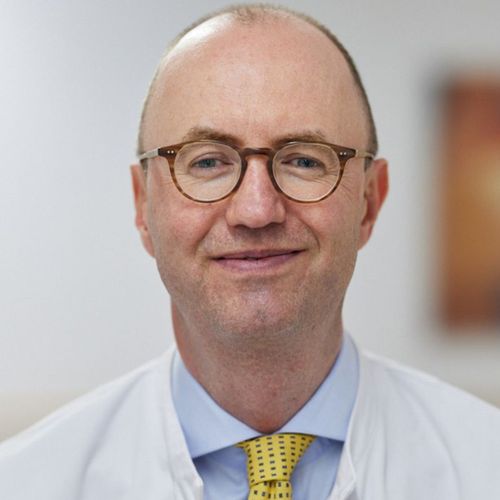
Prof. Ludwig Heindl, Ph.D., Ph.D., is a renowned physician with over 20 years of experience in aesthetic medicine. As a specialist, he places great emphasis on personalized consultations and tailored treatment plans to meet the individual needs of his patients.
At his private practice, “New Aesthetic Vision,” in Cologne, he offers a wide range of aesthetic treatments that combine the highest level of medical expertise with state-of-the-art methods. He is one of Germany’s leading experts in aesthetic facial surgery. The renowned professor combines the latest medical findings with excellent surgical experience. His name is synonymous not only with highly specialized eyelid surgery and the treatment of disorders of the lacrimal ducts, the ocular surface, and the orbit, but also with innovative minimally invasive procedures—such as scar-free laser surgery.
Prof. Dr. Dr. Heindl is recognized both nationally and internationally, both for his scientific publications and for his groundbreaking advancements in the field of ophthalmic reconstructive surgery. In addition to his extensive expertise in the field of ophthalmic oncology (eye tumors), he is distinguished by a comprehensive, interdisciplinary approach to treatment. Every patient benefits from individually tailored treatment strategies developed in close collaboration with other medical specialties. With his passion for ophthalmology, his scientific dedication, and his high standards for holistic patient care, Prof. Dr. Dr. Heindl always places the individual and their specific needs at the center of his practice. Furthermore, Prof. Dr. Dr. Heindl demonstrates that modern aesthetic procedures go far beyond mere cosmetic corrections: Under his medical expertise, Botox and fillers are not only used for wrinkle treatment but also provide targeted relief for migraines, neurological symptoms, excessive sweating, or teeth grinding. The editorial team of the Leading Medicine Guide learned more about this in a conversation with Prof. Dr. Dr. Heindl.
Botox and fillers are often regarded as purely cosmetic procedures for smoothing wrinkles and contouring the face. Yet their modern applications have long since extended far beyond that: Botox is now successfully used to treat migraines, excessive sweating, and teeth grinding. Fillers, too, offer more than just aesthetic improvements; they can also alleviate functional symptoms. The medical benefits of these substances demonstrate just how diverse treatment options are today—and that aesthetics and health are often more closely linked than one might think.
The main component of Botox, botulinum toxin type A, blocks the release of acetylcholine, a neurotransmitter responsible for muscle contraction. This property makes Botox a valuable tool in the treatment of a wide range of medical conditions that extend far beyond cosmetic applications.
“When people think of Botox, many initially think of its aesthetic uses—such as smoothing out forehead wrinkles. But botulinum toxin type A, as the active ingredient is correctly called, is far more than just a treatment for wrinkles. It is one of the most thoroughly researched medications in neurology and has a long medical history that extends far beyond cosmetic medicine. Its first applications were in the treatment of neurological movement disorders. As early as the 1980s, Botox was being used for specific purposes—for example, to treat strabismus (crossed eyes) or blepharospasm (eyelid spasms). Since then, the drug has held a firm place in ophthalmology and neurology in particular. Today, Botox is officially approved for numerous medical indications and is also used with great success in so-called off-label therapies. These include, among other things, the treatment of chronic migraines, especially in patients who experience headaches on more than 15 days per month. Other areas of application include cervical dystonia, which causes uncontrolled head and neck movements; facial muscle spasms such as hemispasm of the face; and, once again, blepharospasm. Another highly relevant area of application is the treatment of spasticity—for example, following a stroke or in the context of multiple sclerosis. Botox is also used to treat teeth grinding, known as bruxism, when the masticatory muscles are overactive. It also helps with excessive sweating, or hyperhidrosis, such as under the armpits or on the palms of the hands. Botox can also provide pain relief, for example, in cases of muscle tension or chronic pain syndromes. “All these applications make it clear: From a medical standpoint, Botox is a true all-rounder—far more than just a remedy for frown lines,” explains Prof. Dr. Dr. Heindl at the start of our conversation.
Botox is being used more and more frequently in medical practice for neurological conditions such as migraines and teeth grinding, as it has the ability to regulate communication between nerves and muscles.
In the case of migraines—a neurological condition characterized by recurring, often very painful headaches—Botox can reduce the frequency and intensity of attacks. Migraines are often associated with overactivity of certain nerves in the brain, which leads to increased pain transmission.
“Botulinum toxin specifically blocks the release of the neurotransmitter acetylcholine at the so-called motor end plate. This means that the nerve can no longer transmit an impulse to the muscle—so the muscle either does not contract at all or contracts only weakly. This muscle-relaxing effect is harnessed to treat classic movement disorders. In the case of migraines, the mechanism of action is somewhat more complex. Here, Botox not only inhibits muscle activity but also the release of certain neurochemical messengers—such as CGRP, substance P, and glutamate. These substances play a central role in pain processing and inflammatory processes in the area of the trigeminal nerve. By administering targeted injections into specific areas—such as the forehead, temples, back of the head, and neck—the hypersensitivity of the nervous system can be significantly reduced. “Studies show that this leads to a noticeable reduction in the frequency of migraine attacks,” says Prof. Dr. Dr. Heindl, who then explains how the treatment works for teeth grinding: “In this case, the treatment targets overactive masticatory muscles, particularly the masseter muscle. The injection specifically reduces chewing pressure—this alleviates pain in the temporomandibular joint, prevents tooth damage, and stops the chewing muscles from continuing to hypertrophy. However, very precise dosing is crucial here to avoid impairing function—that is, chewing and speaking.”
One side effect that is quite welcome for many patients: If the forehead is also treated as part of migraine therapy, it can simultaneously lead to a smoothing of the expression lines there. In such cases, medical benefits can certainly be combined with an aesthetic effect—even if that is not the primary goal. On the other hand, those who wish to consciously preserve their facial expressions can achieve this through targeted placement and dosing.
There are differences in dosage and technique when Botox is used for medical rather than aesthetic purposes. While both applications use the same medication, there are various considerations that must be taken into account for medical use.
For aesthetic treatments, such as smoothing out wrinkles or treating frown lines, Botox is typically injected in smaller doses into specific, superficial muscles to achieve the desired aesthetic effect. The dosages are usually lower, and the focus is on selectively relaxing the muscles without significantly restricting natural facial expressions or movement. Medically, however, in the treatment of conditions such as migraines, teeth grinding, or excessive sweating, higher doses are required, and injections are often administered to larger areas of the body, depending on the specific indication.
“In medical contexts, significantly higher dosages are generally necessary. Here, treatment follows standardized protocols. For example, in the case of chronic migraines: approximately 155 units of botulinum toxin are injected at 31 precisely defined points—an established protocol. For neurological conditions such as spasticity or dystonia, the required dose can even amount to several hundred units. The exact amount then depends on the size of the affected muscles and the individual findings. The injection technique also differs. While in aesthetic medicine injections are typically administered more superficially—that is, intradermally or superficially intramuscularly—medical injections are often administered deep into the muscle. This requires in-depth knowledge of neuromuscular anatomy—in some cases, imaging techniques such as ultrasound or electromyography are also used to precisely target the desired area. The primary goal of medical therapy is not visual smoothing or symmetry, but rather functional improvement—that is, the targeted reduction of pathological muscle activity without significant side effects. A common misconception: The 30 to 33 injection points in migraine treatment do not mean 30 appointments—the entire procedure is performed in a single session. Even though there are many injection sites, the treatment is generally well tolerated. The injections themselves cause only a slight prick. In deeper muscle layers, the prick is felt a bit more, but people with migraines in particular perceive this pain as minimal compared to their usual symptoms. However, the effect does not set in immediately. It takes about two to four weeks for the effect to build up—the so-called “peak” of the effect. After that, the effect slowly wears off again. That’s why it’s important for patients not to wait until they’re back in full-blown pain, but to schedule a follow-up appointment in a timely manner. The interval between two treatments is typically three to six months—depending on the individual’s course of the condition,” explains Prof. Dr. Dr. Heindl.
Coverage by health insurance providers is a complex issue. For certain indications, such as chronic migraine, reimbursement is possible if specific requirements are met—such as prior documented ineffectiveness of other treatment options. If coverage is not granted, patients should expect to pay approximately 200 to 300 euros per treatment—depending on the required dose. Since migraine is a chronic condition, botulinum toxin is often a long-term therapy. For many patients, however, this means above all an improvement in quality of life.
Botox can offer an extremely effective treatment option for excessive sweating, also known as hyperhidrosis. This condition involves excessive activity of the sweat glands, which occurs regardless of external temperatures or physical activity.
Botox works by blocking the nerve signals responsible for excessive sweat production. It inhibits the release of acetylcholine, a neurotransmitter that stimulates the sweat glands to produce sweat. When Botox is injected into the affected areas of the skin—typically the underarms, palms, or soles of the feet—it blocks nerve signals and thus significantly reduces sweating.
“The injections are administered directly into the affected areas, and the dose is precisely tailored. So if someone suffers from severe sweating on their feet, these specific areas can be treated with Botox to block the excessive activity of the sweat glands. The effect begins within a few days and can last up to six to nine months. Many patients report a significant reduction in sweat production, often by more than 80%. Repeated treatments are possible and would further prolong the effect, and long-term desensitization of the sweat glands can also be achieved. For many, Botox is therefore a valuable treatment option, especially when other conservative measures such as antiperspirants or iontophoresis have not yielded the desired results. “Especially in professional settings, where excessive sweating can quickly become uncomfortable, Botox offers many affected individuals a good solution to help them feel confident and comfortable again,” explains Prof. Dr. Dr. Heindl.
However, the duration of the effect depends on various factors, such as the body’s individual response to Botox and the frequency of treatment. Some patients experience long-term improvement and may require follow-up treatments less frequently after several sessions. In some cases, the effects may even become more lasting over time, as the sweat glands are, to a certain extent, “retrained” to produce less sweat.
While fillers were originally used primarily to fill wrinkles and enhance facial volume, they now also play an important role in the restoration and treatment of various medical conditions.
Prof. Dr. Dr. Heindl comments on this: “Fillers, especially those based on hyaluronic acid, are no longer just an integral part of aesthetic medicine. They are used to compensate for volume loss, define contours, and fill in wrinkles. Fillers also have their place in medical practice across various fields. One example is reconstruction following trauma or surgery, such as in cases of scarring or tissue loss. Hyaluronic acid is also used in lip or palate augmentation, particularly in cases of functional speech or swallowing disorders. Furthermore, fillers are used in the treatment of HIV-related lipoatrophy, a condition in which the tissue beneath the skin atrophies. They are also used to correct asymmetries caused by paralysis, such as in cases of spasticity. Another interesting area of application is ophthalmology, particularly following the loss of an eye. In such cases, the tissue in the orbit (eye socket) is filled with filler to create a foundation for an ocular prosthesis, since the tissue can shrink over time,” he adds:
“The choice of filler depends on various factors, particularly the molecular size, the degree of cross-linking, and the viscosity of the material. Very fine fillers are used for superficial lines, while more highly cross-linked volumizing fillers are used for larger areas such as the cheeks, chin, or for scar correction. So there isn’t just one filler; rather, there is a wide range of options that are used as needed.”
If patients are interested in Botox or filler treatment for medical reasons, they should keep a few important points in mind to ensure that the treatment is both safe and effective.
First and foremost, it is crucial to find a qualified and experienced physician who has extensive knowledge of the use of Botox and fillers and experience in the medical application of these treatments. This ensures that the physician uses the correct techniques and tailors the treatment to the patient’s individual needs.
“Ideally, physicians should specialize in ophthalmology, neurology, dermatology, or plastic surgery. The medical indication must always be clarified and documented. A thorough consultation is essential before treatment: The patient must be informed about possible side effects, alternative treatment options, the duration of the effect, and follow-up care. Especially with Botox, it should also be clarified whether the patient is taking any medications that could affect the treatment’s efficacy, such as muscle relaxants. For fillers, a thorough medical history regarding autoimmune diseases or allergies is important. Another important point: Patients should under no circumstances undergo treatments performed by non-medical personnel. This also applies to vacation trips, where such treatments are often offered on the beach—in my opinion, complete nonsense. There is an increased risk of complications there, primarily due to improper technique and a lack of sterility. Complications can certainly arise from the improper use of Botox and fillers. When used correctly, however, Botox is extremely safe. The most common, usually temporary side effects are local, such as mild pain at the injection site, small bruises, slight swelling, or even fatigue. In very rare cases, systemic symptoms may also occur. Specific risks are associated primarily with Botox, such as muscle weakness when the forehead is treated, leading to a drooping upper eyelid, or visual disturbances if injections are administered too high around the eyes. However, these effects are always reversible and disappear after a few weeks. That’s why, with Botox and fillers alike, the rule really is: less is more. You always have to work closely with the patient,” explains Prof. Dr. Dr. Heindl.
With fillers, the risks are definitely higher, especially if they are injected into blood vessels. One of the most serious complications is vascular occlusion, in which the vessels become blocked, which can lead to circulatory problems.
“The first signs are pain, paleness, or a sensation of cold. But overall, these serious complications are fortunately very rare and usually occur when performed by inexperienced personnel or outside of medical facilities. Training, experience, and proper technique are truly crucial here,” says Prof. Dr. Dr. Heindl.
There are also children who suffer from extremely severe migraines for whom Botox may be medically appropriate. But—and this is very important—Botox should only be used in children if there is a clear medical indication and if the child is able to cooperate during treatment.
Botox originally comes from the field of medicine, not the beauty industry. Its aesthetic use only became popular later.
“In fact, botulinum toxin was already being used in neurology in the 1980s to treat conditions such as strabismus or eyelid spasms. Botox selectively blocks the release of acetylcholine at the motor end plates of the muscles. So the first medical applications came from neurology, and it was only later that people discovered Botox could also be used for aesthetic purposes. The name “botulinum toxin” naturally causes some unease, because “toxin” does indeed mean poison. But it is a relatively weak toxin that breaks down completely after application. So it’s not as dangerous as it’s sometimes portrayed. And of course, in cases with a medical indication—such as patients suffering from severe chronic migraines—it is entirely justified to inject the toxin to alleviate their suffering. But it remains, of course, a personal decision for each patient whether to opt for an aesthetic treatment. Botox and fillers are also elective procedures that each person must decide on for themselves. It is important that patients are well-informed and that the treatment is performed by safe, knowledgeable professionals,” emphasizes Prof. Dr. Dr. Heindl.
At the private practice “New Aesthetic Vision” in Cologne, one of the leading institutions for aesthetic medicine, only top-quality products from trusted sources are used to ensure the safety and success of the treatments. Prof. Dr. Dr. Heindl strongly advises patients to trust only reputable providers and experienced physicians.
“There really must be a certain level of expertise, and quality also plays a major role. The medication used must be of the highest quality. We use only very high-quality products from Germany—genuine top-tier products that aren’t readily available on the open market. The price of these products is, of course, a major cost factor. For example, if I were to use an inferior filler from abroad that costs only one euro, I might be able to sell it for 50 or 100 euros. But I would never use such a cheap product that lacks quality controls and doesn’t meet any standards. That’s simply not responsible. Patients need to know what they’re getting into. A 20-year-old girl interested in a treatment might not know how to tell the difference between high-quality and low-quality products. She might look on Instagram and see that someone has had a treatment and that it looks “cool” or “beautiful.” But such a decision should not be made without careful consideration. That’s why it’s so important to me that treatments are always performed only by specialists who have the appropriate expertise. And, of course, the treatment must take place in a medical setting—not in a nightclub or similar venues. “It’s about the quality of the products and the safety of the patients,” Prof. Dr. Dr. Heindl emphasizes strongly.
Thank you very much, Prof. Dr. Dr. Heindl, for your insightful comments!
Share this article
Expert Interviews
Read next
- Expert interview
Expert interview with Professor Dr Elmar Herbst, PhD
Oct 15, 2026
Patient-centred and personalised knee surgery
Read more - Expert interview
Cardiogeriatrics: Significance and benefits in the context of hospital reform
Sep 21, 2026
Cardiogeriatrics: Significance and benefits in the context of hospital reform
Read more - Expert interview
Expert Interview with Professor Dr. Amadeus Hornemann, MPH
Sep 18, 2026
Prof. Amadeus Hornemann on Precision Medicine in Gynecology: Modern Surgery, New Techniques, Better Quality of Life
Read more