The health checkup is one of the legally mandated early detection and preventive medical examinations. Starting at age 35, you can undergo a checkup every two years that is covered by your health insurance. The scope of coverage depends on the type of insurance you have. The health checkup is designed to identify existing risks at an early stage.
Find out below which tests are included in a health checkup.
The health checkup is designed to detect diseases such as cardiovascular disease, kidney disease, and diabetes as early as possible. In addition, the patient’s overall fitness and health status are assessed. This allows for measures to be taken that counteract health risks and thus prevent serious complications later in life.
Procedure for the Health Checkup
You can have a health checkup with a general practitioner, a family doctor, or an internist. However, the examination always follows a specific protocol. In total, the checkup takes about two hours.
First, a thorough initial consultation—also known as a medical history—is conducted. During this consultation, the doctor will ask about the following areas:
- Dietary habits
- Smoking habits
- Sports and exercise
- Pre-existing conditions
- Family history of certain diseases (diabetes mellitus, heart attacks and strokes, cancer)
The doctor will then perform a physical examination, during which he or she will listen to the heart and lungs and determine body weight and body mass index (BMI). Blood pressure and pulse will also be measured. A urine sample will also be collected, and a blood sample will be drawn. Various important laboratory values will be determined from both samples. If a specific disease is suspected, the doctor may order additional tests. Without a suspected diagnosis, the patient must pay for these tests out of pocket. For those with private insurance, these tests may be covered under their insurance plan. Additional tests may include, for example, an ultrasound, a stress ECG, or a colonoscopy.
Listening to the Heart and Lungs
For this examination, the doctor uses a stethoscope. With it, the doctor can listen to the heart and lungs to assess whether they are functioning normally. The heart is assessed based on the regularity of the heartbeat. The doctor can also evaluate the function of the heart valves. If they do not close properly or are narrowed, they produce sounds that are heard in addition to the heartbeat. The doctor can then attribute these sounds to the specific heart valves. This may raise an initial suspicion of heart rhythm disorders or heart valve insufficiency—that is, when the heart valves do not close properly. When listening to the lungs, the doctor also looks for abnormal sounds. If the breath sounds through the stethoscope are rattling or wheezing, the doctor can draw initial conclusions about fluid retention or lung diseases.
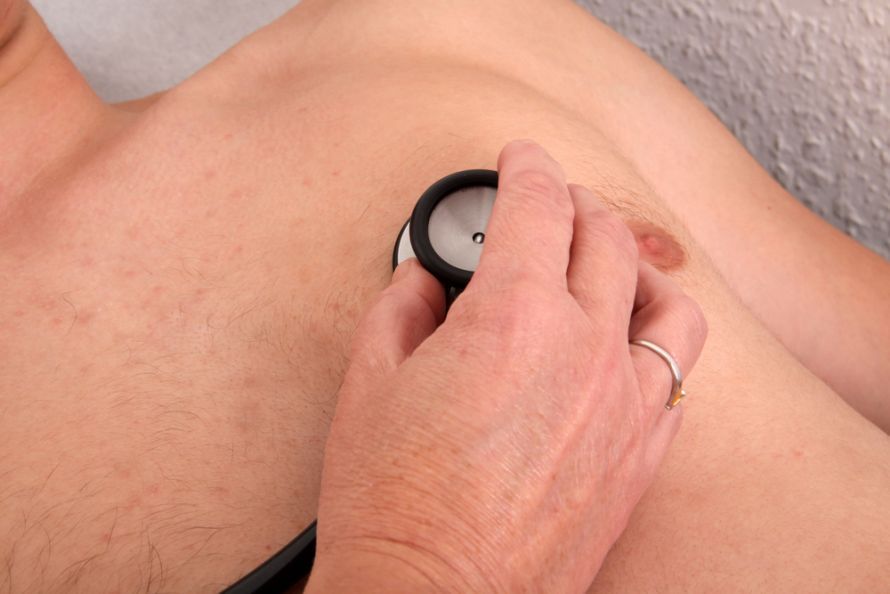 Heart examination with a stethoscope @ Klaus Eppele /AdobeStock
Body Weight and Body Mass Index
- Underweight: below 18.5
- Normal weight: 18.5 – 25
- Overweight: 25–30
- Obesity: over 30
However, different tables apply to children than to adults. Furthermore, athletes, for example, may have a BMI in the overweight range because muscle weighs more than fat. The BMI is therefore only a guideline and should always be interpreted with all factors in mind. Being overweight can increase the risk of many different diseases. These include, for example, diabetes, cardiovascular disease, and osteoarthritis.
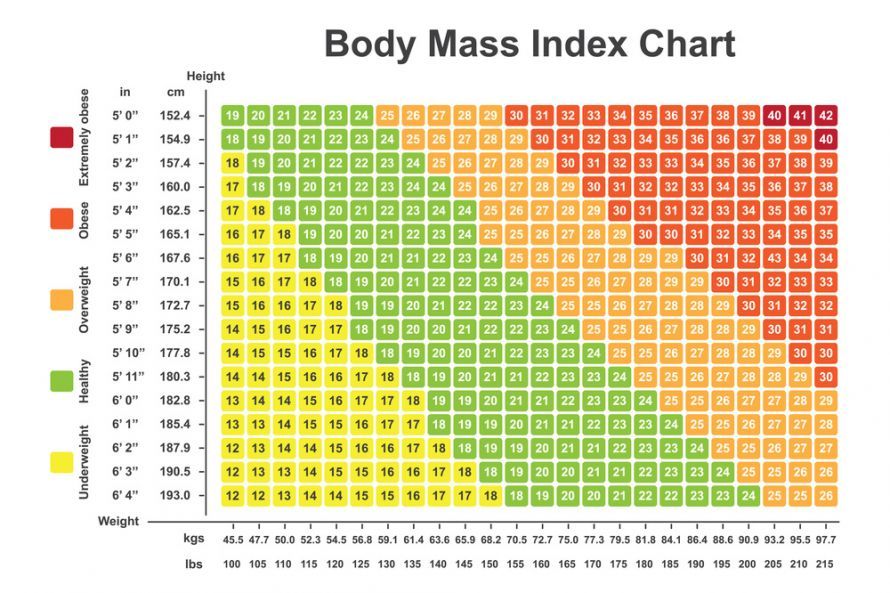 Table for adults @ Ali /AdobeStock
Blood Pressure and Pulse
The pulse measures the mechanical, rhythmic expansion and contraction of the blood vessel walls caused by the heart’s pumping action. The pulse provides information about heart rate and heart rhythm. However, the pulse is influenced by a variety of factors; for example, it increases during physical activity or when a person is excited. For this reason, the resting pulse is measured during an examination. In adults, this is normally between 60 and 80 beats per minute. By checking the patient’s pulse, the doctor can determine whether the heart is beating regularly and thus rule out a heart rhythm disorder.
Blood pressure indicates the force with which blood is pumped through the blood vessels. It is measured in millimeters of mercury (mmHg) and consists of two values. The first value is the systolic blood pressure, and the second value is the diastolic blood pressure. Systolic blood pressure is measured when the heart pumps blood into the blood vessels. This phase is called systole. Afterward, the heart relaxes again and the pressure drops. This phase is called diastole and is measured by the diastolic blood pressure. The values can be categorized into different levels using a blood pressure chart:
- Optimal values: below 120/80 mmHg
- Normal values: below 130/85 mmHg
- High-normal values: below 140/90 mmHg
- High blood pressure (Stage 1): below 160/100 mmHg
- High blood pressure (Stage 2): below 180/110 mmHg
- High blood pressure (Stage 3): above 180/110 mmHg
- Isolated systolic hypertension: above 140/below 90 mmHg
If blood pressure remains consistently too high, it can lead to various complications. These include atherosclerosis (hardening of the arteries), stroke, and heart attack.
 Blood pressure can provide clues about health and serious illnesses @ eyetronic /AdobeStock
Urine and Blood Tests
Laboratory results from a urine sample can help identify various metabolic disorders (such as diabetes mellitus) and kidney diseases. If blood sugar levels are too high in both the blood and urine, this indicates diabetes. If elevated blood lipid levels, such as triglycerides and cholesterol, are detected, this may indicate hereditary lipid metabolism disorders or an unhealthy diet. These factors increase the risk of atherosclerosis and, consequently, of a stroke or heart attack. If red blood cells are present in the urine, or if the protein and creatinine levels are high, this may indicate kidney disease.
Follow-up Consultation