A stroke is an acute brain condition that requires immediate treatment. Typical symptoms often appear suddenly and can drastically change a patient’s life. During a stroke, part of the brain is no longer supplied with enough oxygen, causing damage to nerve cells. A stroke can be caused by a blood clot or bleeding and is also known as a cerebral infarction.
It is particularly important to recognize the symptoms of a stroke early so that the patient can be transported quickly to a hospital with a stroke unit. The right treatment determines the severity of the consequences of a stroke. Risk factors such as high blood pressure, diabetes, or vascular changes significantly increase the risk of a stroke.
Therefore, it is crucial to understand strokes in order to prevent them effectively.
What is a stroke, and how does it occur?
A stroke is often preceded by a transient ischemic attack (TIA, temporary lack of blood flow). This means that the brain is not receiving enough blood.
As a result, brain cells lack oxygen and nutrients, and there is a risk that the affected area of the brain will die. Depending on how long the disruption lasts, this region of the brain may retain some or none of its function later on.
The patient exhibits symptoms typical of a stroke for several hours and requires immediate emergency medical care. The sooner the patient receives medical care, the better the prognosis.
Anyone who experiences a cerebral infarction should—if possible—call emergency medical services immediately. A stroke poses an acute threat to life.
Most people who suffer a stroke are over 60 years of age.
Causes and Risk Factors for a Stroke
The main causes of a stroke are:
- blockage of a blood vessel (ischemic or “white” stroke) or
- bleeding in the brain (hemorrhagic or “red” stroke)
An ischemic stroke is caused by a blood clot that blocks a major blood vessel in the brain. This cuts off blood supply to the affected areas of the brain.
Narrowing of the blood vessel due to atherosclerosis (hardening of the arteries) is also possible. In this condition, cholesterol deposits build up on the inner walls of the affected blood vessels. This reduces the vessel’s diameter. In advanced atherosclerosis, there is a risk that the vessel will become completely blocked and blood flow will cease.
In the less common type of stroke, known as a hemorrhagic stroke, a blood vessel in the brain bursts. The escaping blood seeps into the surrounding brain tissue. The affected areas of the brain no longer receive enough oxygen. The pooling blood increases intracranial pressure and, in extreme cases, can even impair breathing and heartbeat.
A specific type of ischemic stroke is subarachnoid hemorrhage (SAH). The subarachnoid space is located between the thin membrane covering the brain’s surface and the skull. It contains cerebrospinal fluid (CSF) and blood vessels.
The risk here stems from an aneurysm (a small, sac-like bulge) in one of these blood vessels: If the aneurysm ruptures, the escaping blood presses on the surrounding brain tissue.
The patient suddenly experiences extreme headaches and requires urgent emergency medical care.
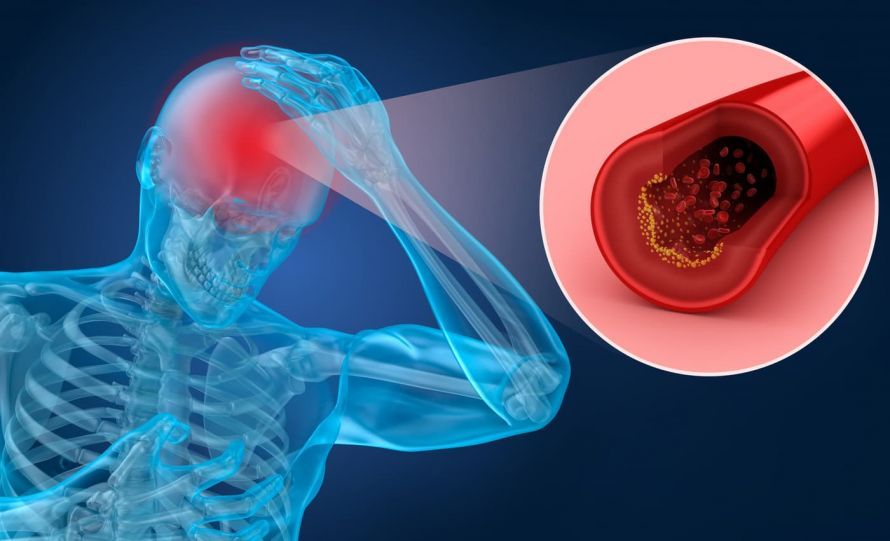
The following risk factors increase the likelihood of a stroke:
- High blood pressure
- Unhealthy lifestyle (smoking, alcohol)
- Obesity
- Unhealthy diet
- Lack of physical activity
- Diabetes
- High cholesterol
- Heart disease (atrial fibrillation, heart valve defects)
- Certain types of migraines
If a patient has multiple risk factors, they are at risk of having a stroke.
What are the symptoms of a stroke?
The symptoms of a stroke depend on:
- the affected area of the brain and
- the extent of the reduced blood flow
The most common signs include:
- Difficulty speaking (slurred speech, unnatural pauses, word repetitions) up to complete loss of speech
- Impaired understanding of speech
- Unilateral facial paralysis with a drooping corner of the mouth
- One-sided paralysis of the body
- Numbness on one side of the body
- Vision problems, including (temporary) blindness (double vision, blurred vision)
- Severe dizziness
- Nausea and vomiting
- Severe headaches
- Difficulty swallowing
- Disorientation, including confusion
- Gait disturbances
- Shortness of breath
- Joint pain
- Loss of consciousness
The symptoms of a stroke usually occur suddenly and are a clear warning sign of an acute disturbance in the brain. The most common signs of a stroke include one-sided paralysis, speech difficulties, and vision problems. Many people affected report that the face, arm, or leg on one side of the body feels weak or numb. Other symptoms of a stroke may include dizziness, unsteadiness when walking, or a sudden loss of coordination. In some cases, severe headaches may also occur, particularly with a brain hemorrhage.
A stroke occurs when part of the brain is no longer adequately supplied with oxygen and nutrients, causing damage to nerve cells. That is why it is crucial to recognize symptoms quickly and act immediately. In an ischemic stroke, blood vessels are blocked by a blood clot, while a hemorrhagic stroke involves bleeding. Both types lead to similar neurological deficits.
It is particularly important to take even mild or temporary symptoms seriously. A transient ischemic attack can serve as a warning sign and significantly increases the risk of a severe stroke. Anyone who notices such symptoms in themselves or observes them in others should call emergency medical services immediately. Only prompt treatment can prevent permanent damage and ensure that the consequences of a stroke do not become severe.
First Aid for a Stroke
In the event of a stroke, rapid recognition and treatment are crucial. The sooner treatment begins, the greater the patient’s chances of suffering no or only minor health damage.
If help arrives too late, there is a risk of paraplegia or even death.
If you suspect a stroke, call for help immediately, such as:
- Fire department
- Emergency medical services
- Ambulance
First aid consists of calming the patient and placing them on their back. Elevate their upper body with a pillow.
Place unconscious patients and stroke victims who are vomiting in the recovery position.
Check the patient’s pulse and breathing at regular intervals. If neither is detectable, carefully lay the patient on their back on the floor. Perform CPR.
The emergency medical services will then transport the patient to the nearest hospital or to a hospital’s stroke unit. A stroke unit is a specialized department in certain hospitals dedicated to treating strokes. It specializes in stroke care.
Diagnosing a Stroke
The hospital staff will first draw blood from the patient.
The medical staff will check:
- Blood lipids
- blood sugar, and
- blood clotting factors
Diagnosis of a stroke begins immediately upon the patient’s arrival at the hospital, as every minute counts. If a stroke is suspected, neurological examinations are first conducted to accurately assess symptoms such as paralysis, speech difficulties, or sensory deficits. The goal is to quickly determine which type of stroke is present and what treatment must be initiated.
A key component of the diagnostic process is brain imaging. Using CT or MRI, it can be determined whether the patient is experiencing an ischemic stroke caused by a blood clot or a hemorrhagic stroke. This distinction is crucial, as the treatments differ fundamentally. In addition, blood vessels are examined to identify narrowings or blockages that may have caused the stroke.
Blood pressure, blood sugar, and other risk factors such as diabetes are also checked to identify possible causes of the stroke. In specialized facilities such as a stroke unit, diagnosis is particularly rapid and targeted. In addition, ultrasound examinations of the blood vessels and ECG tests may be performed to identify cardiac arrhythmias as a trigger.
Accurate and rapid diagnosis is crucial for the patient’s subsequent care. Only once the cause has been clearly identified can the appropriate treatment be initiated to restore an adequate supply of oxygen to the brain and minimize permanent damage.
Treatment of a Stroke
Doctors treat ischemic strokes by administering injections of a blood-clot-dissolving medication (systemic thrombolysis).
However, this treatment is only successful if the injection is administered no later than four and a half hours after the stroke.
If successful, blood flow is restored and the risk of permanent long-term complications is minimized. However, systemic thrombolysis is not suitable for patients with certain pre-existing conditions.
During mechanical thrombectomy, the physician guides a thin catheter to the blocked blood vessel. He removes the lodged clot and suctions it out. This procedure is only suitable for embolisms in the large cerebral vessels. It is only likely to be successful if performed within eight hours of the onset of the first stroke symptoms. Furthermore, it is performed only in specialized stroke centers.
In the case of a hemorrhagic stroke, doctors must stop the bleeding in the brain and reduce the high intracranial pressure. To do this, they sometimes have to open the skull. Leaking blood vessels caused by an aneurysm can be closed using special surgical techniques.
For hemorrhagic strokes caused by high blood pressure, doctors administer blood pressure-lowering medications.
Which doctor should you see in the event of a stroke?
At the first signs of a stroke, you must call an emergency medical service immediately. Every minute counts during treatment. However, the primary care physician is responsible for initial care, as they know the patient best.
Specialized examinations are performed by specialists or hospital departments, and the results are compiled by the primary care physician. Radiologists, for example, examine the blood vessels using imaging techniques.
Depending on the results, neurologists and vascular surgeons may also be involved in the patient’s care. If a blood clot in the heart caused the stroke, a cardiologist is the appropriate specialist to consult.
What does rehabilitation after a stroke look like?
In some cases, early rehabilitation takes place in the hospital’s stroke unit. Depending on the damage caused by the stroke, the patient receives physical and/or occupational therapy.
Physical therapy helps restore the patient’s impaired movement patterns, sense of balance, and other affected functions.
It also corrects poor posture and paralysis, helping the patient regain mobility. If full recovery is not possible, rehabilitation should at least preserve the patient’s remaining physical functions and abilities.
With the help of occupational therapy, the patient relearns how to handle certain objects and perform necessary activities of daily living. Occupational therapy is designed to prepare the patient to lead as independent a life as possible.
If the stroke has caused a speech disorder and/or difficulty swallowing, speech therapy rehabilitation is necessary.
In addition to standard rehabilitation measures, there are other methods, such as:
- neuropsychological training, which is beneficial in cases of hemiplegia, and
- Concomitant psychotherapy
Patients suffering from depression work through their emotional problems with a psychotherapist.
Conclusion
The risk of a stroke can be significantly reduced by identifying stroke risk factors. A common cause of stroke is impaired blood flow, with potential causes such as high blood pressure or vascular changes playing a central role. A stroke usually occurs suddenly and results in the brain no longer receiving an adequate supply of oxygen and nutrients. The signs of a stroke should be taken seriously, as recognizing symptoms quickly can be crucial. An ischemic stroke is usually caused by a blocked blood vessel, which requires immediate treatment. If a stroke is suspected, action must be taken without delay, as a stroke should be treated immediately.
Many people experience a stroke unexpectedly, which is why education about strokes is particularly important. The severity of the stroke often determines its long-term consequences and significantly affects quality of life. Patients who have suffered a stroke often require targeted rehabilitation to help partially restore lost functions. Stroke treatment includes acute interventions as well as follow-up care to stabilize the patient. Consistent treatment helps prevent another stroke and minimize the consequences of the stroke as much as possible.
A stroke is always a medical emergency in which every minute counts. Responding early can significantly reduce the risk of suffering a stroke. Strokes often occur without warning, which is why prevention is crucial. The causes of a stroke should be identified early so that targeted measures can be taken. Treating a stroke as quickly as possible significantly improves the prognosis. Knowing how to respond correctly in the event of a stroke saves lives and reduces permanent damage.
FAQ
What are the typical symptoms of a stroke?
Typical symptoms of a stroke include sudden paralysis, speech difficulties, vision problems, and neurological deficits. These symptoms often appear abruptly and are a clear indication of an acute brain condition.
What causes a stroke?
A stroke is usually caused by a blood clot that blocks a blood vessel or by bleeding in the brain. An ischemic stroke involves a disruption of blood flow, while a hemorrhagic stroke involves bleeding in the brain.
What is a TIA, and why is it dangerous?
A transient ischemic attack, or TIA for short, is a warning sign of a stroke. Although the symptoms disappear quickly, the risk of another stroke is greatly increased.
How is a stroke treated?
Acute treatment takes place in a hospital, often in a stroke unit. Depending on the cause, thrombolysis or thrombectomy is used to remove the blood clot and restore blood flow to the brain.
Can a stroke be prevented?
A stroke can be prevented by managing risk factors such as high blood pressure, diabetes, and elevated blood pressure. A healthy lifestyle helps significantly reduce the risk of a stroke.
Share this article

About the medical author
Sabine Schneider
Editor-in-Chief
Sabine Schneider – medical author: Explore expert articles and medical expertise in the Leading Medicine Guide.
View full expert profile →Sources
- S3-Leitlinie „Schlaganfall“ (AWMF-Register-Nr. 053-011), Stand 05.05.2020: register.awmf.org/de/leitlinien/detail/053-011