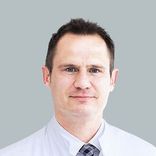
Prof. Christoph Kleinschnitz
Specialist for Neurology in Essen
University Hospital, Essen· Hufelandstrasse 55, 45147 Essen
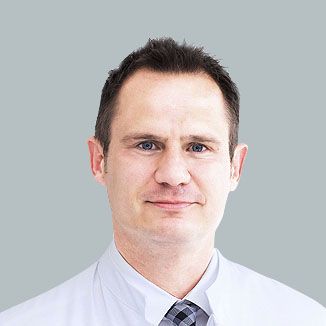
Prof. Kleinschnitz has acquired an immense reputation above all as a proven stroke expert. As the head of Germany's oldest stroke unit, the experienced neurologist knows that every minute counts when a stroke occurs - and he is also considered an absolute pioneer in interdisciplinary cooperation.
Areas of focus
- Cerebrovascular accident
- Multiple sclerosis
- Parkinson’s disease
- Neuroimmunology
- Neuropathy
- Early identification of CVA
- Neurovascular conditions
Admission criteria
- At least 10 years of surgical and treatment experience
- Expertise in modern diagnostic and surgical procedures
- An outstanding treatment focus within your own specialist area
- Member of a leading national professional association
- Leading professional position
- Active participation in specialist events (e.g. lectures)
- Active in research and teachin
- Evaluated quality management (e.g. certification)
About Prof. Christoph Kleinschnitz
Christoph Kleinschnitz studied medicine at the University of Wurzburg (1994 to 2000). Following his doctorate (2001), he worked at the University Neurology Clinic in Wurzburg for several years and qualified as a neurology specialist in 2007. In 2009, he was made the Head of the Stroke Unit and the Out-patients’ Clinic there, where cerebrovascular accidents and disorders of the blood vessels supplying the brain are treated. From 2010, he also led the Clinical Research Group for MS and Neuroimmunology. Before he came to the University Hospital, Essen, he was a Professor and Executive Consultant at the University Hospital, Wurzburg. He has received several prizes for his pioneering work.
Each year, approximately 270,000 people in Germany suffer a cerebrovascular accident and around 2,500 new MS cases are diagnosed each year. In a CVA and in MS, the immune cells (T-helper cells), which should effectively assist the body to recognize pathogens, are impaired. Prof. Kleinschnitz: “If the immune system is misdirected, however, as is the case in MS and CVA, the body attacks itself, even allowing nerve cells to die off, paralysis or even impaired speech.”
Blood platelets (thrombocytes), for example, play a great role: in the healthy body, these help to stop hemorrhage and in the healing of wounds. In a CVA, they form a part of the blood clot and obstruct the blood vessel. The picture is similar for MS. Prof. Kleinschnitz: “Our research, however, also shows that, of course, these conditions are significantly more complex and cannot be explained by the activity of the immune system alone.” Blood clotting factors also play a role in the inflammatory processes within the nervous system. Together with his team at the University Hospital, Essen, he is searching for further similarities and alternative treatment approaches.
Diagnostic services
- Clinical examination
- Doppler-duplex sonography
- Electronystagmography (ENG)
- Electroencephalography (EEG)
- Evoked potentials (EP)
- Electromyography (EMG)
- Electroneurography
- CSF examination
Expert interviews
- Essen Stroke Unit at the University Hospital Certified - Stroke Specialist Prof. Kleinschnitz (opens in a new tab)Highest Quality of Stroke Care: Essen Stroke Unit at the University Hospital Certified
- And Suddenly, Everything Changes—The Stroke: An Expert Interview with Prof. Dr. med. Christoph Kleinschnitz (opens in a new tab)
Insights
Insights: University Hospital, Essen
Insights: University Hospital, Essen – Bild 1
Location
How to reach Prof. Christoph Kleinschnitz

University Hospital, Essen
Neurology Clinic
Specialisation
The medical spectrum of Prof. Christoph Kleinschnitz
Diseases
- Neurofibromatosis (opens in a new tab)
- Tethered Cord Syndrome (opens in a new tab)
- Neurovascular Diseases (opens in a new tab)
- Stroke (opens in a new tab)
- Cerebral Ischemia (opens in a new tab)
- Neuralgia (Nerve Pain) (opens in a new tab)
- Akathisia (opens in a new tab)
- Huntington's Chorea (opens in a new tab)
- Dystonia (opens in a new tab)
- Facial nerve palsy (opens in a new tab)
- Meralgia Paresthetica (opens in a new tab)
- Migraine (opens in a new tab)
- Multiple Sclerosis (opens in a new tab)
- Myasthenia gravis (opens in a new tab)
- Narcolepsy (opens in a new tab)
- Neuromuscular Diseases (opens in a new tab)
- Neuropathy (opens in a new tab)
- Neuropathic Pain (opens in a new tab)
- Parkinson's (opens in a new tab)
- Polyneuropathy (opens in a new tab)
- Restless Legs Syndrome (opens in a new tab)
- Spinal Muscular Atrophy (opens in a new tab)
- Tarsal Tunnel Syndrome (opens in a new tab)
- Tremor (opens in a new tab)
- Balance Disorders (opens in a new tab)
- Position-Related Vertigo (opens in a new tab)
- Dizziness (opens in a new tab)
- Amnesia (opens in a new tab)
- Movement Disorders (opens in a new tab)
- Dementia (opens in a new tab)
- Tic Disorders (opens in a new tab)
- Speech Disorders (opens in a new tab)
- Speech Disorders (opens in a new tab)
- Brain tumor (opens in a new tab)
- Brain Injury (Traumatic Brain Injury) (opens in a new tab)
- Lyme disease (opens in a new tab)
- Ataxia