Medical professionals use the umbrella term “ataxia” to describe disorders of motor coordination. The term is derived from the Greek word “ataxia,” meaning “disorder.” Ataxia is usually caused by impaired communication between the motor centers—that is, between the cerebellum, the spinal cord, and the connections between them. In all cases, the coordination of movement sequences in ataxia is disrupted—either temporarily, permanently, or recurrently. Here you will find further information as well as a selection of specialists and centers for movement disorders.
What are the symptoms of movement disorders?
The symptoms of a movement disorder vary depending on which part of the body is affected by ataxia. Doctors therefore distinguish between the following clinical pictures:
- Gait ataxia
- Trunk ataxia
- Limb ataxia
- Dysarthria
- Visual ataxia
- Dystonia
In gait ataxia, those affected suffer from an unsteady gait, which is often characterized by very small steps or a wide-legged stance.
Trunk ataxia primarily affects the ability to sit and stand upright. Without support, this is not possible or only barely possible.
If fine movements—such as writing—are particularly impaired, this is known as limb ataxia.
Speech difficulties are also considered a movement disorder. In this case, doctors refer to dysarthria, which is usually accompanied by slow, halting, and/or slurred speech.
Another form of movement disorder is ocular ataxia. In this condition, those affected are unable to perform purposeful hand movements while controlling their eye movements.
Prolonged muscle tension that cannot be consciously controlled is known as dystonia, also called a dystonic movement disorder.
Doctors distinguish between various forms of dystonia:
- idiopathic,
- symptomatic, and
- genetic.
While no specific trigger can be identified for idiopathic dystonia, symptomatic dystonia occurs as a symptom of another condition. Genetic dystonia is the result of a hereditary predisposition.
Depending on the type and severity of the movement disorder, accompanying symptoms may occur, such as:
- pain
- Muscle cramps
- Incontinence
- Social withdrawal
Causes and Risk Factors
The cause of a movement disorder usually lies in the cerebellum. The following factors may contribute:
- Circulatory disorders
- Cerebral hemorrhage
- Inflammatory brain diseases (Parkinson’s disease, multiple sclerosis)
- Brain tumor
- Infection (HIV, mononucleosis, Lyme disease)

Parkinson’s disease causes limb ataxia © Alessandro Grandini | AdobeStock
Poisoning can also be associated with movement disorders. For example, years of heavy alcohol consumption combined with malnutrition leads to alcoholic cerebellar degeneration, or ACD for short. Ataxia resulting from lead or pesticide poisoning, or from a deficiency in vitamin E or B12, is rare but possible.
Furthermore, movement disorders can occur as a side effect of certain medications. Antiepileptic drugs and benzodiazepines are the primary culprits, but certain antibiotics can also cause them.
Very often, movement disorders are a symptom of a genetic disorder.
It is an autosomal recessive form of movement disorder if
- ataxia occurs before the age of 25,
- siblings are also affected,
- and the parents are not affected.
In this case, more than 30 disorders could be the cause of the ataxia.
If the mother and/or father also suffer from movement disorders, an autosomal dominant form of the disorder is likely. Examples include episodic ataxia (EA) or spinocerebellar ataxia (SCA).
Furthermore, there are several inherited disorders in which the genetic mutations affect the X chromosome. These disorders therefore occur primarily in males.
Movement Disorders: When to See a Doctor?
Those affected should always take movement disorders seriously and see a doctor if symptoms persist. The primary care physician can be the first point of contact—however, a neurologist is generally the specialist for conditions associated with movement disorders.
A visit to the doctor is strongly recommended if you experience the following symptoms:
- feelings of instability when walking, standing, or sitting
- an unsteady gait
- if performing alternating movements is difficult
- motor difficulties, such as when writing
- speech disorders
- Eye movement disorders
- if the hands shake during movement
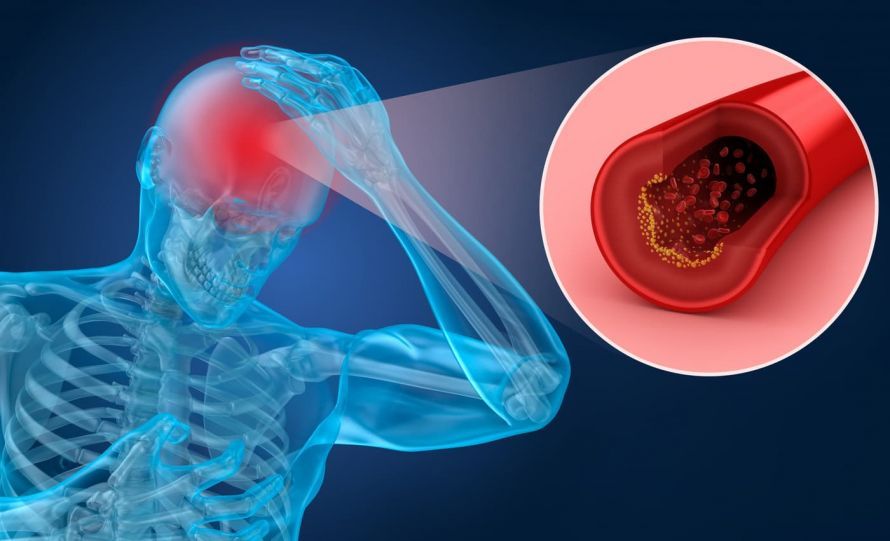
Important: If symptoms appear suddenly, seemingly out of the blue, it is a medical emergency! It could be a stroke or poisoning. In this case, you should call emergency medical services immediately.
Examinations and Diagnostic Procedures
The examination begins with a doctor-patient interview (medical history). Among other things, the doctor asks the patient:
- what symptoms have been present and since when,
- whether there are any pre-existing conditions, and
- what medications the patient takes regularly.
This is followed by a physical examination:
and a blood test. The latter provides information on whether there is an infection or a vitamin deficiency.
Neurological tests are particularly important when movement disorders are suspected. The specialist checks reflexes and how the pupils react to changing light conditions. This can provide important clues about the cause of the ataxia.
Other tests frequently performed for movement disorders include:
- magnetic resonance imaging (MRI) of the head
- Electroneurography (ENG)
- Cerebrospinal fluid analysis
- Genetic testing
How are movement disorders treated?
Physical therapy plays a key role in the treatment of movement disorders. Under the guidance of a physical therapist, the patient learns exercises designed to improve coordination. The patient should then perform these exercises independently at home, preferably every day.
Further treatment depends on the cause. If alcoholic cerebellar degeneration (ACD) has been diagnosed, the patient must strictly abstain from alcohol. They must also switch to a special diet to ensure the body receives all essential vitamins.
In certain forms of ataxia, medication has yielded good results. This is the case, for example, with episodic ataxia, where the active ingredients carbamazepine or acetazolamide are used. However, the mechanism of action and efficacy of these medications have not yet been fully researched.
If the patient also suffers from accompanying symptoms, these are treated in a targeted manner as part of the therapy.
Since people with ataxia often tend to withdraw and avoid social contact, interacting with others who share the condition is particularly important. Support groups are a good example of this.
Conclusion
Patients should never take movement disorders lightly. Instead, it is advisable to have the cause medically evaluated as soon as possible to rule out serious illnesses.
A neurologist is the right specialist to consult if movement disorders occur repeatedly. They are highly knowledgeable about the complex processes in the human brain and nervous system. They not only provide a reliable diagnosis but also initiate appropriate treatment to alleviate symptoms as quickly as possible.
Share this article