
Precisely because these skin changes may seem harmless at first, it is important to recognize them early and have them evaluated by a dermatologist.
Even though actinic keratoses may seem harmless at first, they should be taken seriously. Dermatologists consider them a possible early form of squamous cell carcinoma, a common type of non-melanoma skin cancer. Regular skin checkups with a dermatologist are therefore particularly important.
What are actinic keratoses?
Actinic keratoses are cellular changes in the outermost layers of the skin caused by chronic UV radiation. They primarily develop on areas of skin that have been regularly exposed to the sun over many years.
Typical areas include:
- Forehead
- Nose
- Cheeks
- Ears
- Scalp (without hair)
- Back of the hand
- Forearms
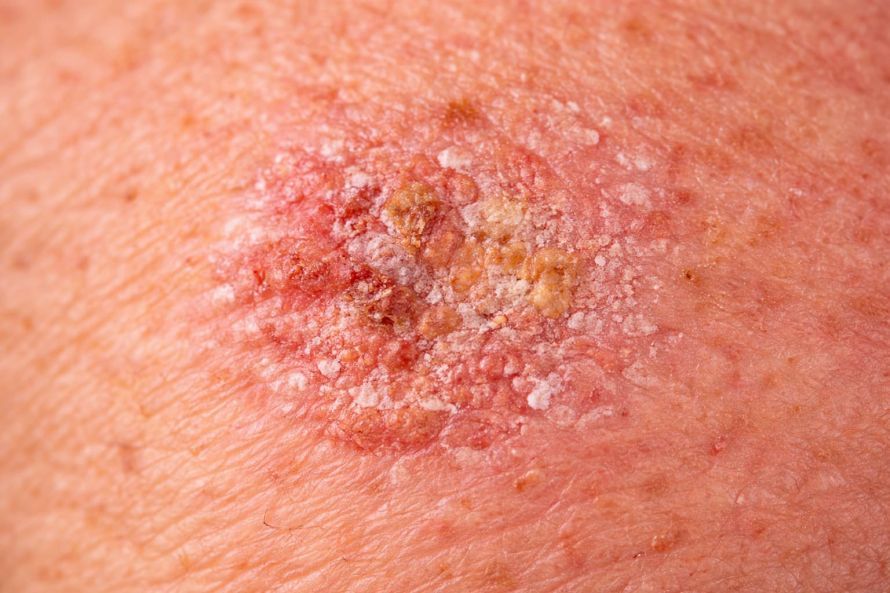
The skin changes often appear as small, reddened, skin-colored, or brownish areas with a rough surface. Many patients describe the sensation as if the skin feels like fine sandpaper.
Some areas are barely visible and can initially only be felt. Others appear significantly thickened or more calloused.
Causes and Risk Factors
The primary cause is long-term exposure of the skin to UV radiation. UV rays damage the genetic material of skin cells. Over many years, this damage accumulates and can lead to pathological cellular changes.
Fair Skin Types
People with fair skin, light-colored eyes, and blond or red hair have less natural UV protection and are therefore at a significantly higher risk.
Spending a Lot of Time Outdoors
People who spend a lot of time outdoors, whether for work or leisure, are more at risk. This includes, for example, tradespeople, gardeners and landscapers, or people who are physically active and have significant sun exposure.
Age and the Immune System
Actinic keratoses usually appear starting in middle age, as UV damage accumulates over decades. A weakened immune system can also contribute to their development.
Symptoms and Typical Signs
Actinic keratoses usually develop slowly. Typical characteristics include:
- rough, dry, or scaly patches of skin
- mild redness
- hardened or crusty areas
- occasional itching or burning
Many people first notice the rough texture of the skin before any visible changes appear.
If a lesion grows significantly, bleeds, becomes painful, or hardens further, it should be examined by a dermatologist as soon as possible, as this may indicate progression of the condition.
Why Treatment Is Important
Actinic keratoses are not just a cosmetic problem. They represent a medically significant precursor to skin cancer.
Some of these lesions can develop into squamous cell carcinoma over time. This type of cancer is classified as a “non-melanoma” skin cancer.
For this reason, dermatologists generally recommend early and consistent treatment.
Key goals of treatment are:
- Removal of the abnormal skin cells
- Prevention of cancer development
- Treating other invisible UV damage in the surrounding area
In addition, regular dermatological checkups are important for detecting new changes at an early stage.
Treatment Options for Actinic Keratoses
The most appropriate treatment depends on several factors:
- Number of lesions
- Size of the affected areas
- Location
- The patient’s skin type
Often, several methods are combined.
Cryotherapy
Freezing with liquid nitrogen selectively destroys abnormal skin cells. This method is particularly suitable for isolated, clearly defined lesions.
Medicated creams
Certain active ingredients can be applied directly to the skin. They destroy abnormal cells or activate the body’s own immune system to fight these cells.
Photodynamic therapy
In this method, a light-sensitive substance is first applied to the skin. The area is then treated with a special light. This selectively destroys damaged cells.
This therapy is particularly well-suited for larger or multiple actinic keratoses.
Laser therapy
Lasers can precisely ablate superficial layers of the skin and are primarily used for certain extensive lesions.
Prevention: How to Protect Your Skin
The most important protection against actinic keratoses is consistent protection from UV radiation.
This includes:
- Sunscreen with a high SPF
- protective clothing and head coverings
- Avoiding intense midday sun
- Avoiding tanning beds
Anyone who already has skin that has been heavily exposed to the sun should also have regular skin checkups with a dermatologist.
FAQ: Frequently Asked Questions About Actinic Keratoses
What is actinic keratosis?
Actinic keratosis is a skin lesion caused by UV radiation that has a rough, scaly surface. It is considered a possible precursor to non-melanoma skin cancer.
How do you recognize an actinic keratosis?
Typical signs include small, rough, or scaly patches that often feel like sandpaper. They frequently appear on the face, scalp, or backs of the hands.
Are actinic keratoses dangerous?
They are usually easy to treat initially, but should be taken seriously. Some of these lesions can develop into skin cancer.
Can actinic keratoses go away on their own?
Some lesions may appear less noticeable for a time. However, they often persist or recur. A dermatological examination is therefore important.
How are actinic keratoses treated?
Depending on the findings, cryotherapy, medicated creams, photodynamic therapy, or laser treatments may be considered. The choice of treatment is determined on an individual basis by the dermatologist.
How can actinic keratoses be prevented?
Daily sun protection, avoiding UV exposure, and regular skin cancer screenings are crucial.
Conclusion
Actinic keratoses are common skin lesions caused by long-term UV exposure. They should not be underestimated, as they are considered a precursor to non-melanoma skin cancer.
Early diagnosis and consistent dermatological treatment can prevent these lesions from developing into skin cancer.
People who have their skin checked regularly and consistently use sun protection can significantly reduce their personal risk.
Share this article
