Expert Interviews
A Peek Through the Keyhole – An Interview with Expert Prof. Dr. Hornemann
Leading Medicine Guide Editors ·
The busy specialist, who has taken certain areas of gynecology to new heights through medical innovations on an international scale, is always happy to set aside a little time for the Leading Medicine Guide.
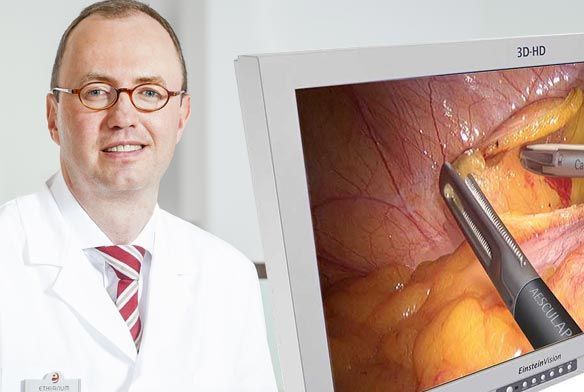
Leading Medicine Guide: Professor Hornemann, what are your main clinical areas of focus?
Prof. Dr. med. Hornemann: My areas of focus are minimally invasive surgery and gynecologic oncology, as well as specialized obstetrics and perinatal medicine. My research on obstetric, gynecologic, and health economics topics complements this perfectly.
What is perinatal medicine?
Perinatal medicine, or perinatology, is a subspecialty of obstetrics and gynecology. It deals with the medical care of expectant mothers and the fetus during the so-called perinatal phase—that is, prenatal diagnosis and treatment, as well as care for the pregnant woman during and up to seven days after childbirth.
Leading Medicine Guide: Gynecological conditions can be diverse and very complex. That requires specialization, doesn’t it?
Prof. Dr. med. Hornemann: My range of services and treatments is quite broad. Just a few examples: Among other things, I specialize in the surgical treatment of fibroids, menstrual disorders, endometriosis, uterine cancers (cervical cancer, endometrial cancer), uterine and vaginal prolapse, Asherman’s syndrome, and other gynecological conditions.
Leading Medicine Guide: Professor Hornemann, it’s truly remarkable how broad your expertise is and at how many hospitals you’ve already been able to apply it.
Prof. Dr. med. Hornemann: Yes, it’s quite a lot. I completed my training in Tübingen, Berlin, Hamburg, Amsterdam, Sydney, Zurich, and Düsseldorf. I also worked at the University Hospital in Jena, the Perinatal Center at Ruhr University Bochum, and the University Hospital in Lübeck. In addition, I have an advanced degree (Magister) in public health. This additional qualification gives me the advantage of being familiar with various interdisciplinary therapeutic methods, comparing them in an interdisciplinary context, and thereby being able to make more precise diagnoses and provide more personalized treatments.
What is public health?
Public health is understood as a highly interdisciplinary, empirical science encompassing public health (also known as community and population health), health services research, disease prevention, and health management. The various measures are primarily aimed at maintaining the health of the majority of the population, while taking into account individual and group-specific needs and preferences. This is also the challenge, both in theory and in practice. Source: German Society for Public Health
Leading Medicine Guide: You have also received the highest award from the Working Group on Gynecological Endoscopy (AGE): the MIC-III certificate. What does this entail?
Prof. Dr. med. Hornemann: This certificate stands for the highest standard of endoscopic quality, and only 80 out of a total of 17,000 specialists in obstetrics and gynecology in Germany hold this qualification. In 2010, for example, I performed the first ovarian surgery through the stomach (mouth). When access is gained through a natural body orifice such as this, specialists refer to it as NOTES surgery (Natural Orifice Transluminal Endoscopic Surgery). One advantage of this approach is that it eliminates the need for additional skin incisions, which can cause postoperative pain, leave scars, or carry other risks. For this procedure, one can choose either the mouth, the vagina, or access via the rectum.
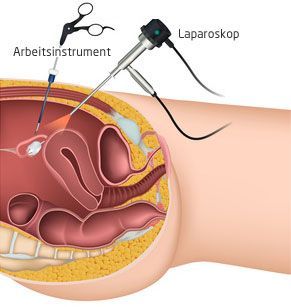
Leading Medicine Guide: You also successfully use laparoscopic surgical techniques. What does that entail?
Prof. Dr. med. Hornemann: This surgical technique is also known as keyhole or buttonhole surgery. As the name suggests, the surgical access is achieved through a very small incision, barely 5 to 10 mm wide. This method is technically somewhat more complicated, more time-consuming, and requires the utmost precision, but it delivers all the better results.
Laparoscopic surgery offers many advantages:
- small, barely visible incisions, leading to better cosmetic results
- Minimal tissue damage, with fewer injuries and less trauma to neighboring organs
- less bleeding during the procedure and thus less blood loss
- shorter hospital stay, rapid recovery
- Overall, minimal downtime in daily life
Share this article
Expert Interviews
Read next
- Expert interview
Cardiogeriatrics: Significance and benefits in the context of hospital reform
Sep 21, 2026
Cardiogeriatrics: Significance and benefits in the context of hospital reform
Read more - Expert interview
Expert Interview with Professor Dr. Amadeus Hornemann, MPH
Sep 18, 2026
Prof. Amadeus Hornemann on Precision Medicine in Gynecology: Modern Surgery, New Techniques, Better Quality of Life
Read more - Expert interview
Expert Interview with Professor Dr. Konstantinos Anagnostakos
Sep 15, 2026
Prof. Anagnostakos on Painful Knee Replacements
Read more