Expert Interviews
An Interview with Prof. Jäger: Everything You've Always Wanted to Ask Your Dentist...

Sabine Schneider ·
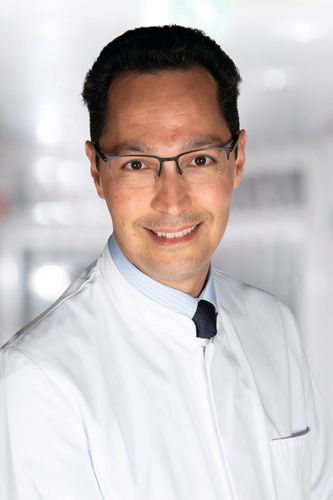
People who go to the dentist often have many questions—but then, as a rule, they don’t ask them. Of course: Most people are just glad to leave the office after their appointment, ideally with a beaming smile. But what about all the questions that have piled up regarding dental health? The Leading Medicine Guide has addressed the most pressing questions surrounding teeth and oral health—and put them to a true specialist. Prof. Dr. med. dent. Kurt Jäger, who, at Argodentis Dental Clinic in Aarburg, is one of the most renowned dentists in all of Switzerland.

The highly competent Argodentis team offers a wide range of dental services at four locations throughout Switzerland. In total, there are five leading specialists who cover all the treatment areas patients could possibly want today. This includes state-of-the-art solutions in implantology as well as medical and cosmetic dentistry—and the intricacies of oral surgery. In other words: If you’re looking for the perfect person to talk to about your teeth, you’re in particularly good hands in Aarburg.
Leading Medicine Guide: Prof. Jäger, among the many questions patients have about their teeth, one surely stands out: Does a visit to the dentist have to hurt?
Prof. Dr. med. dent. Kurt Jäger: Today, treatment can and must be pain-free. There are various methods of local anesthesia available for this purpose. If the injection doesn’t work, treatment should be stopped in cases of severe pain and rescheduled.
Leading Medicine Guide: But that’s exactly what many dentists don’t do...
Prof. Dr. med. dent. Kurt Jäger: Unfortunately, yes. But one of the ways dentists create anxious patients is by simply ignoring the pain.
Leading Medicine Guide: Endodontics—that is, root canal treatments—in particular, however, is associated with uneasy feelings and genuine fear for many people. When is a root canal treatment necessary?
Prof. Dr. med. dent. Kurt Jäger: In most cases, tooth decay is the primary cause of root canal treatment. However, there are other reasons that make it necessary to remove the dental nerve. These include accidents resulting in deep tooth fractures or other conditions such as an internal granuloma. Removal of the nerve may also be indicated for prosthetic reasons.
Leading Medicine Guide: Periodontitis, which is usually called gum disease, is also very common. This condition should by no means be taken lightly, right?
Prof. Dr. med. dent. Kurt Jäger: Absolutely not! Put simply, it is an untreated gum infection. And as a chronic inflammation of the periodontium, it can lead to bone loss and ultimately to tooth loss. In addition, we mustn’t forget: The oral cavity is a potential entry point for germs into the body.
Leading Medicine Guide: That sounds dangerous...
Prof. Dr. med. dent. Kurt Jäger: It certainly is. This can also occur via gum pockets. Therefore, cardiovascular patients need to be especially vigilant.
Professor Dr. med. dent. Kurt Jäger is a specialist in reconstructive dentistry. As practice director at Argodentis Dental in Aarburg, he focuses on dental hygiene, orthodontics, aesthetics, implantology, periodontology, and laser medicine. He also possesses a high level of expertise in the field of preventive dentistry. As a professor of dentistry, he serves as a lecturer at the Biomaterial Science Center at the University of Basel and is head of the Swiss Army’s dental service. With well over 170 publications to his name, his reputation extends far beyond Switzerland.
Leading Medicine Guide: You use state-of-the-art technology, such as lasers, in your treatments. What advantages does laser treatment offer patients?
Prof. Dr. med. dent. Kurt Jäger: The use of laser technology is a major asset in dentistry. The laser’s wavelength is crucial for the treatment. Take, for example, the Er:YAG laser...
Leading Medicine Guide: ... the Er:YAG laser?
Prof. Dr. med. dent. Kurt Jäger: The Erbium-YAG laser is a laser medium that can be used to remove superficial structures. It allows for minimally invasive preparation of hard dental tissue—that is, the dentin, enamel, and root cementum. However, there are also other lasers that are more effective on soft tissue, such as CO₂ lasers: These allow for scar-free treatment of soft tissue. We can use them to remove benign fibromas—that is, growths in the oral cavity—or to assist with other soft-tissue corrections. Lasers are used to reduce inflammation during root canal disinfection, to treat periodontitis, and for pain management. Teeth whitening can also be supported with a laser.
Leading Medicine Guide: And what if a tooth can no longer be saved?
Prof. Dr. med. dent. Kurt Jäger: If a tooth truly cannot be saved, reconstructive dentistry can help. This is where bridges, crowns, partial dentures, and full dentures come into play.
Leading Medicine Guide: How has this field of dentistry changed in recent years?
Prof. Dr. med. dent. Kurt Jäger: Enormously! There are numerous new methods and materials that lead to better results; implantology alone—with or without bone grafting—has revolutionized reconstructive dentistry over the past two decades or so. No one has to suffer from loose dentures today. And some fantastic new materials have been developed: zirconia for all-ceramic restorations, PEEK, PEKTON, titanium, and much more.
Leading Medicine Guide: What’s the story behind this?
Prof. Dr. med. dent. Kurt Jäger: PEEK and PEKTON are polymer materials that are particularly well-suited for the manufacture of dental prostheses. These materials mimic the properties of human bone. This makes it possible, for example, to produce metal-free crown and bridge frameworks, denture bases, and clasps. Zirconia ceramic is the raw material for all-ceramic crowns and bridges. These ceramic materials are translucent and can be colored with pigments in any shade. Their properties are so similar to those of natural teeth that they are virtually indistinguishable from human teeth.
Leading Medicine Guide: Most people brush their teeth after waking up and before going to bed. Is that enough? Or should one take additional preventive measures to maintain dental health?
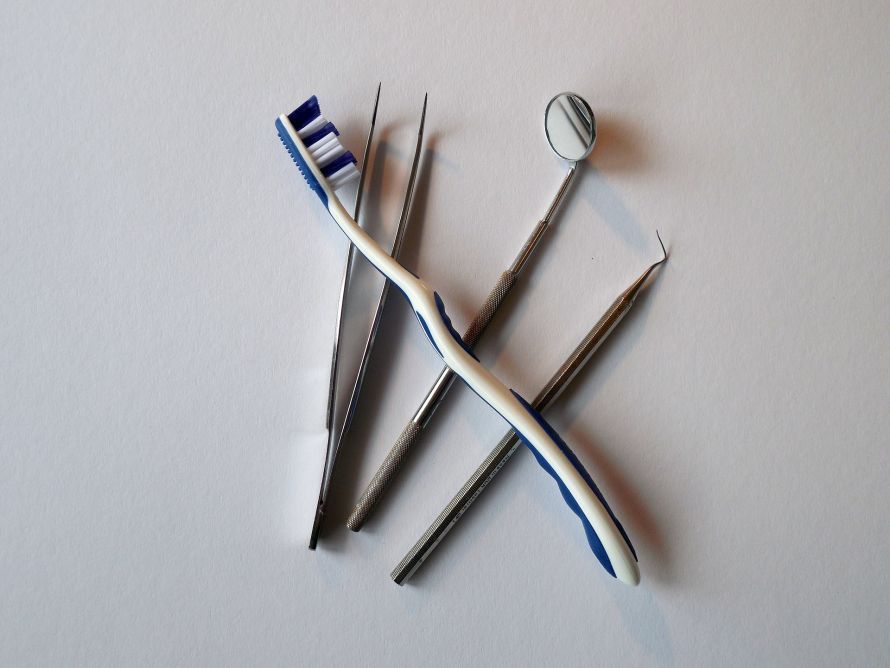
Prof. Dr. med. dent. Kurt Jäger: Regardless of whether you have the time and opportunity, it is definitely recommended to brush your teeth after lunch as well. In addition, you should eat as healthily as possible—that is, a low-sugar diet. And: Smoking clearly damages your teeth and the supporting structures of your teeth. It’s also important to clean between your teeth regularly and thoroughly. And here’s my personal tip: Have your teeth checked by a dental hygienist or dentist once or twice a year. That way, you’ll be on the safe side!
Professor Jäger, thank you for your valuable tips and the wealth of information!
Further information about Prof. Dr. med. dent. Kurt Jäger and Argodentis Dental Clinic, with its four locations, is available on the profile page in the Leading Medicine Guide. You can also contact them directly there.
Share this article
About the medical author
Sabine Schneider
Editor-in-Chief
Sabine Schneider – medical author: Explore expert articles and medical expertise in the Leading Medicine Guide.
More about the medical author →Expert Interviews
Read next
- Expert interview
Cardiogeriatrics: Significance and benefits in the context of hospital reform
Sep 21, 2026
Cardiogeriatrics: Significance and benefits in the context of hospital reform
Read more - Expert interview
Expert Interview with Professor Dr. Amadeus Hornemann, MPH
Sep 18, 2026
Prof. Amadeus Hornemann on Precision Medicine in Gynecology: Modern Surgery, New Techniques, Better Quality of Life
Read more - Expert interview
Expert Interview with Professor Dr. Konstantinos Anagnostakos
Sep 15, 2026
Prof. Anagnostakos on Painful Knee Replacements
Read more