Expert Interviews
Breast Cancer Treatment Takes a New Turn: Prof. Volz Introduces Intraoperative Electron Radiotherapy

Claudia Dechamps ·
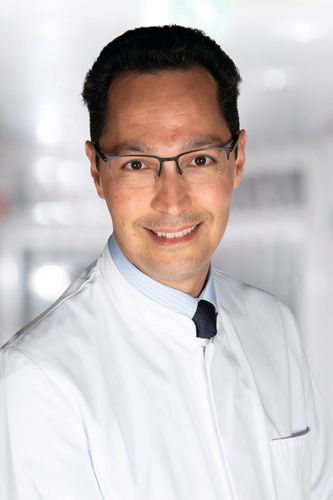
It is a particularly gentle treatment for breast cancer that is currently used in only a few women’s hospitals in Germany: Intraoperative Electron Radiotherapy (IOERT) offers new possibilities for breast cancer treatment. Professor Joachim Volz, M.D., a breast cancer specialist at the Evangelical Hospital in Lippstadt, has been using IOERT for many years. As chief of gynecology and the Breast Center, he is thus regarded as a recognized expert in this still-relatively-new method. Prof. Volz, who has also made a name for himself as the founder and director of the FROG Fertility Center (Women’s Health, Reproductive Medicine, Surgical Gynecology) in Bielefeld, spoke with the Leading Medicine Guide about IOERT—and about his perspective on the topic of breast cancer.

Leading Medicine Guide: Prof. Volz, you have had quite an eventful career—including three years of development work in Namibia. How did that time shape you?
Prof. Dr. Volz: I gained a great deal from those years. At the time, I was stationed at a small hospital in a war zone, primarily working in obstetrics, of course. There, I learned to work with limited resources while still providing the best possible medical care. Those conditions trained me to make medical decisions based on my observations of the patient. That remains extremely important to me to this day, and I try to pass that on to my young doctors as well. They should have the confidence to rely on themselves, on their experience, and on their intuition for what’s essential. I believe this is essential for every doctor, but I also know that you have to dare to do it. You have to take your own observations seriously—at least as seriously as the results from medical devices.
Leading Medicine Guide: During your time as a senior resident at the University Women’s Hospital in Mannheim, you were introduced to intraoperative radiation therapy and established the method at the hospital. Was there a key experience that led you to adopt this new approach to breast cancer treatment?
Prof. Dr. Volz: You could say that, and this experience also took place in Namibia. My predecessor there—a nun who, at the time, was the first woman of her order to be allowed to become a surgeon—had been diagnosed with breast cancer. She underwent surgery and then received radiation therapy. Of course, the radiation treatments back then can’t be compared to those of today. But I witnessed firsthand how the treatment really took a toll on her. That’s why I was one of the first to start performing sentinel lymph node biopsy as an alternative to complete removal of the axillary lymph nodes—and now I’m using partial radiation therapy as a substitute for whole-breast radiation.
Leading Medicine Guide: And that is exactly what intraoperative electron radiation therapy (IOERT) is. Could you explain this technique to us in a bit more detail?
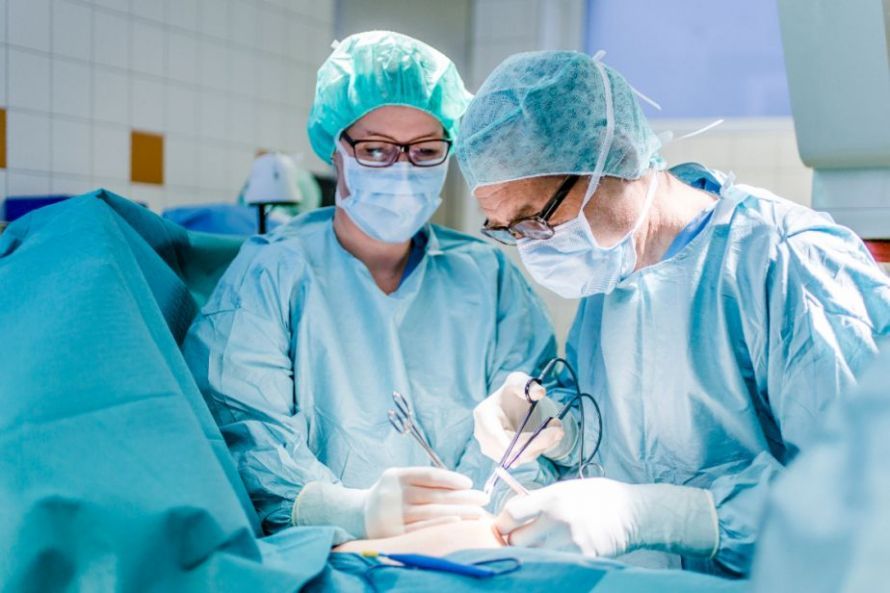
Prof. Dr. Volz: IOERT is a new procedure for treating breast cancer that is currently used in only a few clinics in Germany. In Italy, for example, it has long been standard practice in breast cancer therapy. IOERT is administered directly during cancer surgery. As soon as the tumor is removed, the tumor bed is irradiated using a state-of-the-art, mobile linear accelerator that operates with electrons. This is done with a high dose, but takes only a few seconds. The invaluable advantage of this procedure is that we can target only the tumor bed with high precision while sparing the surrounding tissue and blood vessels. The radiation dose is precisely directed at the target area, thereby minimizing side effects. After the radiation treatment, the wound is closed as usual.
Leading Medicine Guide: Until now, irradiating the entire breast following breast-conserving surgery was considered the standard of care. What has changed?
Prof. Dr. Volz: We now know that over ninety percent of recurrences occur where the tumor was originally located, and only rarely elsewhere in the breast. That is why irradiating the entire remaining breast was previously considered the standard of care. But honestly, especially with a large breast, all the surrounding tissue—indeed, the entire body—is affected and damaged. It’s like bringing out a giant sledgehammer to treat a small area. As a doctor, I find that very difficult to accept. Of course, there are cases where this is necessary, and I would treat those patients the same way. But at least half of the patients do not need this extensive form of treatment.
Leading Medicine Guide: What has changed to make partial breast irradiation an option in breast cancer treatment?
Prof. Dr. Volz: The new guidelines from the Society for Gynecology and Obstetrics and the German Cancer Society now state: “Partial breast radiation alone (as an alternative to postoperative radiation of the entire breast) can be performed in patients with a low risk of recurrence.” In principle, IOERT is an option for all women who were able to undergo breast-conserving surgery. The advantages of IOERT are clear: Only the diseased tissue is specifically targeted, the skin is spared, there are no long-term cosmetic side effects, the pleura remains unaffected, and patients are spared a lengthy treatment period. For patients with a tumor measuring no more than two centimeters and favorable additional conditions, a single session of intraoperative radiation therapy is sufficient. However, if the tumor is larger or other factors are present, IOERT may be followed by additional external radiation therapy.

Leading Medicine Guide: Are there studies on the effectiveness of IOERT and on recurrence rates?
Prof. Dr. Volz: All studies indicate that IOERT is an effective treatment method with a low recurrence rate. The targeted single-session radiation during surgery achieves the same efficacy in early-stage breast cancer as conventional six-week radiation therapy. Internationally, we feel we have a large team behind us. In Italy, which is considered a leader in breast cancer treatment, over 85 clinics use this method. In comparison, there are only about eight centers in this country so far. We at the Women’s Clinic at the Evangelical Hospital in Lippstadt, along with just one other facility in Germany, are conducting a clinical trial to substantiate the effectiveness of IOERT. Regarding recurrence rates, it’s worth noting that we have significantly fewer local recurrences, especially among younger patients.
Leading Medicine Guide: But an important prerequisite for a favorable outcome is also early-stage detection of the tumor, isn’t it?
Prof. Dr. Volz: Yes, but one must keep in mind that there have been enormous advances in tumor biology and diagnostics over the past twenty years. Today, we’re already detecting very small tumors and are also seeing many more small secondary tumors than we used to. That’s why it’s fair to say that many patients are eligible for IOERT. And the advantage is that women only have to deal with the cancer for a short time rather than suffering from it for weeks or months. As I said, other countries are much further ahead in this area than we are. Breast cancer can be treated much more gently; we don’t have to resort to such radical measures. But we also need to understand the entire process much more deeply in order to do less. We’ve already organized several continuing education courses for doctors, and we hope that this gentle and effective treatment method will become better known and more widely adopted here in Germany as well.
Leading Medicine Guide: Thank you very much for this fascinating and insightful conversation, Prof. Dr. Volz!
Share this article
About the medical author
Claudia Dechamps
Editor
Claudia Dechamps – medical author: expert articles, professional insights and medical knowledge in the Leading Medicine Guide.
More about the medical author →Expert Interviews
Read next
- Expert interview
Cardiogeriatrics: Significance and benefits in the context of hospital reform
Sep 21, 2026
Cardiogeriatrics: Significance and benefits in the context of hospital reform
Read more - Expert interview
Expert Interview with Professor Dr. Amadeus Hornemann, MPH
Sep 18, 2026
Prof. Amadeus Hornemann on Precision Medicine in Gynecology: Modern Surgery, New Techniques, Better Quality of Life
Read more - Expert interview
Expert Interview with Professor Dr. Konstantinos Anagnostakos
Sep 15, 2026
Prof. Anagnostakos on Painful Knee Replacements
Read more