Expert Interviews
Colon Cancer Specialist Prof. Pantelis: “The quality of the surgery is what matters!”

Sabine Schneider ·
When searching for a certified colorectal cancer center, there is hardly a better resource for patients and their families than the Leading Medicine Guide. All specialists in this field listed on our online portal have one thing in common: They recommend screening—and they emphasize that the chances of a cure for colorectal cancer are often better than for other types of cancer. A particularly distinguished specialist in colorectal cancer is Prof. Dr. Dimitrios Pantelis, Chief of General and Visceral Surgery at the GFO Clinics in Bonn, which include St. Marien Hospital in Bonn-Venusberg and St. Josef Hospital in Bonn-Beuel. This renowned colorectal cancer specialist is a board-certified surgeon specializing in general surgery, visceral surgery, specialized visceral surgery—and proctology. In an interview with the Leading Medicine Guide, he explains why colorectal cancer screening is so important—and why the quality of surgical care is of crucial importance, particularly in colorectal cancer surgery.
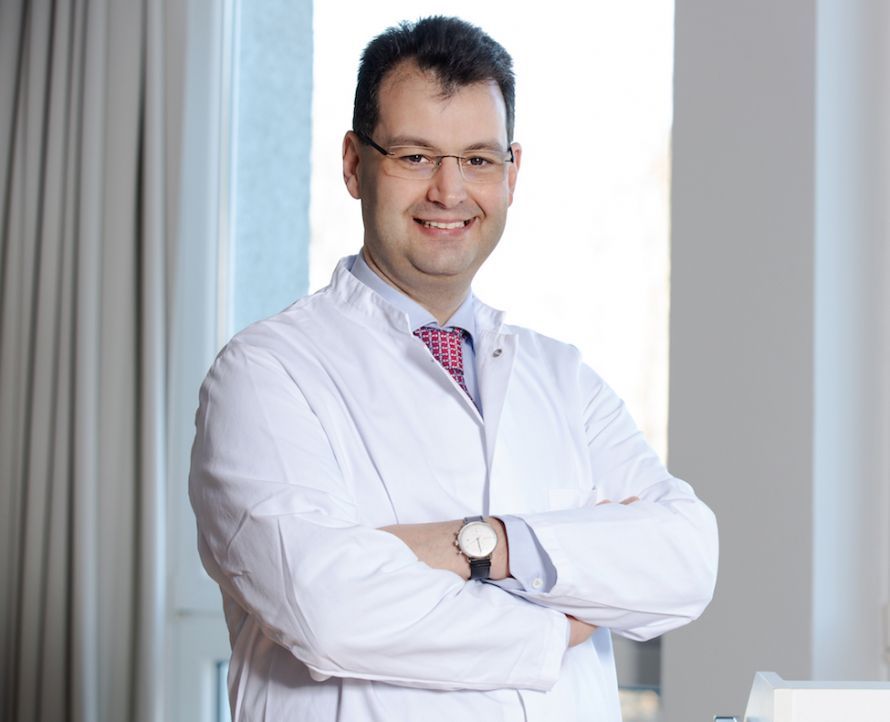
Prof. Pantelis specializes in surgical procedures throughout the entire abdominal cavity as well as on the thyroid and parathyroid glands. Coloproctology is also one of Prof. Dr. Pantelis’s main areas of expertise. And, of course, he is a recognized specialist in colorectal cancer—from screening to rehabilitation. Prof. Pantelis, who is considered a pioneer in minimally invasive surgery, regards it as “one of the most groundbreaking innovations in surgical medicine in recent decades.” He answered several particularly important questions for the Leading Medicine Guide regarding the unfortunately ever-relevant topic of colorectal cancer.
Leading Medicine Guide: Professor Pantelis, as a specialist in visceral surgery and proctology, you have focused your practice on colorectal cancer, among other areas. Could you briefly explain what colorectal cancer actually is?
Prof. Dr. med. Dimitrios Pantelis: With colorectal cancer, as with virtually every form of cancer, there is a malignant degeneration of the body’s own cells. From the normal mucous membrane of the colon or rectum—in most cases through precancerous stages—a malignant tumor then develops, which can penetrate the entire wall and even spread to other organs.
Leading Medicine Guide: You say that the prognosis for colorectal cancer is better than for many other types of cancer …
Prof. Dr. med. Dimitrios Pantelis: First of all, colorectal cancer is one of the most common cancers in humans. It is the second leading cause of cancer-related death in both women and men. Ultimately, however, what is truly special and exciting about this cancer for a surgeon is that, in many cases, colorectal cancer is curable through surgical treatment—unlike many other cancers of the abdominal cavity. Consequently, the most important factor in the treatment of colon and rectal cancer is the quality of the surgery, that is, the surgical treatment.
Leading Medicine Guide: Is colorectal cancer a matter of age?
Prof. Dr. med. Dimitrios Pantelis: Yes, colorectal cancer often occurs in older age, when the body’s repair mechanisms are limited and no longer function fully. The cancer then becomes part of the aging human body; unfortunately, cellular degeneration is a natural part of life.
Leading Medicine Guide: You specialize in minimally invasive abdominal procedures, and your medical department is a certified reference and center of excellence for keyhole surgery. Why is that?
Prof. Dr. med. Dimitrios Pantelis: Laparoscopic surgery—also known as minimally invasive surgery—is certainly one of the most groundbreaking innovations in surgical medicine over the past few decades. In the past, all surgeries were performed through a large abdominal incision, usually in the center, to ensure good access to the abdominal cavity.
Leading Medicine Guide: … but that in itself carries risks, doesn’t it?
Prof. Dr. med. Dimitrios Pantelis: That’s right, and some of those risks were significant, such as incisional hernias or wound infections. In many cases, patients suffered primarily from the consequences of this abdominal incision rather than from what was happening to the organs inside the abdominal cavity.
“Colorectal cancer surgery was groundbreaking!”
Leading Medicine Guide: With minimally invasive procedures, of course, it’s different.
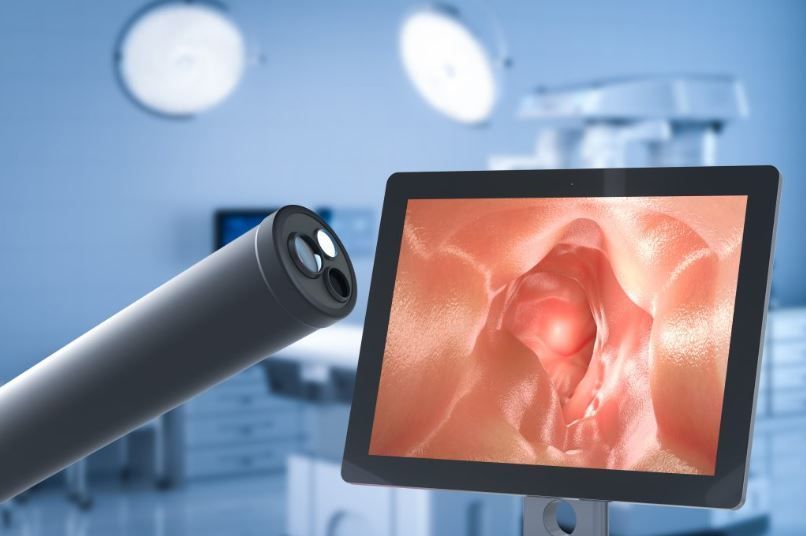
Prof. Dr. med. Dimitrios Pantelis: Exactly. The advantages of keyhole surgery were particularly evident in the field of colorectal cancer surgery, as this is where the first major tumor operations in the abdominal cavity were successfully performed using minimally invasive techniques—and with sufficient oncological radicality. The major benefit for patients was—and still is—that they recover more quickly, experience less pain, and the trauma caused by the surgical approach is much less severe.
Leading Medicine Guide: In your opinion, what are the limitations of this form of surgery?
Prof. Dr. med. Dimitrios Pantelis: The limits of minimally invasive surgery? Over time, there has been a major shift, and the limits have been continually pushed back. However, in certain cases, large tumors that have infiltrated neighboring organs still require open surgery via a large abdominal incision. The goal of the surgery should always be to completely remove the tumor—regardless of whether the procedure is performed using a minimally invasive or open approach.
Leading Medicine Guide: How does postoperative care work?
Prof. Dr. med. Dimitrios Pantelis: Here in Bonn, we have an excellent quality network for the care of colorectal cancer patients. It’s called the Integrative Colorectal Center Bonn/Rhein-Sieg (IDZB). This network brings together physicians from both outpatient and inpatient care to optimize the care of colorectal cancer patients. In addition to surgeons, it includes gastroenterologists, oncologists, primary care physicians, and many other specialties, all of whom work together to provide patients with interdisciplinary care.
Leading Medicine Guide: From diagnosis to rehabilitation, so to speak?
Prof. Dr. med. Dimitrios Pantelis: Exactly—from diagnosis through surgery to rehabilitation and follow-up care. It’s very important to highlight what makes the IDZB special in our region, because there are very few facilities like this in Germany.
Leading Medicine Guide: Thank you very much for all this interesting information—and for your time!
The Leading Medicine Guide offers further information on colorectal cancer and colorectal cancer screening. You can contact Prof. Dr. Dimitrios Pantelis, a recognized colorectal cancer specialist, directly via his profile in the Leading Medicine Guide.
Image sources: (c) peterschreiber.media, (c) phonlamaiphoto – Adobe Stock.
Share this article
About the medical author
Sabine Schneider
Editor-in-Chief
Sabine Schneider – medical author: Explore expert articles and medical expertise in the Leading Medicine Guide.
More about the medical author →GFO Hospitals, Bonn
ProfileExpert Interviews
Read next
- Expert interview
Cardiogeriatrics: Significance and benefits in the context of hospital reform
Sep 21, 2026
Cardiogeriatrics: Significance and benefits in the context of hospital reform
Read more - Expert interview
Expert Interview with Professor Dr. Amadeus Hornemann, MPH
Sep 18, 2026
Prof. Amadeus Hornemann on Precision Medicine in Gynecology: Modern Surgery, New Techniques, Better Quality of Life
Read more - Expert interview
Expert Interview with Professor Dr. Konstantinos Anagnostakos
Sep 15, 2026
Prof. Anagnostakos on Painful Knee Replacements
Read more