Expert Interviews
Excellent Care: State-of-the-Art Hernia and Colorectal Surgery—An Expert Interview with Dr. Fackeldey

Alexandra Pfitzmann ·
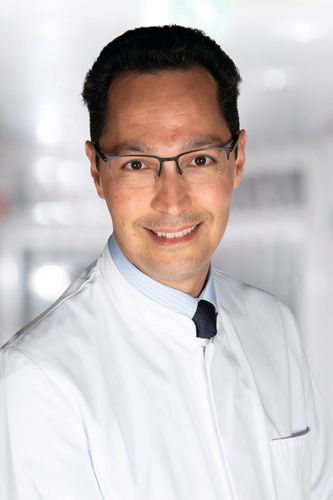
Dr. Volker Fackeldey, an expert in the field of hernia and colorectal surgery, has made the Hernia Center at Maindreieck a leading destination for patients with various types of abdominal wall hernias. In his role as director of the center, he offers state-of-the-art endoscopic techniques for hernia repair procedures. With specialized expertise in minimally invasive hernia surgery—such as TAPP, IPOM, and fundoplication—as well as open procedures like the Shouldice and Lichtenstein techniques and incisional hernia surgery, Dr. Fackeldey has established the Hernia Center as a highly respected institution. The center’s designation as a Center of Excellence for Hernia Surgery in 2013 underscores its outstanding performance and quality.
Under Dr. Fackeldey’s leadership, the Hernia Center offers comprehensive care for various types of abdominal wall hernias and remains at the cutting edge of hernia research. Dr. Fackeldey is an advocate of a personalized approach for each individual patient and emphasizes the importance of tailored treatment. As Chief of the Department of General, Vascular, and Visceral Surgery, he is a member of various professional societies and has earned numerous specializations and additional training certifications.
From classic inguinal hernias to more complex types of hernias, such as hiatal hernias and parastomal hernias, the center offers comprehensive diagnostic and therapeutic solutions. Today, the facility increasingly offers minimally invasive techniques, including state-of-the-art laparoscopy with 3D technology. This enables gentle procedures with minimal scarring. A modern 3D video tower, along with certifications as a center of excellence for minimally invasive surgery, underscore the Hernia Center’s commitment to innovation and quality assurance.
The Hernia Center serves as a sought-after training center for hernia surgery in the German-speaking world and attracts physicians who wish to benefit from the center’s expertise and reputation. Set in the picturesque surroundings of Kitzingen, near Würzburg, the clinic offers the best possible care for patients and their families—not only medically but also in terms of a restful stay. Excellent transportation connections make the clinic easily accessible to patients and visitors. The editorial team of the Leading Medicine Guide once again had the opportunity to speak with hernia specialist Dr. Fackeldey to learn about the latest developments in hernia treatment.
In modern medicine, the effective treatment of hernias and colorectal diseases is becoming increasingly important. Thanks to advanced surgical techniques and expert knowledge in this field, patients can expect excellent care. The combination of innovative hernia surgery and colorectal surgery enables the treatment of various abdominal wall hernias as well as diseases of the colon and rectum, which can lead to an improved quality of life and faster recovery.
In hernia surgery, as well as in colon surgery, minimally invasive techniques have evolved into an important, innovative, and patient-friendly approach.
Procedures such as laparoscopic hernia repair (TAPP, IPOM) and other minimally invasive methods, such as endoscopy, have helped improve patient recovery. These minimally invasive procedures use small incisions and specialized instruments to repair hernias, often resulting in less postoperative pain, a faster recovery process, and a shorter hospital stay. The less invasive nature of these techniques also minimizes the risk of complications, promotes a faster return to normal life, and allows patients to resume their daily activities sooner compared to traditional open surgical procedures.
The integration of robotics into hernia surgery can facilitate progress, but it is not necessarily the ultimate solution for every surgical problem. The long-term value of this new technology has yet to be proven and cannot currently be conclusively assessed.
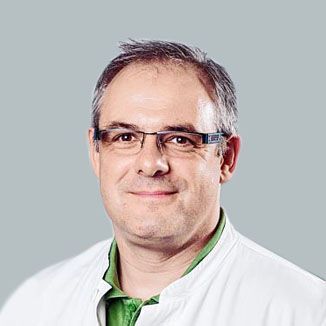
“The adoption of robotics in hernia surgery is being driven by various parties. Personally, I am not yet convinced of the alleged benefits, as the enormously high costs do not seem to translate into any measurable benefit for patients,” Dr. Fackeldey begins our conversation critically, emphasizing: “The saying ‘A fool with a tool is still a fool’ underscores the central importance of the surgeon’s expertise, regardless of the technology used. Even though robots are supposed to enable precise movements and improved visualization in hernia surgery, we should not overlook the fact that their use here does not necessarily lead to better outcomes. The costs of purchasing and maintaining these technologies are considerable and are currently not always justified by measurable benefits for patients, nor are they reimbursed to the hospital. This results in approximately 1,000–2,000 euros in additional costs per operation. The focus—not only for economic reasons—should be on ensuring that surgeons possess the necessary specialized knowledge and specific expertise in hernia surgery, regardless of whether they use robot-assisted instruments or not. If one takes a skeptical view of robots, one is quickly accused of rejecting new developments. Robots will certainly play a role in the long term, but their significance cannot be definitively assessed at this time. At a recent conference, there was frequent mention of a more comfortable working environment for surgeons; however, given the enormous costs involved, I believe clear, measurable benefits for patients are more important. Regarding the very intensive marketing of this new instrument, I can only say that we don’t have to jump through every hoop the industry holds out to us.
Ultimately, the surgeon’s skills, knowledge of anatomy, and surgical experience remain the decisive factors in the success of an operation. Technology can provide support, but it is no substitute for the skill and experience of a qualified surgeon. It is important to take a critical look at the role of robotics in hernia surgery and to ensure that it is used sensibly and responsibly. Ultimately, the success of an operation does not lie in the way a robot handles the instruments, but in the expertise and skill of the surgeon.”
The treatment of complex hernias is a demanding task in surgery that presents several challenges.
Larger defects or hernia-related issues require special attention and surgical skill. A key aspect is tissue deficiency, which frequently occurs in larger hernias and complicates repair of the defect. This deficiency can make surgical repair more difficult and increase the likelihood of recurrence. Infections and impaired wound healing are additional risks associated with complex hernia surgeries that can impair patient recovery. To overcome these challenges, surgeons employ various strategies.
“Fascial retraction, an innovative technique in hernia surgery, complements the treatment of abdominal wall hernias. Unlike traditional methods, which aim to close the abdominal wall, fascial retraction focuses on closing hernias without compromising the entire abdominal wall. This means less surgical trauma. But it’s like with robots—its long-term value has yet to be proven in studies,” explains Dr. Fackeldey.
Specialized techniques, such as the use of meshes, are employed to close larger defects and minimize the risk of recurrence. Biomaterials or artificial tissue are used to reinforce the missing natural tissue and permanently close the defects. Successfully managing complex hernias requires a comprehensive approach that encompasses not only the surgical technique but also careful postoperative care and rehabilitation of the patient. A holistic approach tailored to the patient’s individual needs makes it possible to achieve optimal results and promote recovery.
The selection of the appropriate surgical approach for hernia surgery and colorectal procedures can have a significant impact on long-term outcomes and the success of the procedure. A surgical approach tailored to the patient’s individual needs can significantly influence long-term outcomes.
In hernia surgery, choosing the right procedure is crucial to minimizing the risk of hernia recurrence. A surgical approach that takes into account the patient’s individual anatomical characteristics and tissue condition can reduce the likelihood of recurrence. The use of meshes or specialized techniques that promote more stable wound healing can also improve long-term outcomes. “In surgery, the choice of surgical approach can significantly influence a patient’s quality of life and functional outcome. So-called personalized medicine will certainly become even more prominent and play a greater role in the future. Patients with specific health conditions or preferences will then be able to benefit even more from customized surgical plans tailored to their needs, which deliver more successful long-term outcomes,” states Dr. Fackeldey, adding regarding the current state of hernia surgery: “Long-term results in hernia surgery in Germany today are good. The recurrence rate is less than 1%, thanks to standardized, minimally invasive TAPP surgery or the Lichtenstein procedure (an open, mesh-based repair technique).”
Together and for one another!
The mission statement of the Klinik im Kitzinger Land emphasizes a harmonious and cooperative community that prioritizes the well-being of patients with dedication and care. A pleasant work atmosphere is fostered through collegial and friendly collaboration across disciplinary boundaries, as well as respect, tolerance, and care for one another. Open and respectful communication on an equal footing, as well as a constructive approach to criticism and conflicts, are fundamental values of the clinic. Through innovative approaches and a consistent focus on the highest quality standards, the Klinik im Kitzinger Land sets the benchmark in hernia surgery and offers its patients excellent and safe medical care. “We continue to see a tremendous influx of patients. We’ll likely perform over 500 TAPP surgeries and about 100 incisional hernia surgeries this year. This naturally gives us confidence here at the clinic, as our patients are satisfied with us. It’s no coincidence that many patients come to us in the Kitzinger Land region from far away,” reports Dr. Fackeldey, bringing our conversation to a very positive close.
Dear Dr. Fackeldey, thank you very much for your insightful perspective on robotics and the positive state of hernia surgery!
Share this article
About the medical author
Alexandra Pfitzmann
Editor
Alexandra Pfitzmann – medical author: expert knowledge, professional articles and medical insights in the Leading Medicine Guide.
More about the medical author →Expert Interviews
Read next
- Expert interview
Cardiogeriatrics: Significance and benefits in the context of hospital reform
Sep 21, 2026
Cardiogeriatrics: Significance and benefits in the context of hospital reform
Read more - Expert interview
Expert Interview with Professor Dr. Amadeus Hornemann, MPH
Sep 18, 2026
Prof. Amadeus Hornemann on Precision Medicine in Gynecology: Modern Surgery, New Techniques, Better Quality of Life
Read more - Expert interview
Expert Interview with Professor Dr. Konstantinos Anagnostakos
Sep 15, 2026
Prof. Anagnostakos on Painful Knee Replacements
Read more