Expert Interviews
Regained Hearing Thanks to Cochlear Implants: An Interview with Expert Prof. Caversaccio

Alexandra Pfitzmann ·
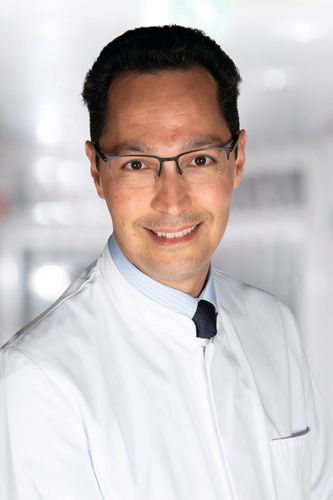
Prof. Dr. med. Marco Domenico Caversaccio is a renowned specialist in the field of otolaryngology. His pioneering work in the field of computer-assisted surgery has earned him international recognition within the medical community. Prof. Dr. Caversaccio focuses on various specialties, including skull base surgery, minimally invasive computer-assisted navigation surgery and robotics, and cochlear and middle ear surgery. In his role as Chief Physician and Clinic Director, Prof. Dr. Caversaccio heads the University Clinic for Otolaryngology and Head and Neck Surgery at Inselspital in Bern. Here, a highly qualified team of physicians, nurses, medical technologists, speech-language pathologists, and psychologists works closely together to ensure the best possible care and medical treatment across the entire spectrum of ear, nose, and throat disorders.
The clinic places great emphasis on the latest scientific standards and an interdisciplinary approach. Close collaboration with other medical disciplines makes it possible to offer comprehensive treatments and innovative solutions. The clinic has extensive experience in cochlear implantation and otologic microsurgery to improve hearing. It also collaborates with the Center for Artificial Organs to develop and implement implantable hearing systems. The treatment of malignant head and neck tumors is carried out in close collaboration with an interdisciplinary tumor board consisting of various medical specialists to develop individually tailored treatment plans aimed at organ preservation and minimally invasive procedures. The topic of hearing implants was explored in greater detail in a conversation with Prof. Dr. med. Marco Domenico Caversaccio by the editorial team of the Leading Medicine Guide.
There are various types of hearing implants that can help people with hearing loss caused by different factors and of varying severity. These implants differ in terms of their application and how they work.
Cochlear implants are designed for people with severe to profound hearing loss or deafness. They replace the function of the inner ear (the cochlea) by transmitting electrical signals directly to the auditory nerve. A microphone behind the ear picks up sound, which is then converted into electrical impulses by a processor. These impulses are transmitted to the auditory nerve via an electrode in the inner ear, enabling the patient to hear. Middle ear implants are suitable for people with sensorineural hearing loss or certain types of conductive hearing loss. They are surgically placed in the middle ear or in the bone behind the ear and amplify sound before it reaches the inner ear. Middle ear implants can help transmit sound more effectively to the inner ear, thereby improving hearing.
“A bone-conduction implant is like a sound amplifier. There are various types available. The Bone Bridge™ or Vibrant Sound Bridge™ implant is a bone-conduction hearing aid used for conductive and mixed hearing loss. It transmits sound vibrations directly to the inner ear via a stapes or through the skull bone to improve hearing. This implant is particularly useful for patients who cannot use conventional hearing aids due to ear problems. The BAHA (Bone Anchored Hearing Aid) is another bone-conduction hearing aid used to treat conductive or single-sided hearing loss. It is implanted into the skull bone behind the ear and transmits sound vibrations directly to the inner ear. “The BAHA can also be used for some types of unilateral hearing loss and for people who lack an ear canal,” explains Prof. Dr. Caversaccio.
Brainstem implants are a special case. Prof. Dr. Caversaccio explains: “Brainstem implants, on the other hand, are a special type of hearing implant used for people with congenital deafness or profound hearing loss. These implants are surgically implanted into the brainstem and are capable of sending electrical signals directly to the brain to restore hearing. They are an advanced solution for people for whom conventional hearing aids or cochlear implants are not effective. They can also be used in the very rare case of bilateral acoustic neuromas (tumors in the ear) to at least partially restore hearing loss.” The choice of the appropriate implant always depends on the type and degree of hearing loss, as well as the patient’s individual needs.
The implants themselves have become smaller and lighter, which increases comfort. Some models are waterproof and resistant to environmental factors. Wireless connectivity enables seamless connection to other devices such as smartphones and televisions, which facilitates communication and enhances the listening experience. Advances in battery technology have led to longer battery life, and some implants are rechargeable.
“As far as aesthetics are concerned, it’s worth noting that the sound processor for a cochlear implant or brainstem implant is barely visible. Imagine it as a small button about 3 cm in size. It’s positioned behind the ear on the head and can be secured behind the ear using a magnetic system or a headband. If someone has long hair, the button isn’t visible at all. For children, a variety of colors are offered to give the whole thing a more playful and fun character,” explains Prof. Dr. Caversaccio.
Hearing implants are effective for various patient groups. These patients must be thoroughly informed.
Hearing implants are particularly effective for people with severe to profound hearing loss or deafness. This includes people for whom conventional hearing aids cannot provide sufficient improvement in hearing ability. “Children who are born deaf or become deaf or hard of hearing at a young age can benefit from cochlear implants to promote the development of their speech and hearing skills. It is important that patients receive thorough information. They need to know that cochlear implant surgery takes about 1.5 hours and that there is a small risk of damaging the facial nerve during the procedure. After surgery, patients stay in the hospital for about 1–2 days and then attend regular ‘fitting’ appointments to work with audiology engineers to optimize the hearing function,” explains Prof. Dr. Caversaccio, outlining the necessary steps regarding patient education.
For patients who have residual hearing in low frequencies despite significant hearing loss, electroacoustic implants (EAS) can be a good option, as they provide both acoustic and electrical stimulation.
The implantation of hearing implants is generally safe and effective, but, like any medical procedure, it may be associated with certain risks and side effects.
“Implantation requires surgery, which can lead to complications such as bleeding, infections, or wound-healing disorders. These risks are minimized by carefully adhering to sterility protocols and surgical procedures. After the operation, pain and discomfort may occur in the surgical area. This can be treated with pain medication prescribed by the treating physician. With some implants, particularly cochlear implants, temporary or long-term changes in taste may occur. This is often related to the implant’s proximity to the taste nerve. Some patients may also experience temporary dizziness, particularly after cochlear implant surgery. This may resolve over time. A very positive aspect is that the patient receives a 10-year warranty on the implant. “If an implant breaks, a new application must be submitted to the health insurance provider—or, in the case of children, to the disability insurance provider—and the implant manufacturer must replace the device if, for example, an electrode is defective,” explains Prof. Dr. Caversaccio.
The risks associated with hearing implants are generally relatively low, especially when the procedures are performed by experienced surgeons. Patients should be thoroughly informed about the risks and potential side effects before surgery. Choosing the appropriate implant and ensuring proper individual fitting are crucial for achieving the best possible results and minimizing potential risks. Close collaboration between the medical team and the patient is essential to ensure successful implantation and rehabilitation.
Rehabilitation and adaptation to hearing implants in adults—especially those who have suffered from hearing loss for a long time—is a careful process.
First, there is a comprehensive preparation and training phase during which the patient receives information about the implant, its care and maintenance, and the expected results. This step helps reduce fears and uncertainties. “The actual rehabilitation begins with the activation of the implant, followed by gradual fine-tuning by the medical team to achieve optimal hearing results. At the same time, auditory training takes place to teach the patient to recognize and understand sounds and speech with the implant. This includes listening exercises, speech therapy, and other auditory exercises. Hearing must be trained. Lip-reading courses are also helpful in supporting auditory comprehension. Here in Switzerland, we have the patient organization Pro Audito, which facilitates exchange among those affected. The patient’s patience is crucial, as adapting to the hearing implant takes time. The brain must get used to the new sounds, which can take some time in cases of long-standing hearing loss. Realistic expectations are important, as hearing quality may not be perfect right away,” explains Prof. Dr. Caversaccio.
Regular follow-up visits and adjustments to the implant settings are necessary to ensure that the implant functions optimally. In addition, psychological and emotional support is of great importance, as cochlear implants can trigger emotional reactions and adjustment difficulties. Psychologists or support groups offer valuable assistance. Integrating the implant into daily life—including using it in various environments, while talking on the phone, and listening to music—is another important step. Finally, the long-term care and maintenance of the implant require regular attention from the medical team.
Switzerland is highly specialized in hearing implants, with a total of 5 centers.
“We maintain very high standards of quality in Switzerland. Of course, this always comes with a cost. Not everyone can simply get a cochlear implant. It all depends on the correct medical indication. If conventional hearing aids are insufficient to improve hearing, and the hearing loss significantly impairs quality of life and the ability to communicate, this may justify the need for a cochlear implant,” explains Prof. Dr. Caversaccio. The costs include the implantation procedure, the implant itself, follow-up care and maintenance, and accessories such as batteries and special audio processors. The amount of these costs can vary depending on the country and the type of implant. In many countries, private health insurance or government health insurance plans cover the costs of cochlear implants. It is important to review individual insurance options. In addition, there are financial assistance programs—including government or nonprofit initiatives—that may cover part of the cost of implants or related expenses.
In recent years, hearing implant technology has continuously improved, offering people with hearing loss the opportunity to regain their hearing. The brand-new Hearing Implant Center in Bern, part of the renowned Inselspital, is at the forefront of these groundbreaking developments.
“Our new Hearing Implant Center in Bern is distinguished by a team of highly specialized surgeons and audiologists who have many years of experience in implant surgery. However, their expertise extends beyond the surgical aspect to include key areas such as research and hearing acoustics. The Hearing Implant Center in Bern offers comprehensive care that covers every step of the process—from the initial evaluation and consultation through implantation to the rehabilitation phase and regular fine-tuning of the implant. This holistic approach enables patients to access all services in one location. Special education schools are located in the immediate vicinity of the center. This is particularly important, especially for children who have experienced hearing loss. These institutions ensure that communication remains possible for these children and contribute significantly to their overall healthy development,” reports Prof. Dr. Caversaccio. The consolidated services offered at the newly established center ensure optimized and streamlined processes and improved interdisciplinary collaboration within the teams led by the experts and Medical Director Prof. Dr. med. Marco Caversaccio.
Progress is a top priority.
The so-called “Hearo Operation™” in Bern is closely linked to cochlear implants and the use of robotics in medicine and is particularly beneficial for patients with anatomical peculiarities or complex conditions in the inner ear. The robot-assisted surgery in Bern represents a significant advancement in hearing medicine, combining state-of-the-art technology and expertise to significantly improve the quality of life for people with hearing loss. “The Hearo Operation™ is an advanced surgical approach used in the implantation of cochlear implants, in which specially developed robotic assistance systems are employed to optimize the positioning of the cochlear implant electrode in the patient’s inner ear. This robotic approach helps ensure that the implantation is performed as precisely as possible. We are leaders in this field at Inselspital in Bern!” Prof. Dr. Caversaccio explains proudly, bringing our conversation to a close.
Thank you very much, Professor Dr. Caversaccio, for your clear explanation of the various hearing implants!
Share this article
About the medical author
Alexandra Pfitzmann
Editor
Alexandra Pfitzmann – medical author: expert knowledge, professional articles and medical insights in the Leading Medicine Guide.
More about the medical author →Expert Interviews
Read next
- Expert interview
Cardiogeriatrics: Significance and benefits in the context of hospital reform
Sep 21, 2026
Cardiogeriatrics: Significance and benefits in the context of hospital reform
Read more - Expert interview
Expert Interview with Professor Dr. Amadeus Hornemann, MPH
Sep 18, 2026
Prof. Amadeus Hornemann on Precision Medicine in Gynecology: Modern Surgery, New Techniques, Better Quality of Life
Read more - Expert interview
Expert Interview with Professor Dr. Konstantinos Anagnostakos
Sep 15, 2026
Prof. Anagnostakos on Painful Knee Replacements
Read more