Expert Interviews
Shoulder Conditions: Optimal Minimally Invasive Treatment Strategies for Tendon Tears, Osteoarthritis, Instability, and Fractures—Expert Interview with Prof. Kaisidis

Alexandra Pfitzmann ·
The Shoulder Surgery Clinic, led by Prof. Dr. Aristotelis Kaisidis, Chief Medical Officer of the Frankfurt Red Cross Hospitals, is a pioneer in the field of shoulder surgery. With comprehensive expertise and specialization in various areas of shoulder surgery—including shoulder arthroplasty, shoulder arthroscopy, shoulder stabilization, rotator cuff tears, sports injuries, shoulder trauma, tendon transfers, and conservative shoulder therapy, the clinic offers a wide range of treatment options for shoulder conditions and injuries.
Under the leadership of Prof. Dr. Kaisidis, the clinic is distinguished by a comprehensive clinical structure that includes a highly specialized team of physicians, nurses, therapists, and specialists. This dedicated team specializes in shoulder treatments and provides patient-centered care of the highest quality. A standout feature of the clinic is its use of innovative treatment approaches, including the surgical method developed by Prof. Dr. Kaisidis using the Kaisidis plate. This method is characterized by minimal invasiveness and high efficacy and is successfully used to treat fractures. The clinic is equipped with state-of-the-art surgical equipment and instruments, which are continuously updated to keep pace with the latest technologies. In addition to surgical procedures, the team is also skilled in modern conservative treatment approaches and offers individually tailored therapy programs to promote flexibility, mobility, and muscle strength.
With approximately 700 shoulder surgeries of varying degrees of difficulty performed annually and around 5,000 outpatient visits by shoulder patients each year, the clinic sets the highest standards for optimal shoulder care. This impressive caseload underscores the trust patients place in the clinic’s expertise, as well as the high demand for the highly qualified services provided by Prof. Dr. Kaisidis and his team. The clinic’s extensive experience and expertise make its specialists sought-after resources for well-founded second medical opinions on shoulder pathologies and the various treatment options. Patients can rest assured that their well-being is the top priority and that the clinic’s dedicated team is committed to alleviating pain and restoring quality of life.
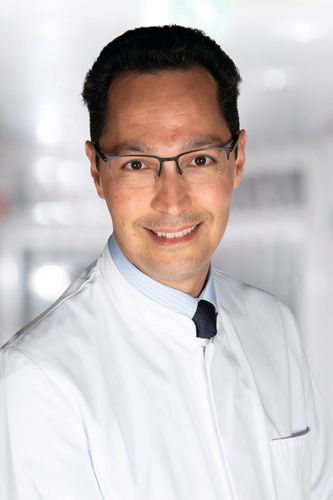
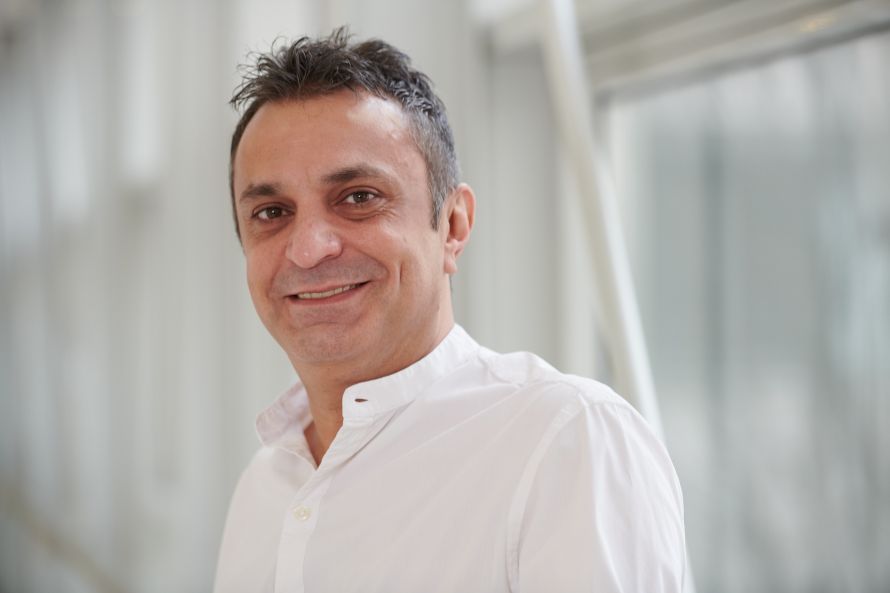
The editorial team at Leading Medicine spoke with Prof. Dr. Kaisidis and learned more about shoulder pathologies and their successful treatments.
Shoulder conditions such as tendon tears, osteoarthritis, instability, and fractures can cause significant limitations in shoulder function and severe pain. Targeted and early treatment is crucial to prevent long-term complications and improve the quality of life for those affected. Modern medicine offers a wide range of minimally invasive therapies and surgical techniques that enable precise and effective treatment of these shoulder conditions. The right choice of appropriate therapy or surgery depends on various factors, including the type and severity of the condition, the patient’s age and overall health, as well as individual preferences and life circumstances. A holistic approach that takes the patient’s needs into account and incorporates state-of-the-art treatment methods with the highest level of expertise—such as at the Frankfurt Red Cross Clinic, which specializes in shoulder surgery—is crucial for the successful treatment of shoulder conditions.
There is a wide range of minimally invasive treatment options for shoulder conditions such as tendon tears, osteoarthritis, instability, and fractures, which can be selected based on the type and severity of the condition as well as the patient’s individual needs.
“There are a variety of treatment options for tendon tears, osteoarthritis, instability, and fractures. For example, tendon tears and instability can be treated with arthroscopy (keyhole surgery), while osteoarthritis and fractures are less commonly treated using this technique. Recovery time with minimally invasive techniques is at least 50% shorter than with open methods. They are also more effective because the camera-assisted minimally invasive technique allows for a wider view of the joint and access to corners and areas that are much more difficult to reach with open techniques. As a result, effectiveness is significantly increased. In cases of mild osteoarthritis, there is also a minimally invasive option known as microfracturing, in which small holes are drilled into the affected joint. “This stimulates the bone marrow, triggers repair mechanisms, and new cartilage tissue forms,” explains Prof. Dr. Kaisidis, before going on to describe the unique feature of the Kaisidis plate he developed: “For fractures, plates can be used. In the case of a humeral head fracture, for example, using ‘my’ Kaisidis plate with mini-incisions (3–4 cm) can be beneficial. Of course, other plates are available as well, but they require larger incisions (15–20 cm) because the plates are significantly larger. This is not ideal for the patient, as recovery time is automatically prolonged with larger incisions.”
The Kaisidis plate, a small titanium plate, was specifically designed for certain fractures of the humeral head and enables minimally invasive treatment. This innovative solution was developed by Chief Physician Prof. Dr. Kaisidis. The plate’s biomechanical properties and design were published in *The Open Orthopaedics Journal* in 2018. It is noteworthy that the plate was named after its developer during his lifetime, which is rather unusual.
Deciding on the most appropriate minimally invasive therapy or surgery for a patient with a specific shoulder condition requires a careful evaluation of several factors.
First, it is important to determine the exact nature of the shoulder condition and the severity of the symptoms. “This comes down to the physician’s experience—the number of shoulder surgeries they’ve performed, how many surgical techniques they’ve mastered, and how proficient they are in those techniques—in order to make a truly accurate assessment. Here at the Frankfurt Red Cross Clinic, we always strive to use the least invasive technique possible for the patient. In the operating room, it may happen that the treatment needs to be adjusted and we have to expand the procedure slightly. But even open surgeries are ‘mini-open.’ Only in some cases of very complicated tendon tears—those occurring across multiple levels—do we often need to combine “mini-open” and arthroscopic techniques. “It depends on the complexity of the condition; sometimes the procedure needs to be expanded slightly,” says Prof. Dr. Kaisidis.
In cases of severe tendon injuries or irreparable tendon tears, a tendon transfer may be necessary to restore the function of the shoulder joint. In this procedure, an intact tendon is harvested from another part of the body and transferred to the damaged area in the shoulder. Tendons are often classified prior to surgery using the so-called Pate system, which describes various degrees of tendon injury. This classification helps doctors choose the right treatment strategy, and imaging such as ultrasound or MRI is often used to accurately assess the injury.
“With tendon tears, the tendon typically tears away from its insertion point. When we want to reconstruct or reattach it, we suture the tendon back to its original location on the head of the humerus—thus reattaching the tendon to the bone. This can be done with simple sutures or with fine anchors. Medical-grade plastic or titanium can also be used. In any case, the tendon is reattached to the bone. Not every tendon can be repaired. That is why we use the Pate classification, which is already determined by MRI before surgery. For example, with a Pate-2 classification, we know that fixation is possible, whereas this is not possible with a Pate-3 classification. We also always explain to our patients that there is a limited time window for repairing tears in the major shoulder tendons. There is only a specific time window. If this window is “missed,” then the tendon can no longer be reconstructed. However, we are not advocates of so-called artificial bio-patches, which are used elsewhere, because the results are very poor; therefore, in such severe cases, we resort to tendon transfers from other parts of the body. These are certainly “exotic surgeries” that don’t take place every day, although many patients are referred to us for this purpose, since, as a shoulder clinic, we have the necessary expertise for such a procedure.
The risks and potential complications of the various minimally invasive treatment options for shoulder conditions can vary depending on the type of procedure.
Despite the minimally invasive nature of these procedures, all surgical interventions carry a risk of postoperative infection. This can lead to pain, swelling, and other complications. Bleeding or the formation of hematomas may occur during or after surgery, particularly in the first few days following the procedure. With minimally invasive surgeries, there is a risk that surrounding tissues—such as nerves, blood vessels, or muscles—may be injured. This can lead to numbness, weakness, or other neurological problems. In surgical procedures that require the use of implants such as anchors or screws, there is a risk that these may loosen or fail, which can lead to a recurrence of symptoms and the need for further surgery. During longer surgical procedures, there is a risk of thrombosis or embolism, in which blood clots form and can travel to vital organs.
“A particular challenge for us is large tendon tears that have been reconstructed but have torn again and failed to hold. These often have to be repaired using tendon transfers or so-called water cushions—particularly when the patient may be too old for a tendon transfer, has already undergone too many surgeries, or is biologically older than average. These water cushions then fill the space where the tendon was originally located. Loose artificial shoulder prostheses also require a high level of expertise. But arguably the greatest challenge is infected shoulder prostheses. Here, one must proceed very objectively and professionally. This is because, as a rule, the surrounding tissue or even the bone is also affected, which makes the procedure quite problematic. “Extremely high levels of experience are required here to assess what is feasible and what is not, and also to avoid placing an unnecessary burden on the patient,” states Prof. Dr. Kaisidis.
Rehabilitation following minimally invasive shoulder surgery is crucial for a successful recovery and the restoration of shoulder function.
From the very beginning, the focus is on promoting movement to reduce swelling and improve blood circulation. Rehabilitation often begins shortly after surgery with gentle movement exercises. A key focus is on muscle building and stability training to strengthen the surrounding muscles and improve joint stability.
“We have our own social services department, and for patients with shoulder prostheses, we refer them to rehabilitation very quickly—usually one week after surgery. Our social services department, which has the necessary experience, takes care of all of this. For patients with tendon tears, instabilities, and fractures, rehabilitation—whether outpatient or inpatient—typically begins six weeks after surgery. We also provide all patients with follow-up treatment plans for home use, which we consider very important. It’s fair to say that a patient who has received a shoulder prosthesis is already functioning at a very high level after about five weeks (including hospitalization and rehab). It takes a little more time to return to full activity, including work. Of course, it always depends on the type of work or sport the patient wishes to pursue. Those who want to return to office work can do so fully after 6–7 weeks, while manual laborers typically need 3–3.5 months. In cases of instability or tendon tears, a bit more time must be allowed. However, we offer the advantage that our patients begin rehabilitation quickly, whereas at less specialized clinics this doesn’t happen until six weeks later, so everything is delayed there,” explains Prof. Dr. Kaisidis.
A successful recovery requires patience, perseverance, and a willingness to follow the treatment team’s recommendations. Individualized rehabilitation programs are developed based on the type of procedure and the patient’s specific needs to ensure optimal recovery. Ultimately, the patient’s active participation in rehabilitation is crucial to the success of the recovery process.
There are continuous advances and developments in minimally invasive shoulder surgery that offer promising opportunities for even better treatment.
New imaging technologies, such as high-resolution MRI and CT scans, as well as intraoperative imaging techniques, enable more accurate diagnoses and more precise procedures. These advances improve the safety and accuracy of surgeries. Another promising area is robot-assisted surgery. Robot-assisted systems are increasingly being used in shoulder surgery to enhance the precision and reproducibility of procedures. They enable surgeons to perform complex movements with greater accuracy and make smaller incisions, which can lead to faster recovery times. “The coming years will show to what extent complementary AI (artificial intelligence) will be used. It’s still too early to say exactly whether AI will play the biggest role during surgery or only in planning, though I see its use primarily in planning, as well as in the development of devices and design. One must also always consider the costs and time involved when assessing the added value. But in the future, AI may be able to develop even more effective implants, the factors of which we do not yet even know,” speculates Prof. Dr. Kaisidis, and with that, we conclude our conversation.
Thank you very much, Professor Dr. Kaisidis, for the fascinating insight into shoulder surgery!
Share this article
About the medical author
Alexandra Pfitzmann
Editor
Alexandra Pfitzmann – medical author: expert knowledge, professional articles and medical insights in the Leading Medicine Guide.
More about the medical author →Expert Interviews
Read next
- Expert interview
Cardiogeriatrics: Significance and benefits in the context of hospital reform
Sep 21, 2026
Cardiogeriatrics: Significance and benefits in the context of hospital reform
Read more - Expert interview
Expert Interview with Professor Dr. Amadeus Hornemann, MPH
Sep 18, 2026
Prof. Amadeus Hornemann on Precision Medicine in Gynecology: Modern Surgery, New Techniques, Better Quality of Life
Read more - Expert interview
Expert Interview with Professor Dr. Konstantinos Anagnostakos
Sep 15, 2026
Prof. Anagnostakos on Painful Knee Replacements
Read more