Expert Interviews
Focus on Women's Health: Holistic Care from Fertility to Postpartum—An Expert Interview with Prof. Volz

Alexandra Pfitzmann ·
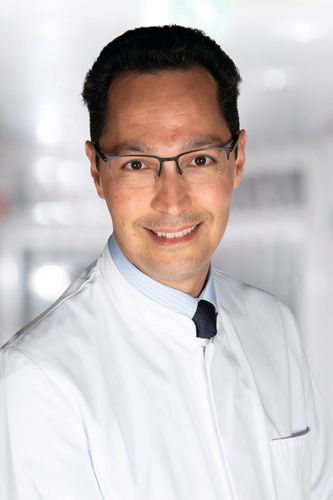
Prof. Dr. Joachim Volz is Chief Physician at the Center for Gynecology at the Evangelical Hospital in Lippstadt, which features a certified perinatal center at the highest level of care, a certified breast center, and an affiliated fertility clinic. With exceptionally broad expertise in women’s health and numerous specialist certifications in gynecology, obstetrics, oncology, minimally invasive surgery, prenatal medicine, endocrinology, and reproductive medicine, Prof. Dr. Volz offers his patients comprehensive care. He places great emphasis on innovative treatment options and keeping pace with the latest developments in medicine.
The Perinatal Center at EVK Lippstadt is a Level 1 center, a perinatal center that also serves children at the highest risk. A holistic approach to fertility—from the desire to conceive through the postpartum period—offers significant benefits for the health of both the woman and her unborn child. Optimal preparation for pregnancy is of crucial importance, and this is precisely where the Center for Gynecology in Lippstadt comes in. Prof. Dr. Volz is a specialist in this complex field, which encompasses reproductive medicine, perinatal medicine, and surgical gynecology. While these areas often drift apart in modern medicine, the hospital in Lippstadt, in the district of Soest, North Rhine-Westphalia, is the only municipal hospital in Germany that combines all three areas of specialization.
The editorial team of the Leading Medicine Guide took the opportunity to speak with the expert Prof. Dr. Joachim Volz about a holistic approach to gynecology and to evaluate the key factors to consider—from the desire to have children through the postpartum period.
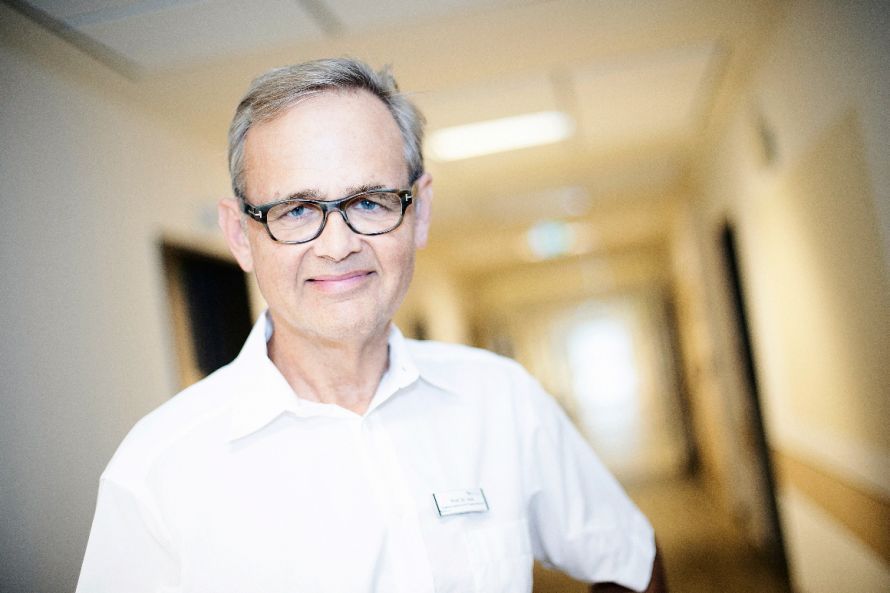
A holistic approach to the topic—from the desire to have children through the postpartum period—offers significant benefits for the health of the woman as well as that of her unborn child. Prof. Dr. Volz begins our conversation by first providing a clear, accessible explanation of the field of gynecology: “The field of ‘gynecology’ has three main areas of focus: reproductive medicine, perinatal medicine, and surgical gynecology. Unfortunately, in modern medicine, these three areas are drifting further and further apart. This means there are hardly any clinics left that view reproductive medicine in conjunction with the full scope of our field. Completely separate structures have emerged, and communication between them is no longer close—which is a great pity, since our field was originally conceived as a unified whole. As these areas continue to diverge, the resulting synergies and benefits for patients are also lost. Here in Lippstadt, we are the only municipal hospital in all of Germany that still maintains the integration of these three areas of specialization. We have a perinatal center, a breast center, a fertility center, and a very well-established surgical gynecology department. In addition, we have the unique distinction of being authorized to provide specialty training in all areas of our field. That’s quite remarkable when you consider how small this hospital in Lippstadt once was and how it has developed into such a well-known center in Germany. With a solid team of seven highly qualified senior physicians who are excellently trained, we perform an average of 1,700 deliveries per year.
Over the years, the situation surrounding and understanding of pregnancy has changed in many ways.
On average, women today are more likely to choose to have children later in life. However, an older age at first pregnancy can increase the risk of fertility problems. Factors such as stress, environmental factors, and certain lifestyle habits also influence fertility, as does the rise in the incidence of health issues like obesity and diabetes. “A lot has changed for women who want to get pregnant or are pregnant today. For example, they gain more weight during pregnancy than they used to (just 30 years ago, a woman weighed an average of 62 kilograms shortly before pregnancy; today, she weighs an average of 82 kilograms), they are more likely to have diabetes, they smoke, and so on. As a result, 15–30% of couples today need help conceiving—for example, if the man’s sperm are too slow. And all these difficulties lead to a whole host of pregnancy complications,” explains Prof. Dr. Volz.
Overweight women have a harder time getting pregnant.
Overweight women often experience hormonal fluctuations that also affect the menstrual cycle, which reduces the chances of pregnancy. It has also been found that the quality of eggs is reduced in overweight women, which in turn lowers the chances of success with in vitro fertilization. “Pregnancy in a very obese woman presents special challenges. Since the summer of 2023, a new ‘weight-loss injection’ has been available on the market. This and other measures help me prepare my patients optimally for pregnancy. The course of pregnancy and childbirth is significantly better after weight loss. This way, we ensure that even overweight women can become pregnant (more easily) and, in cases of doubt, that the child does not inherit a predisposition to obesity or diabetes. “So if I treat women beforehand—for example, by properly managing their blood sugar in cases of diabetes, that is, if I take a preconception approach—then I know I’ll see far fewer pregnancy complications and healthier babies,” Prof. Dr. Volz explains.
Many women can only become pregnant with the help of artificial insemination.
The risks associated with assisted reproduction and their impact on the course of pregnancy are the subject of intensive research and discussion. Studies have shown that assisted reproduction can increase the risk of miscarriage and preterm birth.
“In reproductive medicine, we need to take a completely different approach to ensure healthy children. As I mentioned, measures can be taken in advance that lead to a successful pregnancy and a better pregnancy outcome. Often, the reason for a failed pregnancy is male subfertility. Many men (especially those who are overweight) have ‘poor-quality’ sperm; they are simply too slow and fail to reach the egg. In reproductive medicine, there is a method in which sperm are injected directly into the egg. “However, in many cases, this leads to an increased risk of preeclampsia (pregnancy-induced hypertension),” explains Prof. Dr. Volz, adding: “It’s important to consider all aspects. As a doctor, I must focus on identifying and understanding the individual circumstances of the affected couple or the affected woman.”
Alongside in vitro fertilization (fertilization in the lab), intracytoplasmic sperm injection is one of the most successful treatments in reproductive medicine.
Of course, decisions must also be made regarding the birth itself. “Here, for example, the pregnant woman’s age also plays a role, which may lead me to advise the expectant mother against a vaginal birth and recommend a cesarean section instead. For example, if a woman is 42 years old and expecting her first (and last) child, a cesarean section prevents significant damage to the pelvic floor and thus incontinence later in life.
A holistic approach to childbirth can also determine, for example, whether I recommend a pessary to a new mother for the postpartum period to stabilize her pelvic floor. Or do I also need to refer the woman to a cardiologist after delivery because she has an increased risk of heart failure in later years, or to a diabetologist due to a risk of diabetes? I automatically receive all the necessary information once I’ve helped her achieve pregnancy and thus know all the relevant parameters. If I practice obstetrics exclusively, then I simply don’t know all of that,” explains Prof. Dr. Volz, describing the approach.
There is a close connection between Lippstadt Hospital gGmbH, the Fertility Institute, and the Level 1 Perinatal Center.
A premature birth is like booking a trip to Europe but then landing in Africa.
Approximately 6 out of every 100 children in Germany are born each year before the end of the 37th week of pregnancy. “But we mustn’t forget—a disproportionately high number of these children are healthy! That’s the beautiful part! Thanks to the close integration of all subspecialties in obstetrics and gynecology here in Lippstadt, I can offer even a preterm baby the best possible start in life and strive to prevent long-term complications for the child. Comprehensive specialized knowledge leads to a significantly better prognosis for both mother and child,” Prof. Dr. Volz comments on the situation regarding premature births and adds that the hospital in Lippstadt performs exceptionally well: “For example, before inducing labor, we also perform an ultrasound of the mother’s heart so we can determine whether she’ll be able to handle the birth at all. After all, a birth like this is ultimately a test for the entire cardiovascular system. As a result, approximately 7% of women experience heart failure postpartum—that is, in the immediate period after giving birth.
But the positive results we can report for our premature births are simply fantastic—for example, we didn’t have a single case of asphyxia (oxygen deprivation in the infant) all last year; that’s just incredibly good! “But that requires a team that really understands the big picture,” says Prof. Dr. Volz, praising the outstanding work of his clinic, which has a highly international focus.
Pelvic Floor Surgery: Treatment Options and Maintaining Health
The pelvic floor plays a crucial role during childbirth. During delivery, its elasticity supports the birthing process by allowing the birth canal to dilate and facilitating the baby’s passage through the mother’s pelvis. A strong and elastic pelvic floor is particularly important for making the birthing process as smooth as possible.
“However, despite any romantic notions, it is sometimes very important to explain to women the advantages of a cesarean section over a spontaneous birth—that is, a natural birth—especially when it comes to women who are heavier or older, and we have many such women here. The issues surrounding the pelvic floor should never be overlooked. Even when delivering a large baby weighing 4000g, the pelvic floor is often damaged after birth. The same applies to rapid births that last only about 1 hour. This is because it means the pelvic floor was already relatively weak to allow such a rapid birth in the first place,” explains Prof. Dr. Volz.
Pelvic floor disorders such as urinary incontinence and uterine prolapse can significantly impair women’s lives. Surgical procedures can be used to treat these problems. A total hysterectomy is the worst possible option. “If possible, the cervix should never be removed, as it serves as a firm anchor in the pelvic floor that stabilizes the bladder, vagina, and bowel,” says Prof. Dr. Volz, adding: “So if the pelvic floor is damaged after childbirth, we can take various measures right here in Lippstadt. Fortunately, with the help of the da Vinci robot, we can perform even very complex pelvic floor reconstructions in a minimally invasive way—procedures that would have been unthinkable in the past without a robot. I’ve been a surgeon for over 40 years, but working with da Vinci robotic technology is truly fascinating and represents a whole new dimension for me, since it allows us to work with even greater precision! “First and foremost, we perform pelvic floor surgeries and complex cancer surgeries using the da Vinci robot,” says Prof. Dr. Volz enthusiastically.
We always support the entire family.
Prof. Dr. Volz speaks with great empathy and enthusiasm about how families continue to visit the clinic together, even years after a successful birth, to share their children’s development with the doctors: “It’s so wonderful when families come to the clinic with their children to show them off. After all, as a doctor, you support the entire family and help them achieve what truly makes them happy. Of course, we also treat single women, including lesbian women who wish to have children. Some patients—like a woman who successfully became pregnant here at age 43 and gave birth to her child—send me a card with photos every year to show how her child is developing. That brings me so much joy! We have a good success rate, but the fact remains that we’re unable to help 10–15% of women become pregnant. That’s why we’re all the more delighted about the many successful pregnancies!”
As for the future and further developments, Prof. Dr. Volz’s primary hope is that we can maintain what we’ve achieved so far.
“As for robotic technology—that is, working with the da Vinci robot, which we’ve only been using in Lippstadt for a little over a year—I hope that robotic surgery becomes a routine procedure and that the costs remain manageable. There’s still room for improvement there. As for digital documentation, we need an even better system, since it allows us to document treatments much more effectively. As for my team, I hope that committed individuals will continue to apply and truly want to contribute. It would also be great to see more women entering the field. Women need to understand even better that they are important,” says Prof. Dr. Volz.
The state of the world and the associated fear of bringing children into it.
The many challenges facing our planet certainly cause anxiety for families as well. Given the current difficult circumstances—environmental problems and wars—should I really bring a child into the world? “Since the start of the war in Ukraine, we’ve seen a significant decline in births and have treated 2,000–4,000 fewer women per year seeking to conceive. COVID, on the other hand, initially led to many pregnancies, but at the same time, the number of births resulting from reproductive medicine has dropped sharply across Europe. Many people today are certainly feeling very uncertain, whether due to the climate crisis, war, or economic reasons. After all, everyone has to think about their financial situation,” states Prof. Volz, but adds: “My message to women is, ‘Never give up!’ That’s important, not only for the entire process of trying to conceive, but also for many other health challenges.”
Professor Volz, thank you very much for the insight into the fascinating world of gynecology, combined with your tremendous enthusiasm!
Share this article
About the medical author
Alexandra Pfitzmann
Editor
Alexandra Pfitzmann – medical author: expert knowledge, professional articles and medical insights in the Leading Medicine Guide.
More about the medical author →Expert Interviews
Read next
- Expert interview
Cardiogeriatrics: Significance and benefits in the context of hospital reform
Sep 21, 2026
Cardiogeriatrics: Significance and benefits in the context of hospital reform
Read more - Expert interview
Expert Interview with Professor Dr. Amadeus Hornemann, MPH
Sep 18, 2026
Prof. Amadeus Hornemann on Precision Medicine in Gynecology: Modern Surgery, New Techniques, Better Quality of Life
Read more - Expert interview
Expert Interview with Professor Dr. Konstantinos Anagnostakos
Sep 15, 2026
Prof. Anagnostakos on Painful Knee Replacements
Read more