Expert Interviews
Proton therapy – high-energy and effective

Alexandra Pfitzmann ·
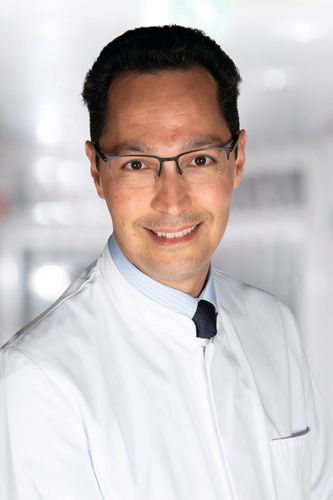
Professor Dr. Beate Timmermann is a leading expert in the field of proton therapy, a state-of-the-art form of radiation therapy used to treat cancer. As Director of the Clinic for Particle Therapy and Medical Director of the West German Proton Therapy Center Essen (WPE) at the University Hospital Essen, she specializes in the treatment of tumors, particularly those located in sensitive areas of the human body or that are difficult to operate on. Proton therapy, as performed by Prof. Dr. Timmermann and her team at the WPE, is based on the use of protons—positively charged particles that possess a unique property. Unlike conventional radiation therapy, which uses X-rays, protons can penetrate tissue in a controlled manner to a defined point before releasing their maximum energy. This process enables experts to precisely direct the radiation at the tumor while sparing the surrounding healthy tissue. The West German Proton Therapy Center Essen (WPE) is one of the leading facilities for proton therapy in Germany and worldwide. Prof. Dr. Timmermann and her highly qualified team of specialists, medical physicists, and radiology technologists work closely together to plan and administer proton therapy tailored to each patient’s individual needs. Close cooperation with other clinics and institutes at Essen University Hospital ensures comprehensive care at the highest medical standard. The editorial team of the Leading Medicine Guide had the opportunity to speak with Prof. Dr. Timmermann to better explain proton therapy.

Proton therapy differs from conventional radiation therapy methods in the way it uses high-energy beams to destroy tumor cells. The key difference lies in when the radiation dose is delivered to the body. Conventional radiation therapy methods typically use X-rays, which pass through the body while continuously releasing their energy. These rays therefore lose most of their energy as they pass through the body. This means that most of the radiation dose is delivered before the radiation reaches the tumor, and healthy tissue both in front of and behind the tumor is also exposed to radiation.
In the 1950s, researchers observed how protons behave, but the technology still needed to be developed. In the 1990s, the first proton therapy system was installed in a hospital in the U.S.; in Europe, this did not happen until 2009, and specifically in Germany, not until 2010 at the clinic in Heidelberg.
“In proton therapy, we take advantage of the fact that protons release their maximum energy precisely within the tumor and then come to an abrupt stop. This allows us to spare the surrounding healthy tissue as much as possible,” explains Prof. Dr. Timmermann at the beginning of our conversation. “For sarcomas and many other tumors, proton therapy can therefore offer advantages by enabling more precise and targeted irradiation of the tumor while sparing the surrounding healthy tissue. This can lead to a reduction in long-term side effects and improved tumor control. Depending on the tumor’s location, this can also spare organs or nerves that are highly sensitive to radiation and help prevent secondary tumors caused by radiation therapy. However, proton therapy is a specialized and technically very complex form of radiation therapy and is not available everywhere. A careful evaluation and discussion with the treating physician is therefore necessary to determine whether proton therapy is the appropriate option for treating, for example, sarcomatous tumors,” explains Prof. Dr. Timmermann.
Sarcomatous tumors, also known as sarcomas, are a specific type of benign—but often also malignant—tumor that can arise from connective tissue, muscles, bones, blood vessels, or other soft tissue structures in the body. Unlike the more common carcinomas, which arise from epithelial tissue such as the skin, breast, or intestine, sarcomas develop from mesenchymal tissue.
Proton therapy offers a number of potential benefits for patients with sarcomatous tumors compared to other treatment options.
Precise Radiation Delivery: Proton therapy enables precise and targeted radiation delivery to the tumor. By precisely controlling the proton energy, the radiation dose can be tailored exactly to the tumor, thereby sparing the surrounding healthy tissue. This is particularly important for sarcomatous tumors, which are often located near sensitive tissue structures. This helps reduce the risk of long-term side effects and complications.
Reduced Radiation Exposure: Because the radiation dose is delivered with such precision, higher radiation doses—which many sarcomas require to be destroyed—can be administered.
Improved tumor control: By precisely targeting the tumor, proton therapy can help achieve better control of tumor growth. This can increase the chances of complete tumor removal and reduce the risk of recurrence.
Approximately 2,500 patients in Germany receive proton therapy.
Approximately 250,000 patients are in need of this treatment.
“Because proton therapy spares surrounding healthy tissue, it can reduce the risk of long-term side effects such as chronic damage to organs, tissues, or structures. This is particularly relevant when the tumor is located near vital organs or radiation-sensitive tissue. Children benefit from this in particular. Due to the increased radiation sensitivity of children and young adults, patients in this age group with sarcomatous tumors can benefit from proton therapy. The precise delivery of proton therapy can reduce the risk of long-term side effects associated with radiation therapy at a young age. Especially for children with a high life expectancy, a lasting, optimal quality of life is a key consideration. Patients with skull base tumors, soft tissue and bone tumors, lymph node cancer, or prostate cancer also benefit from proton therapy,” explains Professor Dr. Timmermann, adding: “We have only four clinics in Germany that offer proton therapy—in Essen, Dresden, Heidelberg, and Marburg. Berlin offers it only for eye tumors. In this regard, the patient’s travel arrangements must also be considered, as treatment typically involves about 30 sessions spread over 6 weeks. When radiation therapy is available close to home, patients can continue their normal daily routines, depending on the tumor and any individual limitations caused by the disease. However, someone living in Hamburg, for example, would need to arrange overnight accommodations for the duration of the outpatient radiation sessions, which last about 20–30 minutes per day. “Due to the limited number of centers, however, Essen is equipped to accommodate patients traveling from farther away and assists them in finding lodging.”
It is important to note that the decision regarding a specific treatment method should be made on an individual basis and depends on factors such as tumor type, stage, location, individual patient characteristics, and the availability of proton therapy. A thorough evaluation and discussion with a specialized oncologist or radiation oncologist is crucial for making the best possible treatment decision. Especially in the case of sarcomas, which are very rare and are divided into over 100 different subtypes, treatment should always take place at a certified sarcoma center.
Radiation Is a Mystery
“Patient education is particularly important when it comes to radiation therapy, as patients often cannot fully visualize what radiation is or how it works, and this causes them anxiety. Patients need to understand that the precise delivery of radiation in proton therapy helps achieve better control of the tumor and reduces the risk of complications. Patients soon realize that a proton therapy session is similar to an X-ray,” says the specialist in radiation therapy and proton therapy.
The side effects of proton therapy in the treatment of sarcomatous tumors are similar to those of other radiation therapy methods, but differ in some aspects or in the severity of their occurrence.
“Acute side effects may occur during treatment; these are temporary and usually subside after therapy is completed. These include fatigue, nausea, diarrhea, skin reactions (redness, irritation), inflammation of the mucous membranes in the treatment area, and temporary or permanent hair loss. Some long-term side effects of proton therapy may occur, particularly if healthy tissue near the tumor is irradiated. These can include damage to organs, tissues, or structures in the irradiated area. The exact nature and extent of the side effects depend on various factors, such as the tumor’s location and the dose delivered to the surrounding tissue. It is important to note that radiation therapy is always administered only on the basis of what is known as a “justifying indication.” This means it is recommended only when its benefits outweigh the risks,” explains Prof. Dr. Timmermann.
Radiation therapy can save lives
In principle, the destruction of the tumor during proton therapy is identical to that achieved with conventional photon radiation therapy. The effectiveness of proton therapy depends on various factors, including tumor location, tumor size, tumor grade, the presence of metastases, and individual patient factors. “However, proton therapy—like any other form of radiation therapy—can be used especially when surgery is not an option or when complete removal of the tumor is not possible due to its location. Of course, radiation therapy is not intended to replace surgery as a matter of course. If a tumor is operable, then surgery is usually recommended—and I’ll go out on a limb for the surgeons here. Surgery is an extremely important method. The discussion regarding the best local therapy is the responsibility of the interdisciplinary tumor board; this is where the best possible treatment for each patient is determined,” emphasizes Prof. Dr. Timmermann.
Radiation Therapy for an Acoustic Neuroma
Certain other tumors, such as the (usually benign) acoustic neuroma in the ear, can also be treated with proton therapy. In many cases, hearing loss can be avoided by using precision radiation therapy instead of surgical removal. Since all ionizing radiation carries a risk of secondary tumors, it is particularly important to weigh the options on a case-by-case basis in consultation with the patient. Part of this assessment includes, among other factors, the remaining hearing function in the affected ear and the opposite ear. Proton therapy is also generally associated with a risk of secondary tumors, but there is now solid data showing that the risk following proton therapy is significantly lower than after radiation therapy using other conventional types of radiation.
In recent years, there have been significant advances in proton therapy, including in the treatment of sarcomatous tumors.
The technology and equipment for proton therapy have improved, leading to more precise and efficient treatments. Modern proton therapy facilities offer advanced imaging techniques such as image-guided radiation therapy (IGRT) and adaptive radiation therapy planning (ART) to further improve the accuracy of radiation dose delivery. “My hope is that more people could benefit from proton therapy. Patients need to be even better informed about the availability of proton therapy. And then the procedures for therapy sessions could be further improved so that the planning time for proton therapy is reduced, ultimately allowing us to treat more patients,” says Prof. Dr. Timmermann hopefully, bringing our conversation to a close.
Professor Dr. Timmermann, thank you very much for this in-depth look into the world of radiation therapy!
Share this article
About the medical author
Alexandra Pfitzmann
Editor
Alexandra Pfitzmann – medical author: expert knowledge, professional articles and medical insights in the Leading Medicine Guide.
More about the medical author →Expert Interviews
Read next
- Expert interview
Cardiogeriatrics: Significance and benefits in the context of hospital reform
Sep 21, 2026
Cardiogeriatrics: Significance and benefits in the context of hospital reform
Read more - Expert interview
Expert Interview with Professor Dr. Amadeus Hornemann, MPH
Sep 18, 2026
Prof. Amadeus Hornemann on Precision Medicine in Gynecology: Modern Surgery, New Techniques, Better Quality of Life
Read more - Expert interview
Expert Interview with Professor Dr. Konstantinos Anagnostakos
Sep 15, 2026
Prof. Anagnostakos on Painful Knee Replacements
Read more