Expert Interviews
High-Tech Journey Through the Intestines: Capsule Endoscopy with Prof. Ehehalt
Leading Medicine Guide Editors ·
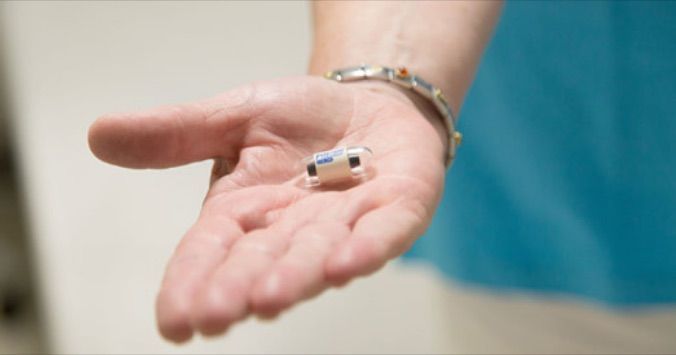
It’s barely bigger than a pill—and is taken the same way: You swallow a video capsule that remains inside the intestines for about twenty hours. It is then excreted naturally. The result: informative “internal images.”
“Secret Agent Capsule”: Images of the Stomach and Intestines
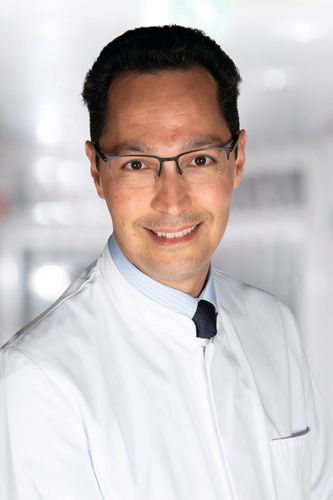
Capsule endoscopy is the name of this completely non-invasive procedure for examining the digestive tract. In Heidelberg, this method is performed by a renowned specialist who consistently draws attention to himself with his high level of expertise: Prof. Dr. med. Robert Ehehalt, who is also frequently sought after as an expert on television programs, provides insights here into a method that, for example, takes colorectal cancer screening to a new level.
Prof. Ehehalt is one of the leading gastroenterologists in the German-speaking world. His own gastroenterology practice, affiliated with the Heidelberg Facharztzentrum Nord, has a reputation that extends far beyond the borders of this world-famous city. The renowned practice primarily treats patients with disorders of the digestive tract and the entire metabolic system. Whether it involves gastroscopy or colonoscopy, Crohn’s disease, reflux, or liver diseases: Anyone who comes here can look forward to a first-class diagnosis—and to exactly the right individualized treatment, which the specialist administers drawing on his extensive experience. However, Prof. Ehehalt frequently deals with chronic inflammatory bowel diseases. No wonder: As a specialty practice, the institution is certified specifically for this—and also offers a popular specialized consultation hour.
High Level of Expertise: Colorectal Cancer Screening as a Crucial Factor for Health
Over the years, the practice has also earned a strong reputation in the field of colorectal cancer. Precisely because colorectal cancer is one of the most common cancers, screening is of particular importance. Furthermore: “With a colonoscopy, colorectal cancer can be detected so early that it is usually highly treatable,” says Prof. Ehehalt. Often, as he puts it, “precursors” are detected—these are usually polyps, which are then removed. And this is precisely how colorectal cancer can be prevented before it develops.
Despite his expertise in the core areas of gastroenterology, which also include nutritional medicine, it was capsule endoscopy that brought Prof. Dr. med. Robert Ehehalt into the spotlight far beyond the region’s borders. In clinical practice, this examination method is now considered standard in gastroenterology. Yet this non-invasive procedure for examining the digestive tract isn’t even entirely new: the first camera capsule caused a sensation at the turn of the millennium and has been used successfully by individual specialists ever since.
Advanced Medicine in Heidelberg
However, advanced medicine in particular has taken another giant leap forward in recent years. And the new generations of capsule endoscopy offer decisive advantages—including through clear distinctions. Prof. Ehehalt: “The small-bowel capsule can also detect diseases of the small intestine that cannot be adequately identified using conventional methods,” he says—and adds: “With the colon capsule, it may be possible to avoid the standard colonoscopy—that is, an endoscopic examination of the colon—performed through the anus.”
Traditionally, a colonoscopy is performed as a preventive measure to screen the colon for suspicious polyps. To do this, a flexible tube a few centimeters thick is inserted through the anus, with a camera at its tip. This method is rather uncomfortable for patients, which is why it is usually performed under sedation. It’s completely different with the capsule: “Patients don’t even notice the high-tech capsule itself during capsule endoscopy. This small capsule is also equipped with a high-resolution camera, LED lights, and a sensor that sends signals to a data recorder. During the examination, the patient wears a belt containing this recorder. The signals transmit all the necessary information, which we evaluate the next day.”
Analysis: High Image Quality
The images produced by capsule endoscopy today are of such high quality that it was hard to even imagine such results at the beginning. With this information, an experienced specialist like Prof. Ehehalt can identify and evaluate suspicious areas with a high degree of certainty. However, it is of course not possible to take tissue samples this way.
Prof. Dr. med. Robert Ehehalt knows that the potential of capsule endoscopy is still far from being fully realized today. This is another reason why he repeatedly draws attention to this innovative option, for example on popular TV shows like “Volle Kanne.” This not only increases the number of patients who opt for this state-of-the-art examination method: “Since capsule endoscopy is particularly well-suited for examining the small intestine and for diagnostic colorectal cancer screening, hopefully more people will take advantage of preventive care in the future—especially those who are reluctant to undergo screening and may want to avoid the unpleasant experience of a colonoscopy.”
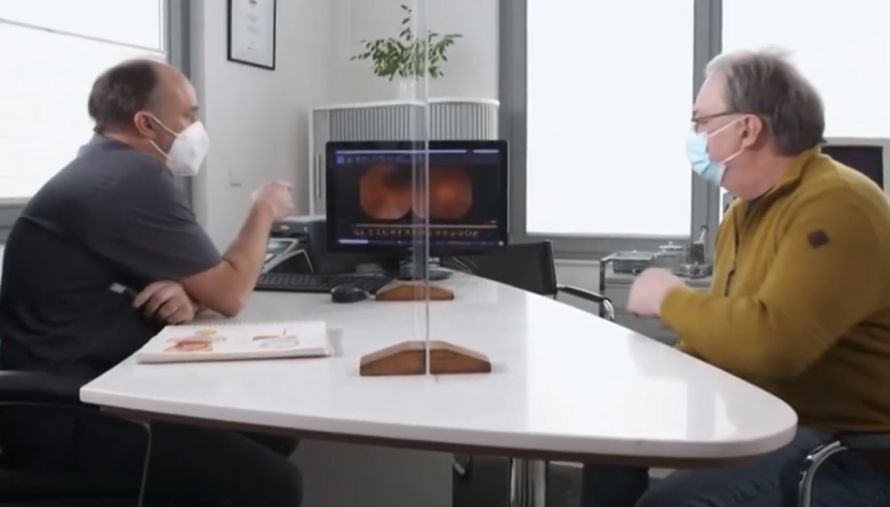
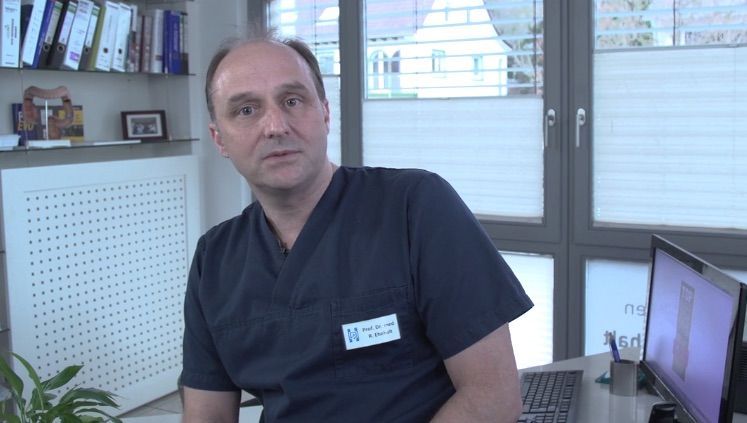
Prof. Ehehalt explains: ZDF report on the examination method (still image from the program)
Of course, this raises the important question: Will health insurance providers cover the costs? The answer offers hope: The costs for this imaging procedure are already being covered in some cases—but no clear statements can be made on this matter. Anyone interested should check directly with their health insurance provider. Or, of course, consult a proven specialist who has extensive experience with capsule endoscopy and applies all their expertise when interpreting the results. We know one—in Heidelberg. Incidentally, they’re familiar with all modern therapies for colorectal cancer screening.
Why a Screening Exam Is So Important
Once you’ve developed a tumor in the intestinal tract, you face a difficult journey ahead. Colorectal cancer is the second most common type of cancer in our part of the world—and over the past thirty years, the number of new cases has nearly doubled. Early detection can save lives; screening is recommended and supported by health insurance providers—those interested can find out exactly how by contacting their specific health insurance provider or consulting a specialist.
Even though campaigns like “Colorectal Cancer Awareness Month in March” or “Movember” reach many people—screening is still not widely utilized. Medical experts believe that in German-speaking countries alone, well over 60,000 cases could be prevented—every year. So if you sometimes experience constipation, if bowel movements are painful, or if you feel pressure in your abdominal region, it’s best to consult a specialist. This is especially true if you notice blood in your stool—because who knows: it could be a serious intestinal condition—or even cancer.
Incidentally, people aged fifty and older are most likely to develop colorectal cancer—and it affects men more frequently. It has long been proven that lifestyle plays a role: smoking, obesity, alcohol, red meat, and a sedentary lifestyle can contribute to the development of cancer.
Further information about Prof. Dr. med. Robert Ehehalt is available on his specialist profile in the Leading Medicine Guide.
Share this article
Gastroenterology Practice
ProfileExpert Interviews
Read next
- Expert interview
Cardiogeriatrics: Significance and benefits in the context of hospital reform
Sep 21, 2026
Cardiogeriatrics: Significance and benefits in the context of hospital reform
Read more - Expert interview
Expert Interview with Professor Dr. Amadeus Hornemann, MPH
Sep 18, 2026
Prof. Amadeus Hornemann on Precision Medicine in Gynecology: Modern Surgery, New Techniques, Better Quality of Life
Read more - Expert interview
Expert Interview with Professor Dr. Konstantinos Anagnostakos
Sep 15, 2026
Prof. Anagnostakos on Painful Knee Replacements
Read more