Expert Interviews
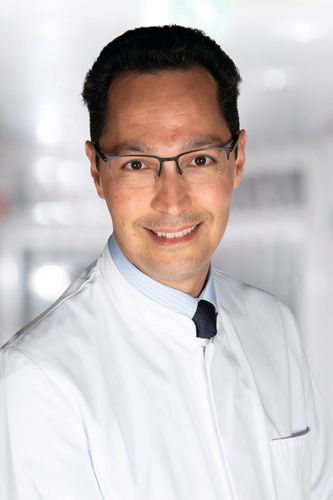
Sports Hernia: Expert Interview with OA mag.dr. Jurij Gorjanc

Alexandra Pfitzmann ·
OA mag. dr. Jurij Gorjanc, dr. med., FRCS, FEBS AWS is a renowned specialist in hernia surgery in Klagenfurt and is considered one of the leading experts in this field. With his many years of experience and high international recognition, he has earned an excellent reputation in both traditional and minimally invasive hernia surgery. Dr. Gorjanc is well-versed in a wide range of modern surgical techniques, which he applies in the treatment of abdominal wall and visceral hernias. Whether open surgery involving an abdominal incision or laparoscopic procedures—his expertise covers the entire spectrum of hernia surgery.
Dr. Gorjanc has made a significant contribution to the advancement of his field. He is a member of renowned international professional societies, including the “Royal College of Surgeons of England,” which admitted him in recognition of his outstanding achievements. He also holds the European specialist title “Fellow of the European Board of Surgery – Abdominal Wall Surgery,” which is awarded only to highly qualified specialists. His scientific publications and regular collaboration with international colleagues further underscore his position as a leading specialist in hernia surgery.
At his practice in Klagenfurt, Dr. Gorjanc offers comprehensive, quality-assured care to his patients. His many years of experience and high surgical standards are confirmed by the quality seal of the German Hernia Society, which certifies his special expertise in the treatment of hernias. Dr. Gorjanc places great emphasis on holistic care, ranging from individual consultations through the surgical procedure to postoperative follow-up. The editorial team of the Leading Medicine Guide was able to learn more about sports hernias in a conversation with Dr. Gorjanc.

A sports hernia, also known as a soft groin or sports-related groin pain, is an injury that frequently occurs in athletes, particularly in sports that require rapid changes of direction, twisting movements, and intense strain on the lower abdomen and groin area. Unlike a traditional inguinal hernia, in which a visible hernial sac protrudes through a weak spot in the abdominal wall, a sports hernia is an injury to the soft tissues in the groin area. The exact cause of a sports hernia is not yet fully understood, but it is often associated with overuse or weakening of the muscles and connective tissue in the groin area. This can lead to chronic pain that occurs in the groin area, the lower abdomen, and sometimes the inner thigh. The pain may worsen during physical activity and subside during periods of rest.
An athlete’s hernia, also known as athletic pubalgia, is characterized by specific symptoms often experienced by athletes who engage in intense and repetitive movements such as sprinting or abrupt changes in direction.
“A ‘normal’ inguinal hernia, one of the most common diagnoses in men, is usually not painful or is associated only with discomfort or a slight feeling of pressure. An athletic hernia is also called ‘athletic pubalgia’ (groin pain in athletes), and many imaging tests (ultrasound, CT, MRI) do not confirm a suspected hernia. In the case of a ‘soft’ groin, pain is the primary symptom. This pain usually occurs during sprinting, with abrupt movements in athletes, or after physical activity. Furthermore, the location of the pain is not high up in the groin (such as at the projection point of the internal inguinal ring), but deeper, more caudal, and near the pubic bone. During the examination, pubic bone inflammation (symphysitis), hip joint pathologies (e.g., labral tear), adductor strains or tears, and several other differential diagnoses must be ruled out. The experience of the examining physician (e.g., a hernia surgeon) also plays a decisive role in this process. “Deciding too quickly to perform groin surgery—regardless of the technique used—may not be effective or may fail to bring about any improvement,” explains Dr. Gorjanc at the beginning of our conversation.
The chronic nature of the symptoms, which can worsen over weeks or months without visible signs such as a bulge, distinguishes a sports hernia from other inguinal injuries. Unlike an adductor strain, where pain tends to occur specifically during movements that strain the adductors, the pain associated with a sports hernia is often more widespread and can radiate to the lower abdomen or the inner thigh.
For patients with a sports hernia, conservative treatment options are generally recommended first before surgery is considered.
“With a sports hernia, a ‘wait-and-see’ strategy is no longer considered a failure of medicine. Rest and, above all, activity modifications should accompany such a rehabilitation plan. This relieves the inflamed and overloaded structures, thereby allowing them to heal. In my practice, this usually takes three months; after that, I refer my patients (mostly men) to an experienced physical therapist. The therapist begins with controlled stretching of the muscles and tendons. This is followed by strengthening exercises, core training, and manual therapy,” explains Dr. Gorjanc.
Conservative therapy aims to relieve pain, control inflammatory processes, and improve muscular stability to facilitate a return to sports. In some cases, injections of corticosteroids or other anti-inflammatory agents into the affected area are considered to provide acute pain relief. The success rate of conservative treatments for a sports hernia varies and depends heavily on the severity of the injury and the duration of the symptoms. Studies show that approximately 50 to 70 percent of patients who consistently follow a conservative treatment program experience significant improvement in symptoms and are able to return to athletic activity without surgery. However, this means that for about one-third of patients, conservative treatment may not be sufficient, and surgery may be necessary. Conservative therapy typically lasts several weeks to months. If sufficient improvement is not achieved after a specified period, surgical treatment is considered, particularly for athletes who wish to return to a high level of performance.
Surgical treatment for a sports hernia is considered when conservative measures—such as rest, physical therapy, and anti-inflammatory medications—do not result in sufficient improvement.
“It depends a bit on the patient’s level of discomfort; most are experienced athletes or even elite athletes, but I almost never opt for surgery before the completion of the three-month physical therapy program—that is, a total of half a year after diagnosis. Of course, there are exceptions, but patients are grateful to me because, in many cases, time works in their favor. If there is a clear lack of improvement or a significant reduction in quality of life, the decision is then made to proceed with surgery. Tension-free techniques, such as TAPP, are my treatment of choice if a soft inguinal component is present. In my experience with these cases, TAPP hernioplasty leads to significant improvement or even complete recovery by promoting scarring and strengthening the inguinal region in the area of the iliopubic tract. I use exclusively titanium-coated synthetic meshes, which trigger fewer inflammatory reactions. For patients under 18 years of age, I usually perform the original Shouldice procedure, as I was taught by the former chief physician at the Shouldice Clinic in Canada. I often use this method for older patients as well—they simply need to understand that the postoperative pain associated with the Shouldice procedure (which is not a tension-free method) has nothing to do with chronic groin pain and will subside over time (weeks). I have had very good results with this multilayered reinforcement in the groin using these techniques, and published data also support this approach. Other techniques may also be considered. In any case, the decision should be made on a highly individualized basis, taking into account the specific needs of each patient. This requires the surgeon to be proficient in several different surgical techniques,” explains Dr. Gorjanc.
TAPP hernioplasty (transabdominal preperitoneal hernioplasty) is a minimally invasive, laparoscopic method for repairing inguinal hernias. It involves using a synthetic mesh to reinforce the weakened abdominal wall and prevent the hernia from recurring. TAPP is one of the two common laparoscopic techniques for hernia repair; the other is TEP (Total Extraperitoneal Plasty). Unlike TEP, TAPP involves accessing the hernia through the abdominal cavity.
The Shouldice repair is a surgical procedure for repairing inguinal hernias that does not require the use of a synthetic mesh. It was developed by Dr. Edward Earle Shouldice in the 1940s and is routinely performed at the Shouldice Clinic in Canada. The method is considered one of the most successful techniques for hernia repair and has gained worldwide recognition.
Athletes, especially those involved in sports that place high stress on the groin area—such as soccer, rugby, or ice hockey—can take several preventive measures to minimize the risk of a sports hernia.
“My patients are mostly soccer and hockey players, but there are others as well. In my view, core training plays an important role (abdominal muscles, lower back, pelvic floor). This reduces the strain on the groin region. In Klagenfurt, Austria, I work with two experienced physical therapists. In my view, exercises for the hip flexors and hip extensors take priority over exercises for the adductors. The adductors should be strengthened or treated last,” says Dr. Gorjanc.
Another important aspect of prevention is a targeted warm-up before training or competition. A thorough warm-up program improves blood flow to the muscles, increases flexibility, and better prepares the body for the upcoming physical demands. Stretching exercises that specifically target the adductors and hip muscles can help prevent muscle tension and improve range of motion. Avoiding excessive or improper movements—especially during sudden changes of direction or fast sprints—can help minimize strain on the groin area. Coaches and physical therapists can help athletes improve their technique and avoid improper loading. In addition to training, adequate rest and recovery are also important for reducing the risk of a sports hernia. Regular breaks and a well-planned training program that avoids overexertion help ensure that the muscles are not overworked and can recover sufficiently.
The typical rehabilitation process following surgical treatment of a sports hernia is crucial for full recovery and a return to athletic activities. The process involves several phases aimed at a gradual restoration of function and strength.
Dr. Gorjanc explains: “In the early phase (up to two weeks postoperatively), pain management, rest, cooling, and reducing inflammation (including with medication). Then, we review the athlete’s original sports technique, especially if it involves very specific movements, since incorrect training technique was often the cause of the sports hernia. Over the next 2–4 weeks, walking training (preferably ‘Nordic walking’) and stretching exercises take priority over strength training; strength training follows during the rehabilitation phase in the weeks thereafter, and sport-specific training—ideally in consultation with the patient’s coach—should also be discussed. Such communication often yields solutions that one might not have considered at the outset. Thus, after three months of this approach, a return to the patient’s sport should be possible.”
A return to full training and competition occurs only when the athlete is completely symptom-free and both the physician and physical therapist deem the athletic workload to be safe. As a rule, the entire rehabilitation process takes between three and six months. Athletes who participate in the rehabilitation program early and consistently can often return to their sport more quickly, while a slow healing process or inadequate rehabilitation can delay their return to sports.
Long-term studies and current research findings offer valuable insights into the effectiveness of various treatment approaches for sports hernias. Studies have shown that conservative treatments such as physical therapy and targeted muscle strengthening can lead to significant improvements in approximately 50 to 70 percent of patients.
“Studies have shown that conservative measures are successful for many patients and that many athletes would not benefit immediately from surgery. There are also studies showing that the return to athletic activities is faster for patients who have undergone surgery. So how should we interpret this correctly? An experienced physician or surgeon should be able to determine which patient might benefit from which method. Over time, as you work more closely with such patients, you develop a sense of which approach to take. When we compare surgeries with and without synthetic mesh, studies show that there are fewer hernia recurrences after reinforcing the groin with mesh. But for a patient with a sports hernia, the primary concern is groin pain—though, of course, the hernia recurrence rate is also sometimes a factor. That’s why a surgeon should be able to tell a patient with a sports hernia what the recurrence rate is for his operated patients after one and after five years. This data is obtained from hernia registries. “I’m proud of my hernia recurrence rate of less than 1%,” summarizes Dr. Gorjanc, adding:
“Furthermore, studies show that even in cases of sports hernias, if the decision is made to operate, established surgical methods (such as TAPP or Shouldice) should be used. This is the only way to ensure a minimal scientific comparison of success rates. Patients should avoid surgeons who offer any ‘decompression incision methods’ without supporting them with studies. Last but not least, the published data show that even during the postoperative rehabilitation phase, supervised individualized rehabilitation through physical therapy and a trainer (and their collaboration and communication) enables a faster return to athletic activity compared to ‘self-training.’”
Dear Dr. Gorjanc, thank you very much for this detailed information!
Share this article
About the medical author
Alexandra Pfitzmann
Editor
Alexandra Pfitzmann – medical author: expert knowledge, professional articles and medical insights in the Leading Medicine Guide.
More about the medical author →Expert Interviews
Read next
- Expert interview
Cardiogeriatrics: Significance and benefits in the context of hospital reform
Sep 21, 2026
Cardiogeriatrics: Significance and benefits in the context of hospital reform
Read more - Expert interview
Expert Interview with Professor Dr. Amadeus Hornemann, MPH
Sep 18, 2026
Prof. Amadeus Hornemann on Precision Medicine in Gynecology: Modern Surgery, New Techniques, Better Quality of Life
Read more - Expert interview
Expert Interview with Professor Dr. Konstantinos Anagnostakos
Sep 15, 2026
Prof. Anagnostakos on Painful Knee Replacements
Read more