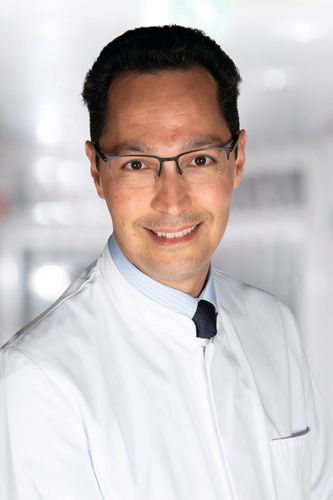
Expert Interviews
Prof. Michael Hirschmann: “The knee poses a special challenge even for experienced joint replacement surgeons!”
Claudia Dechamps ·
Orthopedic surgeon Professor Dr. Michael Hirschmann has already been honored with numerous national and international awards for his research and achievements in the field of knee arthroplasty. As head of the Knee Surgery and Sports Orthopedics team and Chief of Orthopedics and Traumatology at the Baselland Cantonal Hospital, he has not only ensured that Basel has a firm place on the global map of orthopedics. As an experienced knee specialist, Prof. Hirschmann has also gained international renown, particularly in the field of revision arthroplasty. In addition to science and research, Prof. Hirschmann is deeply committed to passing on his expertise to young doctors and medical colleagues.
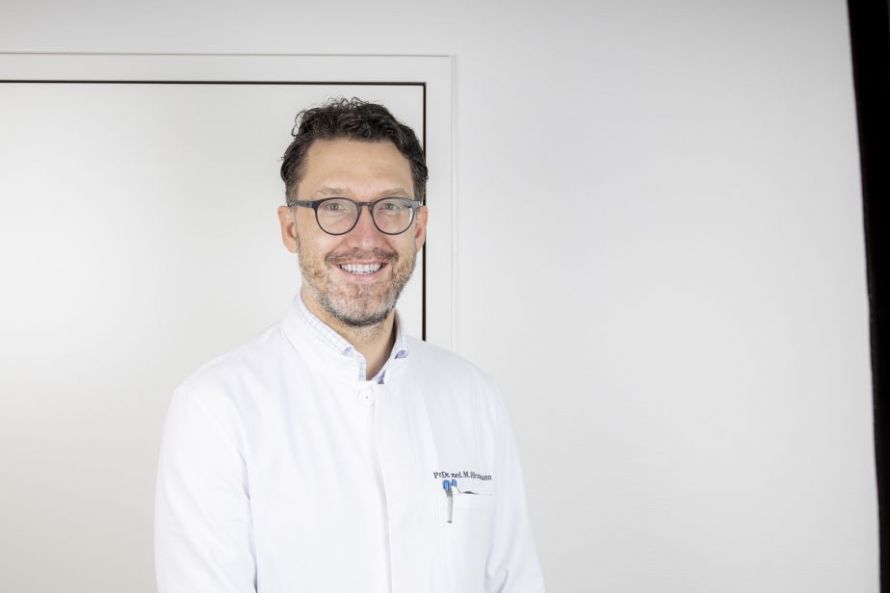
Leading Medicine Guide: Prof. Hirschmann, in your youth you competed in the decathlon at the national level. Did that time shape you?
Prof. Dr. Michael Hirschmann: I think so. In this type of competition, you have to balance different disciplines, and you simply can’t be equally good at every sport—that’s just not possible. So you’re forced to develop a certain degree of self-acceptance. At the same time, I learned that nothing works without hard work. And I learned to persevere through strenuous, demanding, and arduous phases.
Leading Medicine Guide: It’s also unusual that you’ve gained experience all over the world in your orthopedic specialty—the knee joint.
Prof. Dr. Michael Hirschmann: Yes, I’ve participated in many exchange programs, seen a lot internationally, and that, too, has left its mark. I think it’s very important to step outside your familiar surroundings and get to know other things. The same issue is approached differently in every country. That’s where you learn the underlying principle. I also started participating in research exchanges early on. I worked in London for a year, which greatly broadened my horizons. There, you see clinical presentations that we no longer encounter here at all. People there have to wait months for an appointment with a specialist—it’s a completely different healthcare system. The different approaches to the same issue were important experiences. In other countries, for example, robotic surgery was adopted much earlier than here.
Leading Medicine Guide: Of the countless prizes and awards you’ve received, which ones mean the most to you?
Prof. Dr. Michael Hirschmann: The award from the American Academy of Orthopaedic Surgeons (AAOS)—that means a great deal to me. After all, hardly any Europeans have received this honor to date. My team and I received the Award of Excellence for our scientific work on “Diagnosis and Treatment of Painful Knee Replacements.” I’ve been studying the issue of painful knee replacements for a long time—how to better identify the cause and what can be done about it. But with all the awards I’ve received, it’s also important to me that the entire team is recognized and that my young assistants can gain experience and prove themselves.

Leading Medicine Guide: Together with PD Dr. Dr. Andrej Nowakowski, you co-lead the Department of Orthopedics and Traumatology at the Baselland Cantonal Hospital. You two complement each other perfectly—PD Dr. Nowakowski specializes in hip arthroplasty, while your area of expertise is the knee. PD Dr. Nowakowski conducts research and works on innovations in hip implants—where does your focus lie?
Prof. Dr. Michael Hirschmann: In addition to clinical research, passing on knowledge is very important to me. I share my knowledge with my residents and students in my daily work, and with other colleagues at conferences and meetings. I have also written numerous books on the treatment of knee problems, particularly knee replacement surgery. The thickest book deals with the topic of “painful knee replacements.” I also serve on committees or the executive board of many national and international professional societies to actively advance the field. Conferences are always great opportunities to exchange and share knowledge.
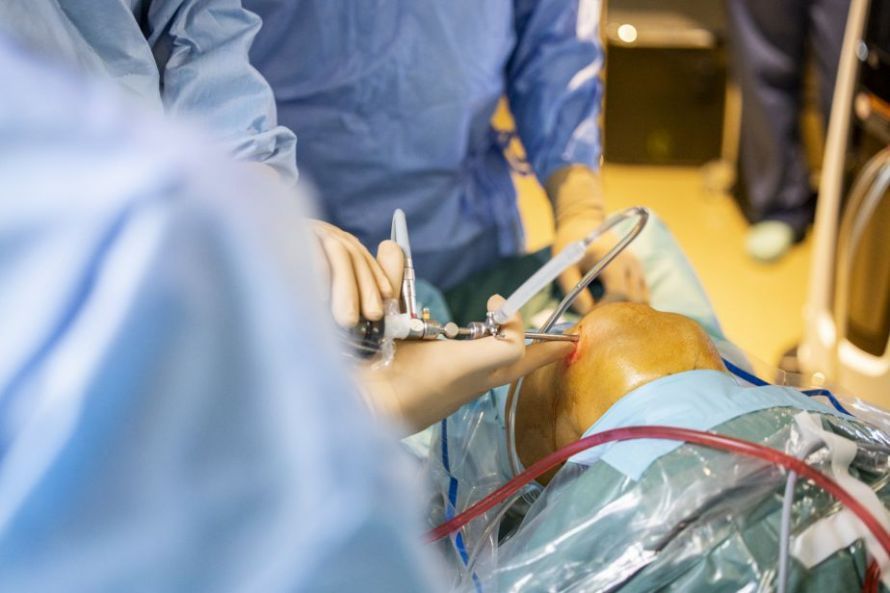
For us, teaching also includes hands-on instruction. We have an arthroscopy simulator at our clinic where young doctors can practice using the instruments and techniques. We strive to be very innovative in our training. For example, we’ve set up a Surgical Skills and Training Lab because young doctors must complete technical training before they’re allowed to operate on patients under supervision. This is always difficult to integrate into the training program, and that’s where these training sessions help. This is a project that’s very close to my heart.
Leading Medicine Guide: You have earned an excellent international reputation in revision and replacement arthroplasty. Could you explain what that entails?
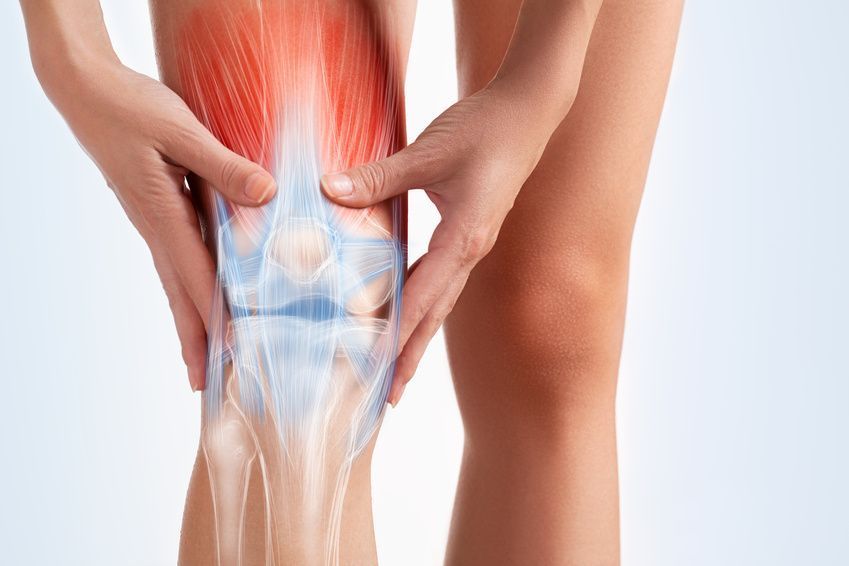
Prof. Dr. Michael Hirschmann: The knee poses a particular challenge even for experienced joint replacement surgeons. Knee replacement is complex for many reasons. The knee involves a complex interplay of ligaments, tendons, and muscles. Static and dynamic factors are defined by individual anatomy, which varies slightly from person to person. The quality of prosthetics can still be further optimized. We know that approximately twenty percent of all patients are not satisfied and/or pain-free after knee replacement surgery. In such cases, an expert is needed who can care for these patients with competence and experience. The key is to identify the causes of the symptoms and then address them specifically. We have developed a standardized assessment protocol and specialized treatments for these patients. Word of this has spread both nationally and internationally, and as a result, our patients come from all over Europe.
Leading Medicine Guide: That must be very rewarding and satisfying work, isn’t it?
Prof. Dr. Michael Hirschmann: Yes, I truly feel privileged to do this work. I’m very grateful for that. It’s always wonderful to see the patients—their joy at being pain-free, their gratitude for their newfound mobility. That’s what makes my profession so rewarding; I’m grateful to have a job like this.
Leading Medicine Guide: Let’s briefly discuss joint-preserving surgery. What new methods are available in this area?
Prof. Hirschmann: Preserving the knee joint is always our top priority. Today, there are a variety of different treatment options that make it possible to preserve a patient’s own knee joint for as long as possible. Because we can offer all forms of cartilage repair—such as cartilage cell transplantation, cartilage-bone transfer, meniscus preservation (e.g., meniscus suturing), meniscus replacement, and ligament reconstructions—such as for the anterior and posterior cruciate ligaments, as well as the medial and lateral collateral ligaments—and leg alignment corrections, we can preserve the knee for a long time and only recommend a knee replacement when it is necessary.
© artstudio_pro / Fotolia
That really sounds like a complex field of work where there’s still a long way to go. Thank you very much for the interview, Professor Hirschmann!
For further questions or to contact him directly, Professor Hirschmann can be reached via his profile page on the Leading Medicine Guide.
Share this article
About the medical author
Claudia Dechamps
Editor
Claudia Dechamps – medical author: expert articles, professional insights and medical knowledge in the Leading Medicine Guide.
More about the medical author →Cantonal Hospital Baselland
ProfileExpert Interviews
Read next
- Expert interview
Cardiogeriatrics: Significance and benefits in the context of hospital reform
Sep 21, 2026
Cardiogeriatrics: Significance and benefits in the context of hospital reform
Read more - Expert interview
Expert Interview with Professor Dr. Amadeus Hornemann, MPH
Sep 18, 2026
Prof. Amadeus Hornemann on Precision Medicine in Gynecology: Modern Surgery, New Techniques, Better Quality of Life
Read more - Expert interview
Expert Interview with Professor Dr. Konstantinos Anagnostakos
Sep 15, 2026
Prof. Anagnostakos on Painful Knee Replacements
Read more