Expert Interviews
Prof. Preyer: “Early-stage laryngeal cancer has a good chance of being cured.”

Claudia Dechamps ·
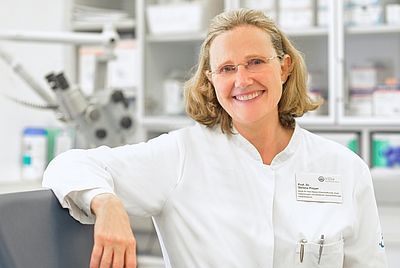
Prof. Dr. med. Serena Preyer is a specialist in otolaryngology who focuses on head and neck surgery and facial plastic surgery. As Chief Physician of the Ear, Nose, and Throat Clinic at ViDia Clinics Karlsruhe, she also heads the associated Head and Neck Tumor Center at the Oncology Center of ViDia Clinics Karlsruhe and the Karlsruhe Ear Center (OS.Ka). Trained at university hospitals and internationally renowned institutions, this specialist and surgeon in otolaryngology maintains high interdisciplinary standards at her clinic and places great value on professional, collegial exchange. At the same time, she impresses everyone with her empathetic, caring manner. It is therefore no surprise that patients—and especially parents with their children—travel from all over Germany to the clinic led by Prof. Preyer when they face medical issues involving the head, neck, and ears. Leading Medicine Guide spoke with the expert about laryngeal cancer and its prospects for recovery.
 Leading Medicine Guide: Prof. Preyer, you are a specialist in the entire head and neck region. This includes the nose, ears, and larynx—all areas with delicate, complex structures and a wide variety of diseases. How do you manage to stay up to date medically in this field?
Prof. Dr. med. Serena Preyer: Yes, that’s true—from a medical perspective, otolaryngology is a very broad field. But that’s precisely what appeals to me. I trained at two university hospitals and abroad. There, I saw a wide variety of clinical presentations. And I was able to learn a great deal about different approaches and treatment methods. At a university hospital, there’s an enormous variety of cases and a high standard of care. It’s simply a wonderful environment for learning and for working. And I read a lot. I really do that consistently!
Leading Medicine Guide: Your patients benefit from this “passion for reading,” as do the staff at the clinic you’ve been leading since 2008.
Prof. Dr. med. Serena Preyer: Sharing one’s own knowledge and letting others benefit from it—that’s an important culture that I foster at my clinic. During our regular in-house continuing education sessions, we keep each other informed. Anyone who has attended a conference shares what they learned. Anyone who has participated in a training session or pursued further education shares their knowledge and new experiences with the others. Together, we then evaluate this and adapt the insights to our clinic. In addition, every colleague has their own area of specialization, so that collectively we can draw on a wealth of outstanding and cutting-edge expertise. This is very important to me, because I simply find it exciting and interesting to keep moving forward and never stand still.
 Leading Medicine Guide: Given such a broad range of specialties—what is your personal area of focus?
Prof. Dr. med. Serena Preyer: My area of special interest in ENT is oncology. Here, too, we hold regular conferences through our tumor boards that facilitate interdisciplinary exchange, where each patient’s case is discussed in detail. It’s very beneficial for patients when many experts from different fields come together to discuss a case and determine the best treatment strategy. Yes, and otology—that is, everything related to the ears—is also something I really enjoy.
Leading Medicine Guide: Oncology in the head and neck region—that also includes laryngeal cancer. What are the risks of developing a tumor here? Are there any signs of laryngeal cancer, and are there perhaps any screening tests?
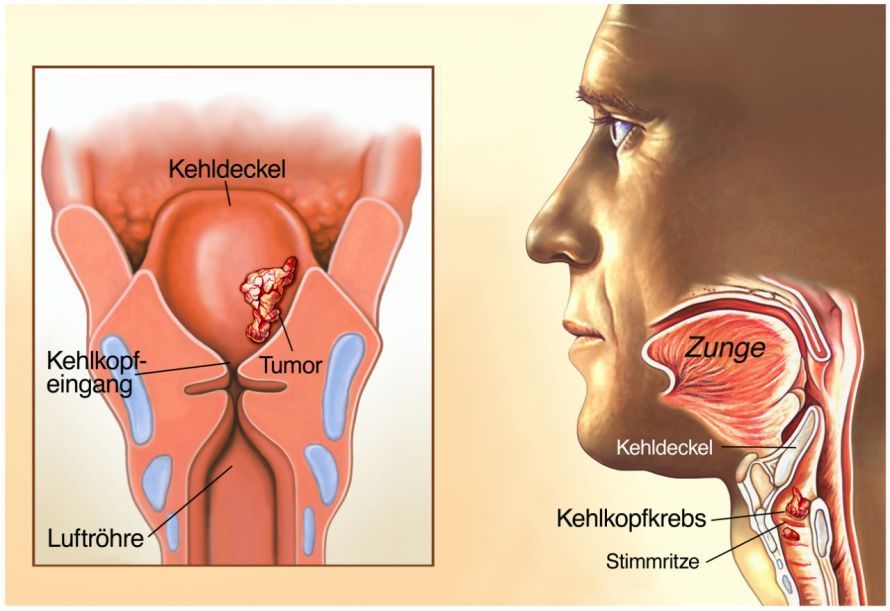
Prof. Dr. med. Serena Preyer: Unfortunately, there is no screening program for laryngeal cancer. However, people who smoke and drink alcohol have a higher risk of developing it. Fortunately, symptoms such as hoarseness and difficulty swallowing—which indicate changes in the vocal cords—are noticed quite early on. And in such cases, you should see an ear, nose, and throat (ENT) specialist right away. A laryngoscopy is a quick and painless examination that provides information about the possible stage of the disease. If the tumor is detected early, we have an 80 to 100 percent chance of a cure. That’s very encouraging.
Leading Medicine Guide: Which stages do you primarily encounter at your clinic?
Prof. Dr. med. Serena Preyer: Fortunately, we do see many early stages, but if we were to break it down numerically, one-third would be early stages, one-third intermediate stages, and one-third late stages. But as I said, the chances of a cure are particularly good in the early stages.
Leading Medicine Guide: Can you describe the treatment steps or methods in more detail?
Prof. Dr. med. Serena Preyer: Small whitish patches are completely excised. We use a laser and perform the procedure endoscopically. The endoscope is inserted through the mouth in a minimally invasive manner, so there are no incisions or wounds on the outside of the neck, as was the case in the past. This is much gentler on the patients. Usually, a single surgery is sufficient, though a second excision may be necessary. With modern imaging and under the microscope, we can determine this with millimeter precision. If follow-up treatment is needed after surgery, radiation therapy is usually used. Chemotherapy is not suitable for laryngeal cancer. Sometimes radiation therapy is used on its own—and this also yields good results. Of course, radiation therapy is not without side effects. While the tumor may be gone, the sensitive larynx can undergo changes in both tissue and function. Swallowing, for example, can be made more difficult by dry mucous membranes. That’s why we have to carefully consider which treatment makes the most sense for each patient.
Leading Medicine Guide: What new treatment methods are available for laryngeal cancer?
Prof. Dr. med. Serena Preyer: First, there’s laser therapy. Today, we perform surgery almost exclusively with lasers. Laser surgery is well established in Germany. In this context, it’s worth noting that the transfer of knowledge in this field did not go from the U.S. to us, but rather the other way around—from Germany to the U.S. Second, immunotherapies are gaining ground in the treatment of head and neck tumors. About 80 percent of laryngeal tumors are squamous cell carcinomas. Under certain conditions, this type of tumor in the head and neck region responds very well to immunotherapies. The third is intensity-modulated radiation therapy. This has proven very effective because it has fewer side effects. With this type of radiation therapy, the radiation beam is directed at a specific field for only a short time and then repositioned. This allows the tumor to be targeted from different angles while, for example, the overlying skin is very well protected.
Leading Medicine Guide: Unfortunately, there are also advanced stages of the disease. How do you proceed in those cases?
Prof. Dr. med. Serena Preyer: In those cases, we may have to perform a total laryngectomy. Breathing via the tracheostoma in the neck and swallowing are not affected; the voice must then be reconstructed using a voice prosthesis. Patients are well advised to contact a certified cancer center if they are diagnosed with the disease. With the expert knowledge gathered here, it’s always a good place to start. Cancer centers also offer excellent, often lifelong follow-up care and, with experienced teams of specialists, ensure that patients can return to a normal life after treatments that can sometimes be very taxing. Here in southern Germany, we also work closely with, for example, the Parksanatorium Aulendorf, a specialized clinic for oncological rehabilitation that focuses specifically on head and neck cancers.
 Leading Medicine Guide: Your clinic also regularly participates in clinical trials. What’s currently underway?
Prof. Dr. med. Serena Preyer: Like virtually all cancer centers, we are regularly involved in clinical trials. Currently, a major area of focus is the association between head and neck tumors and papillomaviruses. Human papillomaviruses, or HPV as they are called, can cause inflammation and skin lesions. They penetrate the skin or mucous membranes and multiply within the cells. We now know of two hundred different HPV types. Some virus types cause only harmless warts and heal on their own. Others lead to the well-known cervical cancer or—as we are now observing more frequently—to cancers in the oropharyngeal region, particularly tonsil cancer. Studies have already shown that about half of all oropharyngeal tumors are caused by papillomavirus infection. Laryngeal cancer or oral cavity cancer is caused by HPV significantly less frequently. What is striking about tonsil cancer is that smoking and alcohol are no longer the primary risk factors for the tumor; instead, it is infection with HPV. There is therefore a suspicion that papillomaviruses are becoming more common, which is why we are participating in various studies on this topic.
Prof. Preyer, we would like to thank you very much for this informative conversation and the interesting insights into your field of expertise. You can contact our specialist directly via her profile page on the Leading Medicine Guide.
Share this article
About the medical author
Claudia Dechamps
Editor
Claudia Dechamps – medical author: expert articles, professional insights and medical knowledge in the Leading Medicine Guide.
More about the medical author →ViDia Christliche Kliniken Karlsruhe, Klinik für Hals-Nasen-Ohren-Heilkunde
ProfileExpert Interviews
Read next
- Expert interview
Cardiogeriatrics: Significance and benefits in the context of hospital reform
Sep 21, 2026
Cardiogeriatrics: Significance and benefits in the context of hospital reform
Read more - Expert interview
Expert Interview with Professor Dr. Amadeus Hornemann, MPH
Sep 18, 2026
Prof. Amadeus Hornemann on Precision Medicine in Gynecology: Modern Surgery, New Techniques, Better Quality of Life
Read more - Expert interview
Expert Interview with Professor Dr. Konstantinos Anagnostakos
Sep 15, 2026
Prof. Anagnostakos on Painful Knee Replacements
Read more